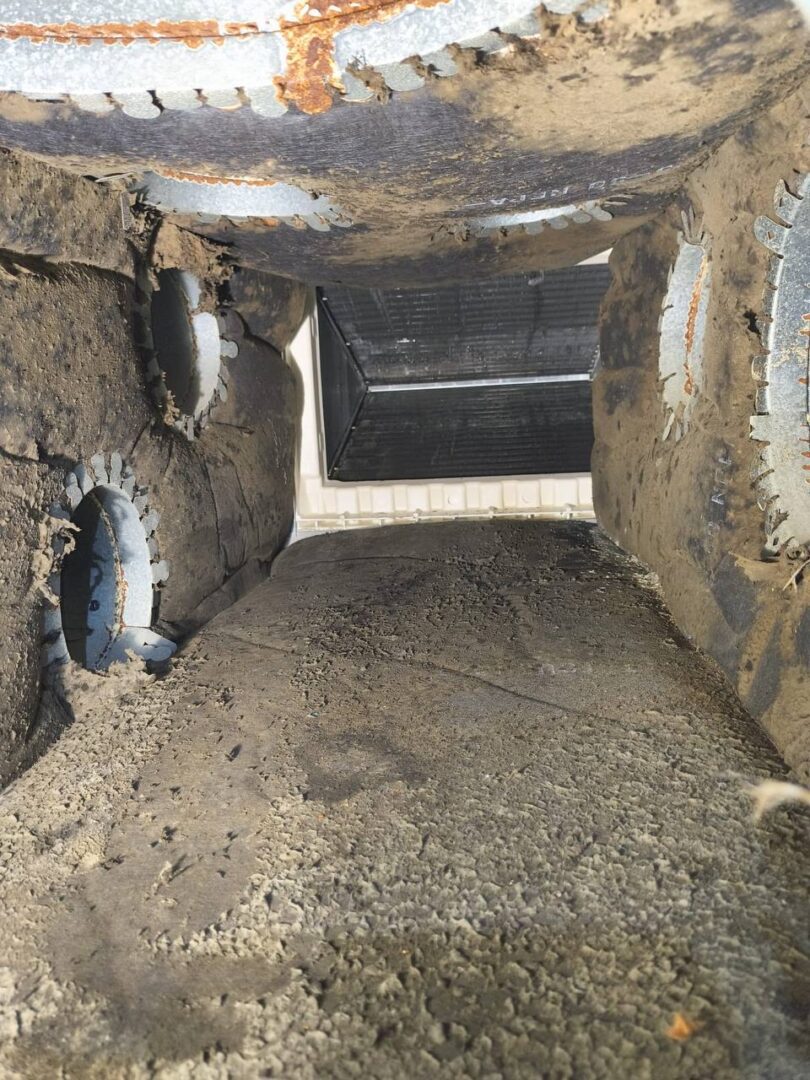
Mold growth inside an HVAC system is one of the most serious indoor air quality problems a Houston homeowner can face. When mold has colonized the interior surfaces of your ductwork, evaporator coil, plenum box, or heating chamber, a standard duct cleaning — even one performed to NADCA source removal standards — may not be sufficient to eliminate the problem. Understanding the difference between duct cleaning and mold remediation is essential for protecting your family’s health and your home’s long-term indoor air quality.
What Is Mold Remediation?
Mold remediation is the professional process of identifying, isolating, removing, and preventing the recurrence of mold contamination in a building or its HVAC system. It differs from standard duct cleaning in several critical ways:
**Containment and isolation.** Mold remediation requires isolating the contaminated area from the rest of the building to prevent mold spores from spreading during the cleaning process. This involves establishing physical barriers, negative air pressure containment zones, and HEPA-filtered exhaust systems that are not part of a standard duct cleaning service.
**Biological assessment and identification.** A professional mold remediation includes assessment of what species of mold are present, the extent of colonization, and whether the mold has penetrated beyond surface contamination into the bulk material of duct liner, insulation, or structural components. Different mold species require different treatment approaches, and the remediation plan must be tailored to the specific contamination identified.
**Anti-microbial treatment and encapsulation.** After source removal of visible mold and contaminated debris, mold remediation includes the application of anti-microbial treatments that kill remaining mold colonies at the microscopic level and encapsulation treatments that seal treated surfaces to prevent future colonization under normal operating conditions.
**Post-remediation verification.** Professional mold remediation concludes with verification testing to confirm that mold colony counts have been reduced to acceptable levels and that the treated areas are safe for reoccupation.
When Houston Homes Need Mold Remediation Instead of Standard Cleaning
**Visible mold growth on HVAC components.** If you can see mold on the evaporator coil, inside the plenum box, or on interior duct surfaces, standard cleaning is not sufficient. Professional mold remediation is required.
**Musty odors that persist after standard cleaning.** If your home has persistent musty or earthy odors that return within days or weeks of a standard duct cleaning, mold colonization is the likely cause and remediation is needed.
**Water intrusion or flooding history.** Any flood event, significant roof leak, or plumbing failure that introduced contaminated water into the HVAC system creates conditions where mold colonization can establish rapidly and extensively. Post-flood HVAC assessment should include mold evaluation by a qualified professional.
**Allergy or respiratory symptoms that do not improve after standard cleaning.** If household members experience allergy symptoms that persist or worsen after a standard duct cleaning, mold contamination or other biological growth is a likely contributor.
**Mold growth accessible in the attic ductwork.** In Houston-area construction, the majority of ductwork runs through the attic where it is exposed to extreme temperature fluctuations, moisture from condensation, and roof leaks that create ideal conditions for mold colonization on exterior and interior duct surfaces.
What Our Mold Remediation Service Includes
AH-CHOO! mold remediation begins with a comprehensive assessment of all 8 HVAC components. Our NADCA-certified technicians document the extent of mold colonization with photographs and written assessment, identify the species of mold present when possible, and develop a remediation plan that addresses every contaminated surface.
The remediation process includes containment of affected areas, source removal of all visible mold and contaminated debris, anti-microbial treatment of all treated surfaces, encapsulation of treated surfaces where appropriate, and post-remediation assessment to confirm that the system has been returned to a clean baseline condition.
The average remediation service takes approximately 7 hours because the process requires careful, methodical treatment of every contaminated surface. We include a free pre-remediation inspection so you can see the extent of the contamination before making any commitment.
Why Mold Remediates Faster in Houston Homes
Houston’s extreme humidity creates conditions where mold colonies can regrow on treated surfaces within months if the underlying moisture conditions are not addressed. That is why our remediation service includes recommendations for humidity control, ventilation improvement, and ongoing maintenance practices that prevent mold from returning after the initial treatment.
Book Your Free Mold Inspection
If you suspect mold contamination in your HVAC system, do not wait and do not attempt to clean the system yourself. Running a mold-contaminated system distributes spores into every room your system serves. Schedule a free inspection today and our NADCA-certified technicians will assess the condition of all 8 components and provide an honest evaluation of what remediation your system requires.
[Book a Free Inspection](https://crm.ahchooindoorair.com/book)
AH-CHOO! Indoor Air Quality serves Houston, Austin, San Antonio, and South Louisiana. NADCA certified. Average job time: 7 hours. 8 components cleaned every service. 38 years of experience.
Related AH-CHOO resources: Houston air duct cleaning; schedule a free inspection.