#
Most homeowners assume a professional air duct cleaning means someone runs a brush through the vents for thirty minutes and calls it done. That is not how proper source removal works. A complete professional cleaning addresses all eight HVAC components that collectively make up your entire air distribution system.
When you understand what each component does, why it collects debris, and what happens when it is neglected, it becomes clear why a comprehensive cleaning is fundamentally different from a surface treatment. Here is the full breakdown of the eight HVAC components cleaned on every AH-CHOO! service call.
## 1. Return Air Ducts
Return ducts are the intake pathway for your HVAC system. They pull air from every room in your home back toward the air handler. Because return ducts operate under negative pressure, they continuously draw in dust, pet dander, pollen, outdoor dirt, and airborne debris from the living space.
**What accumulates:** Return duct interiors accumulate a dense layer of debris within three to five years in Houston homes. Pet dander and pollen are the most common contributors. Because return ducts carry air from multiple rooms, each branch collects the specific contaminants present in that room. Bedrooms contribute skin cells and fabric fibers. Kitchens contribute grease particles and food debris. Living areas contribute outdoor pollen and dust.
**Why it matters:** Dirty return ducts restrict airflow to the air handler, forcing the blower motor to work harder and reducing the overall efficiency of your system. The debris layer on the interior of return ducts also serves as a food source for mold spores whenever moisture is present.
**How we clean it:** Source removal cleaning using professional-grade negative air systems and agitation tools that dislodge and extract debris from the full interior surface of each return duct branch.
## 2. Evaporator Coils
The evaporator coil is one of the most critical components in your entire HVAC system. Located inside or adjacent to the air handler, the evaporator coil is responsible for transferring heat from indoor air to the refrigerant, which is the core mechanism that enables your air conditioner to cool your home.
**What accumulates:** As air passes over the coil surface, moisture from condensation and fine particulate matter combine to form a coating of dirt and grime directly on the coil fins. In Houston’s humid climate, this condensation layer is continuous during the cooling season. The resulting buildup acts as an insulating barrier that reduces heat transfer.
**Why it matters:** A dirty evaporator coil can reduce your air conditioner’s cooling capacity by fifteen to twenty percent. This means longer runtimes, higher electricity bills, and accelerated wear on the compressor and other components. Coil contamination is also one of the most common catalysts for mold growth, because the combination of organic debris and persistent condensation creates an ideal environment for mold spores to establish colonies.
**How we clean it:** Specialized coil cleaning techniques that remove debris from the fin surfaces without damaging the delicate coil structure. This restores proper heat transfer and eliminates a primary mold growth site within your HVAC system.
## 3. Blower Fan
The blower fan is the motorized component that moves air through your entire HVAC system. It pulls air through return ducts, pushes it across the evaporator coil and heating chamber, and distributes conditioned air through the supply ducts to every room in your home.
**What accumulates:** Blower fan blades accumulate a dense layer of dust and debris on the leading edge of each blade. This debris layer creates an imbalance in the fan assembly, similar to driving a vehicle with an unbalanced tire wheel. Over time, this imbalance increases motor strain, reduces airflow volume, and produces audible noise and vibration.
**Why it matters:** An unbalanced or dirty blower fan reduces the efficiency of your entire system. Reduced airflow means longer cooling and heating cycles, which increases energy costs and accelerates component wear. Excessive motor strain is a common cause of premature motor failure.
**How we clean it:** The blower fan assembly is accessed and cleaned to remove all accumulated debris from the blades, housing, and motor surface. This restores proper balance and airflow.
## 4. Heating Chamber
The heating chamber is the portion of your HVAC system that contains the heat exchanger and related heating components. Whether your system is a split system with a gas furnace, electric resistance heat, or a heat pump configuration, the heating chamber plays a critical role in the heating cycle.
**What accumulates:** Dust, debris, and soot particles accumulate on the heat exchanger surfaces and the surrounding chamber components. In gas furnace systems, incomplete combustion can deposit soot inside the heat exchanger channels and the adjacent duct interfaces.
**Why it matters:** A dirty heat exchanger surface has reduced thermal efficiency. This means your heating system must operate longer to achieve the same temperature output, increasing energy costs and producing uneven heating throughout the home. Excess soot accumulation in gas furnace heating chambers can also affect combustion efficiency and air quality.
**How we clean it:** The heating chamber is accessed and all accumulated debris, soot, and particulate matter is removed from the heat exchanger surfaces and surrounding components.
## 5. Plenum Box
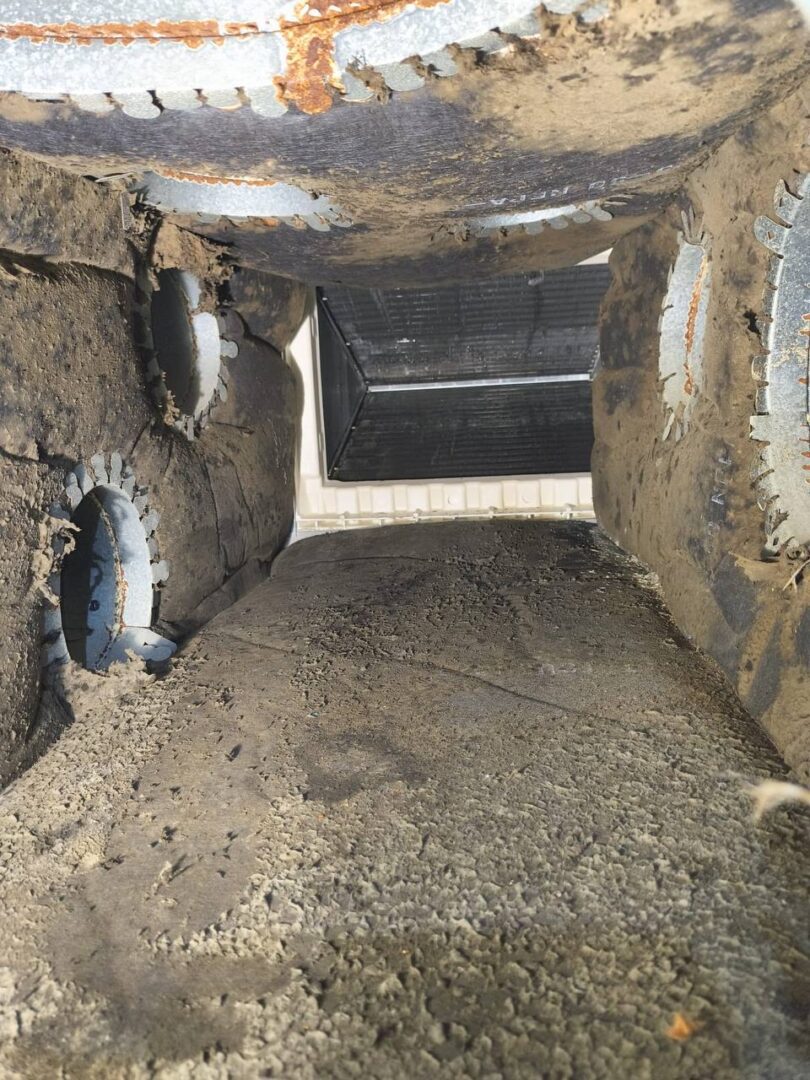
The plenum box is the central transition space that connects your duct system to the air handler. Every cubic foot of air that enters or leaves your HVAC system passes through the plenum box. It distributes air from the air handler to the supply duct branches and collects air from the return ducts before it reaches the air handler.
**What accumulates:** Because it sits at the system bottleneck, the plenum box concentrates debris from all duct branches. Dust, pet dander, pollen, and construction dust accumulate on the interior surfaces of the plenum box. In many Houston homes, we find a visible accumulation of several ounces of debris inside the plenum alone during a first-time cleaning.
**Why it matters:** The plenum box is a primary dust reservoir within your HVAC system. Because every air cycle passes through the plenum, accumulated debris is constantly available to be re-distributed throughout your home. A dirty plenum box also increases the load on your air filter and accelerates coil contamination because concentrated debris passes through the coil surface.
**How we clean it:** The plenum box is accessed through an access panel and all interior surfaces are cleaned to remove accumulated debris. This eliminates the system’s primary debris reservoir.
## 6. Supply Ducts
Supply ducts carry conditioned air from your air handler to every room in your home. These are the ducts connected to your vent registers and grills.
**What accumulates:** While supply ducts operate under positive pressure and draw fewer contaminants than return ducts, they still accumulate significant debris over time. Some debris originates from within the duct system itself and is distributed from the plenum and air handler. Construction dust, renovation debris, and particles that bypassed the filtration system all eventually settle on supply duct interior surfaces.
**Why it matters:** Accumulated debris in supply ducts is distributed directly into your living spaces every time the system cycles. This means the contamination you cleaned out is being recycled back into the air you breathe. Dirty supply ducts also create air resistance that reduces the velocity of conditioned air reaching your rooms.
**How we clean it:** Each supply duct branch is individually cleaned using agitation tools and negative air extraction to remove all accumulated debris from the interior surface.
## 7. Register Boxes
Register boxes are the structural receptacles in your walls, floors, or ceilings that house your vent covers and grills. They are the termination points of your supply duct system and the entry points for your return ducts.
**What accumulates:** Register boxes collect debris that falls out of the airstream as it enters or exits the duct system. Dust, pet hair, and larger particles accumulate in the corners and bottom of register boxes. In floor-mounted registers, register boxes frequently contain debris from vacuum cleaners, foot traffic, and floor cleaning residue.
**Why it matters:** Accumulated debris in register boxes restricts airflow at the point where air enters or leaves your home. Blocked register boxes reduce the volume of conditioned air reaching specific rooms, which creates uneven temperatures and forces your system to compensate. Register boxes also collect the most visible debris, making them the most obvious indicator of duct system contamination.
**How we clean it:** Each register box is individually cleaned and vacuumed to remove accumulated debris from all interior surfaces.
## 8. Grills and Registers
Grills and registers are the visible vent covers that control airflow into and out of your rooms. They serve both functional and aesthetic purposes, directing airflow into the room while filtering larger debris from entering the duct system.
**What accumulates:** Grills accumulate a visible dust coating on the louvers and slats. Pet hair wraps around grill edges. Kitchen grease coats grill surfaces in homes where cooking aerosols are present. These deposits are visible indicators of overall system contamination levels.
**Why it matters:** Blocked or dirty grills and registers restrict airflow at the point of delivery or return. This forces your system to work harder and reduces the comfort level of individual rooms. Dirty grills are also a visible sign of indoor air quality problems that many homeowners find unacceptable.
**How we clean it:** All grills and registers are removed, washed, and dried before reinstallation. This restores proper airflow and appearance.
## Why All 8 Components Must Be Cleaned Together
Cleaning only certain components and ignoring others is not an effective approach. Because air flows continuously through all eight components as a single connected system, debris in any one component will eventually contaminate the entire system. This is why partial cleaning services offered by some companies do not produce meaningful results.
Our average residential cleaning service takes approximately 7 hours because each of the eight components requires individual attention, professional equipment, and careful documentation. This is not a shortcut process. It is a complete source removal procedure designed to restore your entire HVAC system to a clean baseline condition.
Every service is performed by NADCA-certified technicians with an average of 38 years of industry experience. We clean one complete system per day to ensure thorough, careful work that protects your home and your indoor air quality.
## Schedule Your Free Inspection
If you are ready to understand the true condition of your HVAC system and get a detailed breakdown of all eight components, schedule a free inspection. We will document exactly what is in your system and provide a clear maintenance recommendation based on what we find.
[Book a Free Inspection](https://crm.ahchooindoorair.com/book)
AH-CHOO! Indoor Air Quality serves Houston, Austin, San Antonio, and South Louisiana. NADCA certified. 7 hours per job. 8 components cleaned every service. 38 years of experience.
Related: Air duct cleaning after home renovation in Houston.