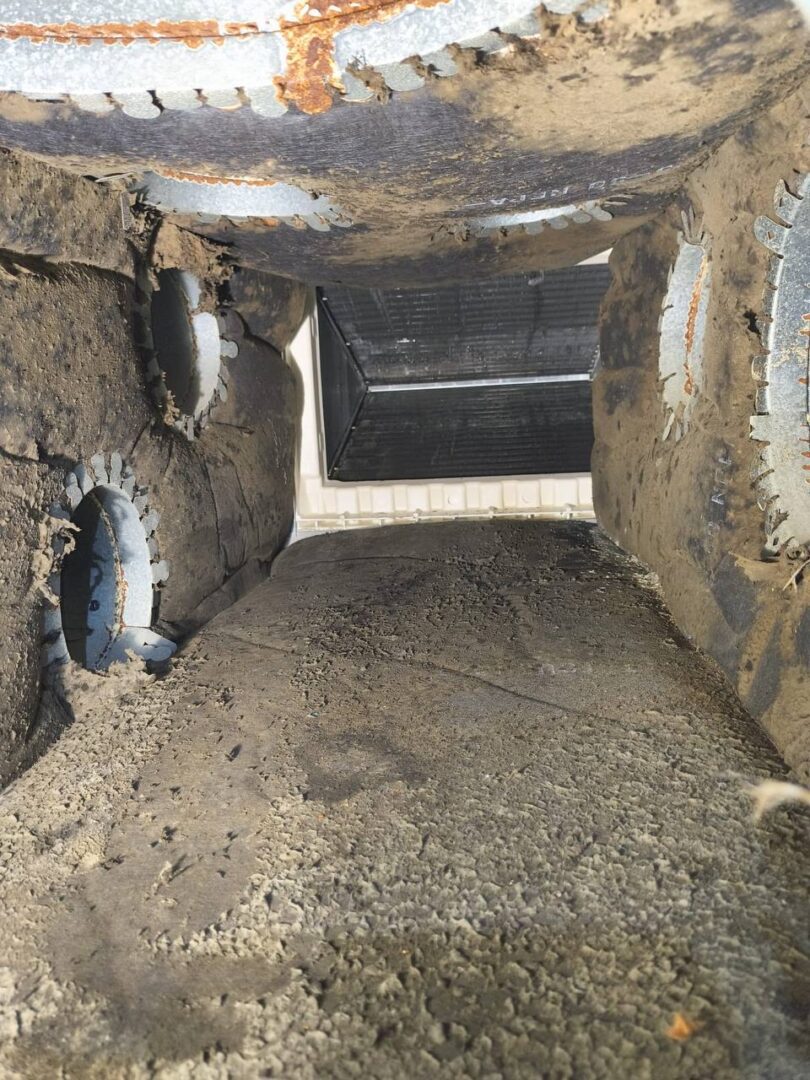
The EPA’s most-cited statement on duct cleaning is that it “has never been shown to actually prevent health problems.” That sentence appears on a federal government page published in 2014 and based on studies conducted primarily in cold, dry climates. Houston is a humid subtropical city where HVAC systems run nine to ten months per year, indoor humidity regularly exceeds 60 percent, and mold grows inside duct systems under conditions that do not exist in most of the country. The EPA’s caution applies to a different climate. Here is what it does and does not mean for Houston homeowners.
What the EPA Actually Says About Duct Cleaning
The full EPA guidance is more nuanced than the widely shared sentence suggests. The agency’s complete position includes three conditions under which duct cleaning is explicitly recommended:
- Substantial visible mold growth inside hard surface ducts or on other components of the HVAC system
- Ducts infested with vermin, including rodents or insects
- Ducts clogged with excessive deposits of dust or debris with particles actually released into the living space
The EPA also notes that whether cleaning is warranted depends on “specific circumstances in your home.” What the guidance does not do is account for the specific circumstances of a Houston home: a humid subtropical climate, year-round cooling load, active mold ecology, and HVAC systems under sustained moisture stress in ways that cold-climate systems are not.
Why Houston’s Climate Changes the Calculation
The studies the EPA references were not conducted in Gulf Coast conditions. They measured dust particle levels in homes with intermittently used HVAC systems in climates where ductwork stays dry most of the year. Houston is different in four specific ways:
- Year-round system operation: A Houston HVAC system runs from roughly March through November, sometimes longer. That is nine to ten months of continuous air movement across every surface in the duct system, depositing organic material, pollen, and particulates that accumulate at a rate cold-climate systems never approach.
- Indoor humidity above mold threshold: Mold spores require roughly 60 percent relative humidity to colonize surfaces. Houston indoor humidity regularly sits at or above that threshold during spring and summer, particularly in homes with older weatherization or after a rain event. Duct interiors in attic-run flex duct systems are especially vulnerable.
- Condensate drain biology: Houston’s warm temperatures promote algae growth inside condensate drain lines year-round. A partially clogged condensate line leads to standing water inside the air handler cabinet. That standing water is adjacent to ductwork and at the primary humidity entry point for mold growth inside the system.
- Pollen load: Houston experiences overlapping oak, grass, and ragweed seasons from February through October. Pollen enters HVAC systems through return air draws and accumulates inside ductwork as an organic substrate that supports biological growth when moisture is present.
These are not theoretical risks. They are the conditions that NADCA-certified technicians in Houston document on real jobs every week.
What the NADCA Standard Actually Requires
The EPA’s guidance predates the ANSI/NADCA Assessment, Cleaning and Restoration standard, which defines what a legitimate full-system clean must include. The standard requires cleaning of every component in the air pathway: supply and return duct runs, trunk lines, plenums, blower wheel, evaporator coil, and air handler cabinet. A cleaning that skips any of these components does not meet the NADCA standard and cannot be evaluated against it.
Most of the duct cleanings that generate negative consumer reviews and that the EPA’s guidance rightly cautions against are not NADCA-standard cleans. They are vent wipes performed by uncertified operators using low-powered equipment that moves debris without removing it. Evaluating NADCA-certified full-system cleaning based on the outcomes of non-standard vent wipes is like evaluating surgery based on outcomes from unqualified practitioners.
When Duct Cleaning Is Worth It in Houston
The EPA’s three conditions for recommended cleaning are met far more frequently in Houston than in most of the country. Beyond those, additional Houston-specific triggers include:
- Moving into a previously owned home with unknown HVAC maintenance history
- Living in a home where the HVAC system has run continuously for more than two years without professional service
- Experiencing musty odors when the AC first activates, indicating biological growth somewhere in the air pathway
- Recent flooding, roof leak, or significant water intrusion near ductwork
- New construction move-in, where post-construction debris in ductwork was never removed before the system ran
- Household members with respiratory conditions, allergies, or documented sensitivities to airborne particulates
If any of these apply, the EPA’s general caution about routine cleaning in clean, dry-climate homes does not govern your situation. The relevant question is what is actually inside your specific system.
The Right First Step: Inspection Before Commitment
AH-CHOO! has been NADCA certified and operating in Houston for 38 years. We take one job per day so that every home receives a complete seven-hour full-system clean that covers every component in the air pathway. But the right starting point is an honest assessment of what is actually inside your system.
A free inspection answers that question without any obligation. If the system is genuinely clean, we will tell you. If it is not, you will have specific documentation of what was found and where, not a generic recommendation based on elapsed time.
The EPA is right that routine duct cleaning in the absence of any problem is not necessary. In Houston, finding the absence of a problem is worth confirming.
Frequently Asked Questions
Does the EPA recommend against duct cleaning?
No. The EPA recommends against routine duct cleaning in the absence of specific conditions. It explicitly recommends cleaning when there is visible mold growth, vermin infestation, or excessive debris actually being released into living spaces. The guidance also notes that whether cleaning is warranted depends on specific home circumstances, including climate.
Was the EPA duct cleaning study conducted in Houston conditions?
No. The studies the EPA references were conducted primarily in cold, dry climates with intermittently used HVAC systems. They did not measure outcomes in humid subtropical climates with year-round system operation, active mold ecology, and the condensate drain conditions common in Houston homes.
What is the NADCA standard and how does it differ from what the EPA evaluated?
The ANSI/NADCA standard requires cleaning of every component in the HVAC air pathway: supply and return duct runs, trunk lines, plenums, blower wheel, evaporator coil, and air handler cabinet. Most of the cleanings that generate negative outcomes in consumer studies are non-standard vent wipes performed by uncertified operators. The EPA guidance does not distinguish between the two.
How do I know if my Houston home actually needs duct cleaning?
An inspection by a NADCA-certified technician answers this with documentation rather than assumptions. Key indicators include musty startup odors, visible debris from registers, known water events near ductwork, or a home with no HVAC maintenance history.
Does AH-CHOO! recommend cleaning for every home?
No. After 38 years in Houston, we know that some systems are genuinely clean and do not need service. Our free inspection tells you which situation you are in, with specific findings, not a sales pitch.
How often should a Houston home have its ducts cleaned?
In Houston’s humid subtropical climate, every two to three years is a reasonable baseline for a home without specific risk factors. Homes that have experienced water events, have had continuous operation without service, or meet any of the EPA’s explicit conditions for cleaning should not wait for a calendar interval.
Schedule a Free Inspection
If you want an honest answer about what condition your Houston duct system is actually in, a free inspection is the right first step. NADCA certified, 38 years in Houston, no obligation.
Learn more about how to verify NADCA certification or review our Houston spring HVAC checklist.
Related Service Areas
- Spring Pollen Duct Cleaning in Houston 2026
- Is Duct Cleaning Worth It for Houston Spring Allergies?
- Pearland Duct Cleaning for Spring Allergies
- Sugar Land Duct Cleaning for Spring Pollen
Related AH-CHOO resources: Houston air duct cleaning; schedule a free inspection.