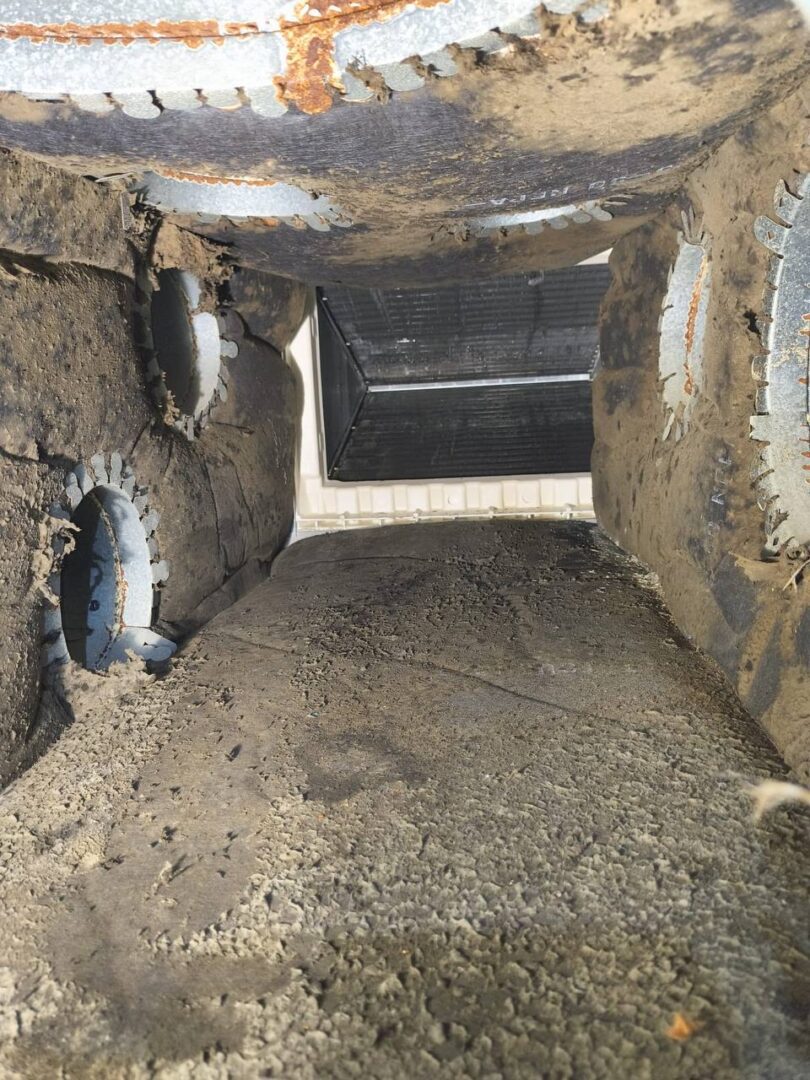
After a spring rain in Houston, your HVAC system faces a specific window of elevated mold risk that most homeowners never think about. Rainfall spikes outdoor humidity to 85 to 95 percent. That air enters your home through every gap, window seal, and HVAC fresh-air intake. Inside your duct system, the temperature differential between cool supply air and warm saturated return air creates condensation on duct surfaces, drain pans, and evaporator coils. If your condensate drain is partially clogged, standing water accumulates inside the air handler within hours. NADCA-certified full-system cleaning removes the contamination before it colonizes.
What Actually Happens to Your Ducts During a Houston Spring Rain?
Houston spring rainfall events are not the same as a dry-climate rain. The air arriving with a Gulf Coast storm system carries moisture that does not dissipate quickly. After the rain stops, outdoor relative humidity often stays above 80 percent for 12 to 24 hours.
Inside your home during that window, several things happen simultaneously:
- Return air humidity spikes: Your HVAC draws return air from living spaces. When indoor humidity rises, that moist air passes across the evaporator coil and leaves condensation on coil fins and in the drain pan.
- Condensate drain stress: Houston’s warm, humid conditions promote algae growth inside condensate drain lines. A partially clogged line that drains fine in dry weather backs up within hours when moisture load increases sharply after heavy rain.
- Attic temperature differential: Ducts running through unconditioned attic space face the largest temperature swings. When cool air flows through a duct surrounded by hot, post-rain humid attic air, condensation forms on the exterior of flex duct and at supply boot connections.
- Crawl space intrusion: Homes with ductwork in crawl spaces face direct soil moisture evaporation after rain, which saturates the surrounding air and raises humidity around duct surfaces.
Why Spring Is the Highest-Risk Season for Houston Duct Mold
Fall and winter in Houston are relatively mild. The AC runs less, indoor humidity is lower, and condensate drain loads are lighter. Spring changes all of that at once.
From March through May, Houston experiences:
- Frequent rainfall events driven by Gulf moisture
- Rapid temperature swings that force the AC to cycle on and off repeatedly
- Oak, grass, and weed pollen that coats outdoor surfaces and enters through HVAC intakes
- Increasing cooling demand as temperatures climb toward summer highs
Each time the system cycles on after a rainy period, it pulls that moisture-laden air across evaporator coil surfaces that may already have standing water in the drain pan. Mold spores are present in all outdoor air. The combination of moisture, organic debris already present in ductwork, and a warm environment gives those spores exactly what they need.
How Do You Know If Rain Created a Problem in Your HVAC System?
The signs are easy to miss because they develop gradually rather than appearing overnight:
- A musty smell that appears only when the AC first turns on, then fades
- Dark specks or smudging around supply register edges
- Increased allergy symptoms inside the home that do not match outdoor pollen counts
- Water staining around supply registers or on ceiling tiles near vents
- AC drain pan visible through the access panel showing standing or stained water
The musty startup smell is the most reliable early indicator. It means biological growth is present somewhere in the air pathway, and each AC cycle is distributing it through every room.
What a NADCA-Certified Full-System Clean Addresses After a Rain Event
A vent wipe does not solve a post-rain contamination problem. The moisture entry points and the contamination itself are inside the system, not on the register face.
AH-CHOO! has been NADCA certified for 38 years. A full-system clean covers the complete air pathway:
- All supply and return duct runs from boot to trunk
- Main trunk lines and plenum chambers
- The air handler cabinet interior, including drain pan inspection
- Blower wheel and housing, where moisture collects and supports growth
- Evaporator coil surfaces, the primary condensation site in the system
- All register boots and grilles
Each job takes approximately seven hours. We take one home per day so that the team working your Houston property is not rushing between multiple jobs. The drain pan and condensate line assessment is included in the inspection because those components drive most post-rain mold risk.
When Should You Call After a Houston Rain Event?
You do not need to wait for visible mold or a strong odor. The right trigger is a heavy rain event followed by any of the early signs listed above, or simply the knowledge that your duct system has not been cleaned in more than two years and you have just come through a wet spring week.
The window between a rain event and active mold colonization in a Houston duct system can be short during warm months. The combination of warm attic temperatures, elevated indoor humidity, and organic debris already present in ductwork creates conditions where growth can establish within days.
A free inspection is the lowest-commitment way to assess whether post-rain conditions created a problem worth addressing.
Frequently Asked Questions
Can a Houston spring rain actually cause mold in my air ducts?
Yes, particularly through two pathways: condensate drain backup from the increased moisture load, and humidity infiltration through return air draws, HVAC fresh-air intakes, and duct penetrations in attic or crawl space environments. Both are more likely during heavy spring rain events.
How long after a rain event should I be concerned?
The critical window is the first 24 to 72 hours when outdoor humidity remains elevated. If your condensate drain backed up during that period, standing water inside the air handler can support mold growth within days in Houston’s warm spring temperatures.
What is a condensate drain and why does it matter after rain?
The condensate drain removes moisture extracted from indoor air by the evaporator coil. In Houston, algae growth partially blocks drain lines over time. After a heavy rain increases the moisture load on the system, a partially blocked drain can back up completely, leaving standing water inside the air handler cabinet directly adjacent to ductwork.
Is the musty smell from my AC dangerous?
A musty startup odor is a reliable indicator that biological growth is present somewhere in the air pathway. The smell itself is the distribution of spores and volatile compounds through your living space every time the system runs. It warrants investigation rather than ventilation as a fix.
Does AH-CHOO! handle mold remediation as well as duct cleaning?
Yes. AH-CHOO! provides both residential duct cleaning and mold remediation services. When an inspection reveals active mold growth rather than early-stage contamination, our team addresses the source rather than only cleaning the symptom.
How often should Houston homeowners schedule duct cleaning given the climate?
In Houston’s humid subtropical climate, every two to three years is a reasonable baseline for a home without specific risk factors. Homes with pets, allergy sufferers, or recent water events, including significant rain infiltration, benefit from more frequent service.
Schedule a Free Inspection After Houston’s Spring Rains
AH-CHOO! serves the greater Houston metro area. If you have been through a heavy spring rain event and want to know what condition your duct system is in, a free inspection is the right first step.
AH-CHOO! Indoor Air Quality is NADCA certified and has served Houston for 38 years. We take one job per day and each job is a complete seven-hour full-system clean. Learn more about HVAC mold removal in Houston or review our Houston spring HVAC checklist.
Related AH-CHOO resources: Houston air duct cleaning; schedule a free inspection.