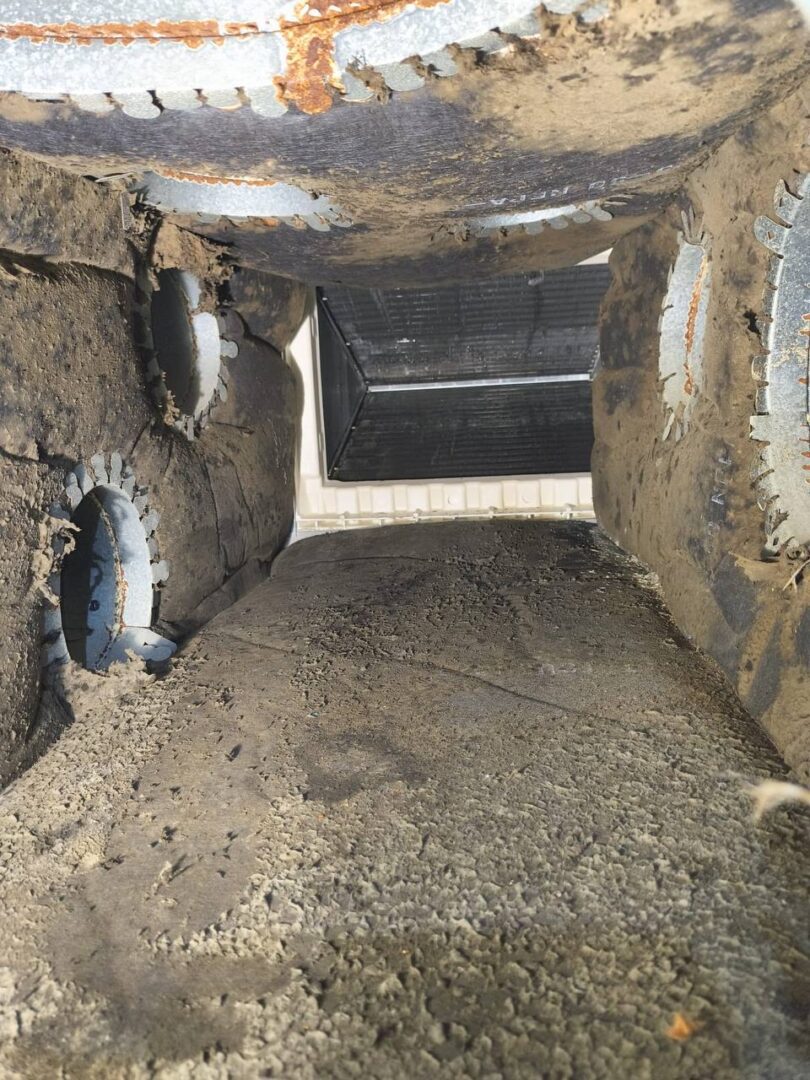
HVAC technicians who say duct cleaning is a scam are describing something real: the majority of companies that offer it deliver a service that does almost nothing. A shop-vac pass through accessible vents, finished in under two hours, does not meaningfully clean an HVAC system. The skepticism is earned. But it misses what NADCA ACR-standard source-removal cleaning — performed by certified specialists with commercial HEPA equipment — actually accomplishes. Those are two different services, marketed under the same name.
Where the “Duct Cleaning Is a Scam” Argument Comes From
The HVAC technician’s skepticism has a specific origin. Most HVAC techs encounter duct cleaning in one of two ways:
- They see the aftermath of budget operators — homeowners who paid a $99 coupon company, got a vent vacuum and a receipt, and have nothing to show for it. When the tech visits for a tune-up six months later, the system looks exactly as contaminated as before. Their conclusion: “duct cleaning doesn’t work.” Their evidence is real, but they’re evaluating the wrong kind of cleaning.
- They’ve been pitched upsells at big HVAC companies — some larger HVAC service companies offer “duct cleaning” as an add-on that their technicians are incentivized to sell. These are often the same shop-vac services. Techs who’ve worked at these companies know the service is mostly theater.
The r/houston thread from November 2024 where someone wrote “all air duct cleaning companies are scams” got hundreds of upvotes. The follow-up comment — from a homeowner who had actual contamination cleaned by a legitimate company and called it worth every penny — got fewer. The internet aggregates the bad experience louder than the good one.
When the HVAC Technicians Are Completely Right
The HVAC tech skepticism is correct in these specific situations:
- The company uses a shop-vac or leaf blower method — portable vacuum equipment cannot create the negative pressure required for source removal. Debris gets disturbed but not extracted. In some cases it makes the contamination problem worse by redistributing settled particles.
- The job takes under two hours — a legitimate full-system cleaning of a standard residential HVAC takes approximately seven hours. A two-hour job has not touched the blower wheel, evaporator coil, or full duct runs. Full stop.
- The technician “discovers” mold or damage after arrival — the bait-and-switch pattern. Low initial quote, then a major upsell after the crew is on-site and the homeowner feels committed. This is the documented scam pattern, confirmed across Houston, Austin, and nationally.
- No one asks about the full system scope before quoting — a legitimate company cannot quote a job without knowing the system size, duct type, and what components need to be addressed. A one-size quote for any home is a red flag.
- The company cannot provide NADCA certification numbers — NADCA ASCS (Air Systems Cleaning Specialist) credentials are tied to individual technicians, not companies. If a company claims NADCA certification but cannot provide specific certificate numbers, the claim is not verifiable.
When the HVAC Technicians Are Wrong
The HVAC tech critique fails when applied to NADCA ACR-standard source-removal cleaning because it’s describing a different service entirely. Here’s what a legitimate cleaning does that the tech’s experience with budget operators hasn’t shown them:
The blower wheel is the core of the problem. Pollen, dust, and debris compact between blower wheel fins over years of operation. This reduces airflow, forces the system to work harder, and re-suspends particles on every cycle. An HVAC technician’s tune-up doesn’t clean the blower wheel. A shop-vac cleaning doesn’t reach it. A NADCA ACR-standard cleaning addresses it directly — and the before-and-after visual difference is significant.
The evaporator coil matters in high-humidity climates. In Houston, Austin, and South Louisiana, the evaporator coil sits in near-permanent condensation from April through October. Mold growth on evaporator coils in Gulf Coast HVAC systems is not a sales tactic — it is a documented occurrence in humid climates. An HVAC tech who services dry-climate systems, or who has never had a coil opened during a duct cleaning job, has not seen what a legitimate cleaning addresses.
New construction homes have a real problem. Drywall dust, sawdust, and joint compound particles accumulate in ductwork during construction. The HVAC installer does not clean the ducts. These particles circulate from day one. A homeowner who has a new construction home professionally cleaned for the first time often sees material that surprises the HVAC technician too — because it’s not something that shows up on a tune-up inspection.
The Actual Standard That Separates Scam from Legitimate
NADCA (National Air Duct Cleaners Association) publishes the ACR standard — Assessment, Cleaning, and Restoration — which defines what a complete HVAC cleaning covers:
- All supply and return ductwork (full duct runs, not just register openings)
- Blower wheel and air handler interior
- Evaporator coil area
- Plenum and distribution chambers
- All registers and grilles
This requires commercial HEPA vacuum equipment maintaining negative pressure throughout the duct system — not portable vacuums. It requires ASCS-credentialed technicians. And it takes approximately seven hours for a standard residential system.
When an HVAC technician says duct cleaning is a scam, they have usually never seen an ACR-standard cleaning performed. They are correct that most of what is sold under the name “duct cleaning” is not worth doing. They are not evaluating the actual standard.
AH-CHOO! Indoor Air Quality has been NADCA certified for 38 years and serves Houston and Austin. Every job follows the ACR standard. One job per day. Before-and-after documentation. ASCS credential numbers provided before booking.
Related: How to verify NADCA certification before hiring a Houston duct cleaning company | Steam Express Houston duct cleaning: what the complaints reveal
Schedule a free inspection — we’ll show you what your system actually looks like inside →
Frequently Asked Questions
Is duct cleaning a scam?
Most of what is sold as duct cleaning — shop-vac passes through accessible vents, completed in under two hours — does very little and is not worth the money. HVAC technicians who call it a scam are describing this version accurately. NADCA ACR-standard source-removal cleaning, performed by ASCS-credentialed technicians with commercial HEPA equipment over a full day, is a different service entirely and addresses real contamination. The label “duct cleaning” covers both.
Why do HVAC technicians say duct cleaning doesn’t work?
Most HVAC technicians have encountered the budget version — quick, cheap, and ineffective. When they return to a home for service and the system looks unchanged after a recent cleaning, their conclusion is that duct cleaning doesn’t work. They are right about that version. They have typically not observed a full NADCA ACR-standard cleaning, which takes seven hours and uses commercial HEPA vacuum equipment to address the blower wheel, coil, and full duct runs.
How do I know if a duct cleaning company is legitimate?
Ask for the ASCS (Air Systems Cleaning Specialist) certificate number of the technician assigned to your job and verify it at nadca.com/find-a-professional. Ask how long the job is scheduled for — a complete residential cleaning takes approximately seven hours. Confirm the scope includes the blower wheel, evaporator coil, plenum, and all registers, not just supply vents. A legitimate NADCA-certified company answers all three questions without hesitation.
When is duct cleaning actually worth it in Houston?
In Houston, duct cleaning is worth doing when: the home has never been professionally cleaned; there has been construction or renovation since the last cleaning; a pet has been added to the household; allergy symptoms are consistently worse indoors than outdoors during cedar or oak season; or a musty smell is present when the system runs. In Gulf Coast climates with high humidity and long pollen seasons, system contamination accumulates faster than in dry or single-season markets.
What does NADCA certification actually mean?
NADCA (National Air Duct Cleaners Association) issues ASCS (Air Systems Cleaning Specialist) credentials to individual technicians who pass a standardized exam covering HVAC system components, contamination types, and cleaning methodology. Companies can be NADCA members without any of their technicians holding active ASCS credentials. NADCA certification — verified at the individual technician level — means the person doing the work has been tested on the ACR standard.
AH-CHOO! Indoor Air Quality has been NADCA certified for 38 years and serves Houston, Austin, and South Louisiana. Contact us for a free inspection.
Related Service Areas
- Daycare Air Quality in Texas
- Property Management Duct Cleaning
- Restaurant HVAC Cleaning Requirements in Texas
- Sick Building Syndrome in Houston Offices
Related AH-CHOO resources: commercial air duct cleaning; schedule a free inspection.