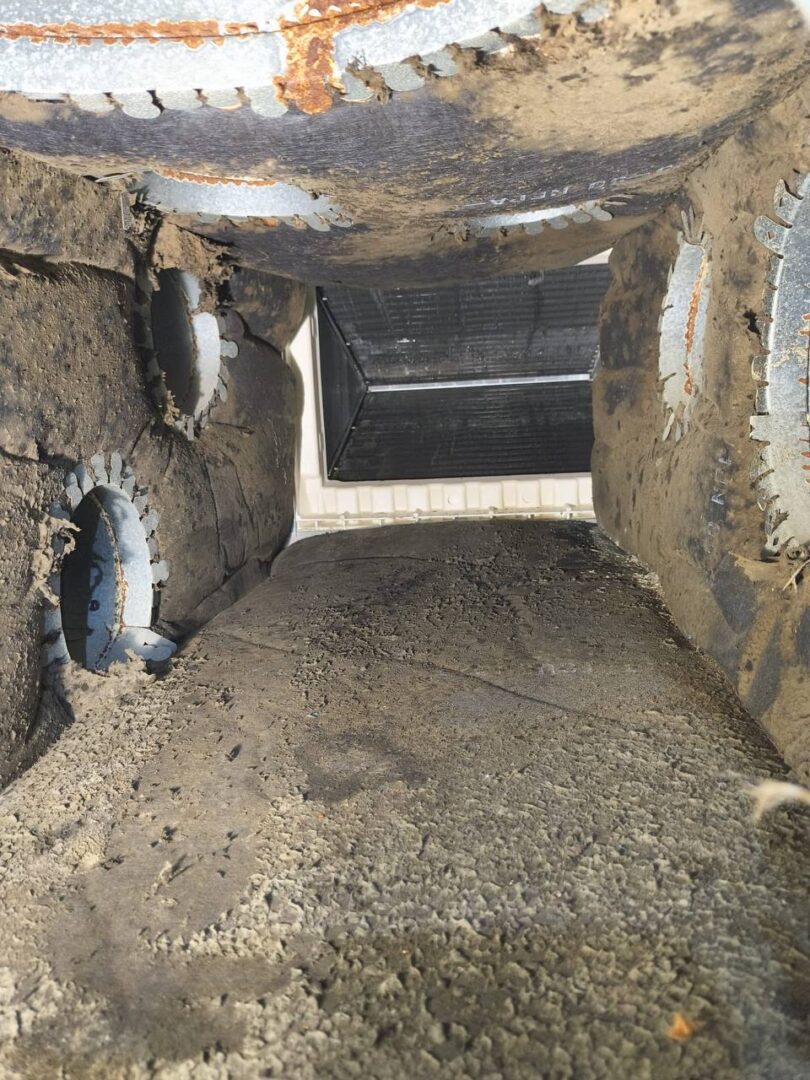
If you share your home with a dog, cat, or both, you already know the routine: fur on the couch, dander floating through sunbeams, and that particular pet smell that seems to settle into every room. What many pet owners do not realize is that a significant portion of what your pets shed — hair, dander, and the microscopic particles that carry odor — is being pulled into your HVAC system every time the air conditioner or furnace runs. The ductwork that distributes conditioned air throughout your home becomes a collection point for everything your four-legged family members leave behind.
At AH-CHOO Indoor Air, we have cleaned thousands of residential HVAC systems across Texas and Louisiana, and the homes with indoor pets consistently show the highest accumulation of hair, dander, and particulate buildup inside the ductwork. This guide explains what happens inside your ducts when you have pets, what professional air duct cleaning actually does for pet-occupied homes, and how to know when it is time to schedule a cleaning — not based on a calendar, but based on what is actually happening inside your system.
How Pet Hair and Dander End Up in Your Air Ducts
Your HVAC system is a circulatory system for your home’s air. The return vents pull air from your living spaces into the ductwork, through the air filter, past the blower and evaporator coil, and back out through the supply vents. Anything airborne in your rooms — including pet hair, skin flakes (dander), and the proteins that bind to those particles — enters this loop with every cycle.
Even homes with high-quality air filters cannot stop everything. Standard 1-inch filters capture larger particles but allow finer dander and hair fragments to pass through. The ductwork itself — particularly the return side, which operates under negative pressure — becomes a passive collection chamber. Over months and years, these materials accumulate in bends, at register boxes, and inside the air handler compartment. Our complete guide to air duct cleaning covers the full list of components that accumulate debris in any home; for pet owners, the accumulation happens faster and in greater volume.
The Three Ways Pets Affect Your HVAC Ductwork
1. Hair Accumulation and Airflow Restriction
Pet hair is lightweight, fibrous, and clings to itself. Inside ductwork, hair collects along the bottom of horizontal duct runs, wraps around register damper blades, and mats against the upstream side of the air filter. Over time, this buildup restricts airflow — your HVAC system has to work harder to push the same volume of conditioned air through partially obstructed ducts. The Department of Energy estimates that even moderate airflow restriction can reduce HVAC efficiency by 5 to 15 percent, which translates directly to longer run times and higher utility bills during Texas summers.
2. Dander and Particulate Recirculation
Pet dander — microscopic flecks of skin shed by cats, dogs, birds, and other animals with fur or feathers — is among the smallest and most persistent indoor air particles. Dander particles range from roughly 2.5 to 10 microns, which is small enough to remain suspended in room air for hours and pass easily through standard HVAC filters. When dander accumulates inside ductwork, every system cycle can stir settled particles back into the air stream and redistribute them through the home. This is why some pet owners report that rooms far from where their pets spend time still carry a noticeable pet presence.
3. Odor Retention in Duct Lining
Persistent pet odor that survives vacuuming, mopping, and air fresheners often traces back to the HVAC system. The proteins in pet dander and saliva can bond to the interior surfaces of ductwork — especially in flexible ductwork with fiberglass lining, which is porous and retains organic particles. When the system cycles on, particularly after a period of inactivity, these accumulated organic materials release what homeowners experience as that “stale pet smell.” Professional source-removal duct cleaning physically extracts these odor-carrying particles rather than masking them.
5 Signs Pet Owners Should Watch For
Most pet owners can tell when it is time for a duct inspection by watching for these five telltale indicators. They are the same signs our technicians look for during pre-inspection before recommending a cleaning scope:
- Visible hair around supply registers. If you see pet hair clinging to the louvers or building up around the edges of a supply register, that register is blowing hair-laden air into the room — which means there is more hair upstream in the duct run.
- Dust buildup faster than normal. Homes with pets that have not had duct cleaning in three or more years often see horizontal surfaces develop a visible dust layer within two to three days of cleaning. That dust includes dander particles recirculating from the ductwork.
- Persistent odor that returns after cleaning. If you deep-clean carpets, wash pet bedding, and use air purifiers but the odor rebounds within days, the likely reservoir is the HVAC ductwork.
- Uneven airflow or weak output from certain vents. Hair-mat accumulation at a register box or duct junction can choke airflow to an individual room. If one bedroom consistently feels warmer in summer or cooler in winter than the rest of the house, partially obstructed ducts may be the cause.
- Filter that clogs faster than the manufacturer rating. A 90-day filter that looks dirty after 30 days in a pet household is a sign that the ductwork upstream of the filter is heavily loaded with debris, sending a constant stream of particles into the air handler.
If several of these signs sound familiar, a professional inspection is the next step. See our air duct inspection guide for what a NADCA-certified technician checks and what to expect during the evaluation.
How Often Should Pet Owners Clean Their Air Ducts?
NADCA — the National Air Duct Cleaners Association — recommends that all homeowners have their HVAC air distribution system inspected every one to two years and cleaned as needed, typically every three to five years. For households with indoor pets, the interval often shifts to the shorter end of that range, particularly when multiple animals are present or when pets are medium to large breeds with heavy shedding.
The honest answer is that cleaning frequency depends more on what is inside your ducts than on an arbitrary calendar. A home with two Labrador Retrievers in humid Houston where the AC runs 10 months out of the year will accumulate duct debris faster than a home with a single short-haired cat in a drier climate. This is why AH-CHOO starts every engagement with a camera inspection — so you can see what is actually inside your ducts before deciding whether cleaning is warranted. For more on how climate affects duct contamination, see our benefits of air duct cleaning and how regional humidity plays a role in the full benefits breakdown.
What Professional Duct Cleaning Does for Pet-Occupied Homes
A NADCA-standard source-removal cleaning is fundamentally different from the quick “blow-and-go” services offered by some companies. For a pet-occupied home, here is what the process actually accomplishes:
- Physical extraction of accumulated pet hair. Mechanical agitation tools — rotary brushes, compressed air whips, or skipper balls — dislodge hair that has matted against duct surfaces. A HEPA-filtered negative air machine simultaneously pulls loosened debris out of the system and captures it before it can re-enter the living space.
- Evaporator coil cleaning. In humid Gulf Coast climates, the evaporator coil is perpetually damp during cooling season. Pet dander that reaches the coil sticks to the wet surface and creates a paste-like coating that reduces heat transfer efficiency. Coil cleaning restores proper thermal exchange.
- Blower wheel and housing cleaning. Hair wrapped around the blower wheel shaft and dust caked onto blower blades unbalance the assembly, increasing motor load and noise. Cleaning restores balanced operation and can extend blower motor service life.
- Register and grille cleaning. The visible vent covers in each room are cleaned and reinstalled, removing the hair and dust that builds up along louver edges.
- Odor source removal. By physically extracting the hair, dander, and organic debris that carry and release odor-causing proteins, professional cleaning addresses the source rather than masking the smell.
The process typically takes four to seven hours for an average single-family home and is performed by a NADCA-certified team using truck-mounted or portable HEPA-filtered negative air equipment. For a full breakdown of what the service includes, visit our air duct cleaning services guide.
What You Can Do Between Professional Cleanings
While only professional source-removal cleaning can fully clear accumulated debris from inside ductwork, pet owners can take several steps between professional services to reduce the rate of buildup:
- Upgrade to a higher-MERV filter (MERV 8–11 range) that captures finer dander particles without overly restricting airflow. Check your HVAC manufacturer’s maximum MERV rating first — exceeding it can strain the blower motor.
- Vacuum registers and return grilles monthly. Use a brush attachment to remove hair accumulating on vent covers before it gets pulled deeper into the duct run.
- Groom pets regularly. Brushing dogs and cats outdoors reduces the volume of loose hair available to enter the HVAC system.
- Change filters on schedule — and check them more frequently than the packaging suggests. A filter that looks dirty at three weeks in a pet home should be changed, regardless of what the box says about 90-day life.
- Run the HVAC fan in “On” mode (rather than “Auto”) for an hour after vacuuming or heavy grooming. Continuous air circulation through the filter captures more airborne particles before they settle into ducts.
Regional Considerations for Texas and Louisiana Pet Owners
Pet owners in the Gulf Coast region face a compounding factor that drier climates do not: humidity. In Houston, Austin, San Antonio, and throughout South Louisiana, outdoor humidity levels routinely exceed 70 percent from May through October. When humid outdoor air is drawn into the HVAC system through the fresh-air intake or building leaks, it passes over the cold evaporator coil, where moisture condenses. Pet dander particles that reach the coil become embedded in this condensation layer and, over time, form a damp organic sludge that can support microbial growth in the drain pan and on coil surfaces.
This is not a scare tactic — it is physics. Warm, humid air plus organic material (dander) plus a dark, enclosed space (the air handler cabinet) creates conditions that favor biological activity. Regular professional cleaning breaks this cycle by removing the organic fuel source. For homeowners in our service areas, we recommend a camera inspection every 12 to 18 months if you have indoor pets, rather than the standard 24-month interval, specifically because the humidity factor accelerates buildup.
AH-CHOO serves pet-owning families across our four major service regions:
Houston air duct cleaning — including Katy, Sugar Land, The Woodlands, Kingwood, and Spring
Austin air duct cleaning — including Round Rock, Cedar Park, Georgetown, Pflugerville, and Buda
San Antonio air duct cleaning — including Alamo Heights, Stone Oak, Helotes, Schertz, and New Braunfels
South Louisiana air duct cleaning — including New Orleans, Baton Rouge, Mandeville, Lafayette, and Lake Charles
Frequently Asked Questions About Air Duct Cleaning for Pet Owners
Q: Does pet hair actually get deep into air ducts, or does the filter catch it?
A: Standard HVAC filters catch larger particles, but pet hair fragments and dander are small and lightweight enough to pass through or around a typical 1-inch fiberglass or pleated filter. Once past the filter, these particles accumulate throughout the return plenum, blower compartment, evaporator coil, and supply ductwork. A camera inspection can show you exactly what has accumulated in your specific system.
Q: How often should a household with multiple pets schedule air duct cleaning?
A: While NADCA recommends cleaning every 3–5 years for typical homes, households with multiple indoor pets — especially medium to large shedding breeds — often benefit from cleaning every 2–4 years, with camera inspections every 12–18 months. The deciding factor should be what the inspection reveals, not an arbitrary timeline.
Q: Can professional duct cleaning eliminate pet odors from the HVAC system?
A: Professional source-removal cleaning physically extracts the hair, dander, and organic debris that carry and release pet odor proteins inside ductwork. When the source material is removed, the associated odors go with it. However, if carpets, upholstery, and pet bedding continue to hold odor, some smell will return as new airborne particles enter the system. Duct cleaning addresses the HVAC portion of the odor equation — it works best as part of a whole-home approach.
Q: Is the cleaning process safe for homes with pets during the service?
A: Yes. During cleaning, we recommend keeping pets in a separate room or outside while the team works, simply because equipment noise and open register access points can be unsettling for animals. The HEPA-filtered negative air equipment captures extracted debris at the source and exhausts filtered air — no chemicals, foggers, or fragrances are used in the standard NADCA source-removal process. Once the service is complete and equipment is removed, there is no residual hazard or waiting period for pets to re-enter the home.
Q: Does duct cleaning reduce the amount of pet hair I see around the house?
A: Duct cleaning removes the accumulated reservoir of hair and dander inside the HVAC system, which stops the recirculation loop that redistributes these particles through your supply vents. Many pet owners notice a reduction in surface dust accumulation after professional cleaning. However, active shedding from your pets continues — duct cleaning is not a substitute for regular vacuuming and grooming. It eliminates the HVAC system’s role as a secondary source of airborne hair and dander.
Q: Should I have my ducts cleaned before or after bringing a new pet home?
A: If your ducts have not been cleaned in three or more years and you are bringing a new pet into the home, having the ducts cleaned beforehand gives you a clean baseline. It also means any future odor or hair accumulation can be attributed to the current environment rather than pre-existing duct debris from previous occupants or pets.
Schedule a Camera Inspection — See What Is Actually Inside Your Ducts
Pet owners in Houston, Austin, San Antonio, and South Louisiana can schedule a free camera inspection of their HVAC air distribution system. Our NADCA-certified technicians insert a high-resolution camera probe into your ductwork so you can see — in real time — exactly what has accumulated. There is no obligation, and the inspection typically takes 30 to 45 minutes.
Contact AH-CHOO Indoor Air to book your free inspection or call our office to speak with a team member who can answer questions specific to your home and HVAC setup.
AH-CHOO Indoor Air is a NADCA-certified air duct cleaning company serving Houston, Austin, San Antonio, and South Louisiana. All cleaning is performed to NADCA source-removal standards using HEPA-filtered negative air equipment. Free inspection available in all service areas.