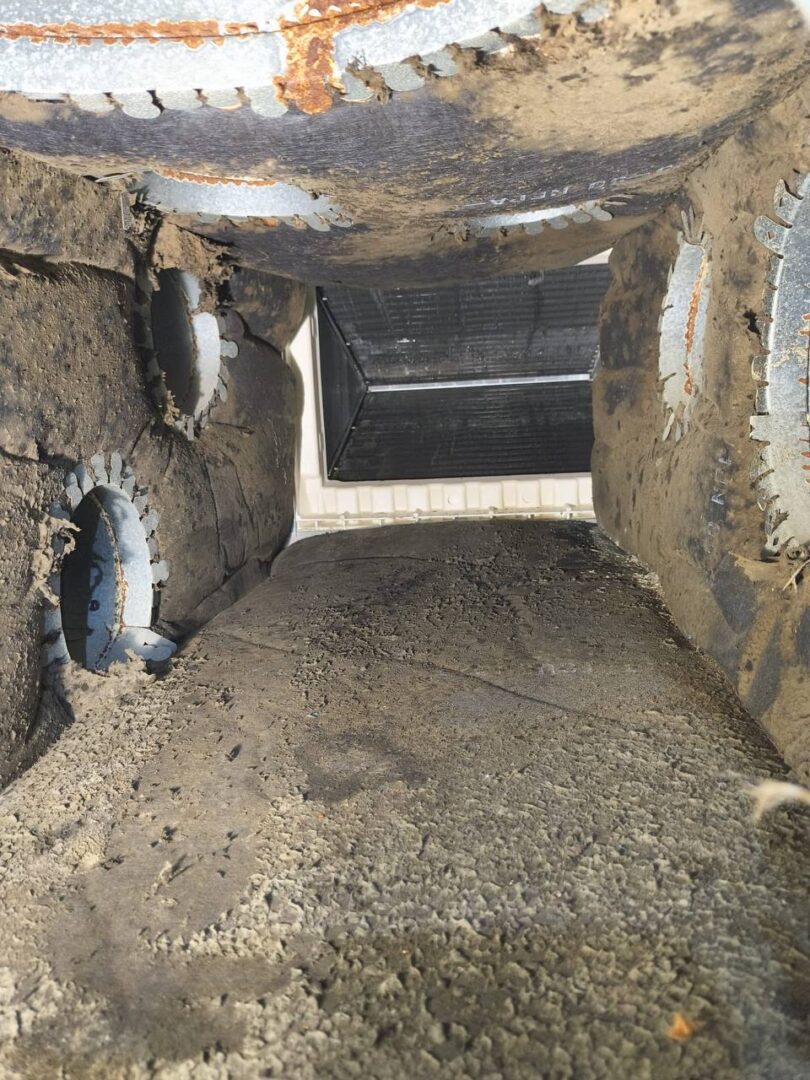
Why New Orleans Is a High-Risk Environment for Duct Mold
New Orleans sits below sea level in a humid subtropical climate, creating environmental conditions that make air duct mold a persistent concern for local homeowners. The city’s average relative humidity hovers around 76 percent year-round, and its location along the Gulf Coast means warm, moisture-laden air is the norm rather than the exception.
Several factors make New Orleans uniquely susceptible to mold growth inside HVAC systems and ductwork:
- **High water table and below-sea-level geography** — The city’s position, much of which sits below sea level, means groundwater and moisture wick into foundation spaces, crawlspaces, and slab foundations where ductwork often runs. This continuous moisture source creates conditions where mold spores can take hold.
- **Older housing stock with legacy duct materials** — Many New Orleans homes, particularly in historic neighborhoods like the French Quarter, Garden District, and Uptown, were built before modern HVAC standards. Original ductwork may be constructed from materials that degrade over time, creating roughness that traps moisture and organic debris.
- **Hurricane and tropical storm history** — Hurricanes Katrina, Ida, and other major Gulf storms left a lasting impact on the region’s building stock. Floodwater intrusion into HVAC systems, even from minor storm events, can introduce mold spores deep into ductwork where they remain dormant until humidity levels rise.
- **Humidity’s compounding effect** — New Orleans experiences more than 60 inches of annual rainfall. Air handling systems pull this humid outdoor air inside, and without proper dehumidification, condensation forms inside duct runs — especially in unconditioned attics and crawlspaces.
Signs of Mold in New Orleans Air Ducts
Knowing what to look for helps New Orleans homeowners identify potential mold issues before they escalate. The combination of Gulf South climate and older building stock means some indicators are more pronounced than in drier regions.
**Musty or earthy odors** — The most common sign of mold in ductwork is a persistent musty smell that intensifies when the HVAC system runs. In New Orleans’ humid environment, this odor is often mistaken for general “old house smell” common in historic properties. If the musty scent returns shortly after cleaning or airing out the home, ductwork is a likely source.
**Visible growth on vent registers or inside air handler compartments** — Black, green, or white speckled growth on metal or plastic vent covers indicates mold spores are traveling through the duct system. In severe cases, opening the air handler compartment reveals visible growth on insulation lining or blower assemblies.
**Allergy-like symptoms that improve when away from home** — While AH-CHOO does not make medical claims, many homeowners report that nasal congestion, sneezing, or eye irritation seems to lessen after spending time away from the residence. If multiple household members experience similar patterns, the home’s HVAC system may be circulating particulate matter.
**Reduced HVAC efficiency and uneven cooling** — Mold buildup inside ductwork restricts airflow and forces the system to work harder. New Orleans homeowners may notice certain rooms are consistently harder to cool, or that utility costs have crept upward without an obvious explanation.
How Flooding and Moisture Lead to Duct Mold
New Orleans’ relationship with water is central to understanding mold risk in air ducts. Unlike cities in drier climates where mold typically requires a direct moisture source like a leaky pipe, New Orleans has ambient moisture conditions that can sustain mold growth on their own.
**Flood events** — When floodwater enters a home, either from storm surge, heavy rainfall, or rising groundwater, it can infiltrate ductwork located in crawlspaces, basements, or slab foundations. Even after visible water is removed, moisture trapped in duct insulation and interior surfaces creates a breeding ground for mold spores. Professional duct inspection following any flood event is recommended to assess interior duct conditions.
**Condensation in unconditioned spaces** — Many New Orleans homes have ductwork running through attics, crawlspaces, or basement areas that are not part of the conditioned envelope. During summer months when attic temperatures can exceed 130 degrees Fahrenheit, cold air moving through ductwork creates significant condensation on interior surfaces. Over time, this moisture accumulation supports mold growth even without a discrete water intrusion event.
**Prolonged humidity between cooling cycles** — The HVAC systems in New Orleans run nearly year-round but cycle on and off based on thermostat demands. During off cycles, humid air settles inside ductwork. Systems without proper dehumidification or with oversized AC units that cool too quickly without adequately running the blower allow moisture to remain in ducts longer than is ideal.
Professional Mold Remediation vs Standard Duct Cleaning
It is important to understand the distinction between routine duct cleaning and mold remediation. While both services address duct cleanliness, they operate at different levels of scope and certification.
**Standard duct cleaning** focuses on removing accumulated dust, debris, and loose particulate from duct surfaces. This is appropriate for homes with normal dust buildup, renovation debris, or pet dander concerns. AH-CHOO’s NADCA-certified technicians perform source removal using HEPA-filtered vacuum equipment and agitation tools that dislodge surface contaminants.
**Mold remediation** targets active fungal growth inside ductwork and HVAC components. Remediation involves:
– Identifying the extent and location of mold colonization
– Containing affected sections to prevent spore spread
– Removing contaminated insulation and duct materials where necessary
– Applying antimicrobial treatments to affected surfaces
– Verifying removal through post-remediation inspection
AH-CHOO Indoor Air Quality follows industry-standard mold remediation protocols. Technicians are trained to distinguish between surface contamination that responds to standard cleaning and deeper colonization that requires remediation-level intervention.
Preventing Mold Regrowth in New Orleans Ducts
Once mold is removed from ductwork, preventing its return requires addressing the environmental conditions that allowed it to develop in the first place. New Orleans homeowners can take several practical steps.
**Humidity management** — Maintaining indoor relative humidity between 40 and 50 percent reduces the condensation potential inside ductwork. Standalone dehumidifiers, whole-home dehumidification systems integrated with the HVAC system, or simply ensuring the AC system is properly sized and maintained all help keep moisture levels in check.
**AC maintenance** — Regular HVAC maintenance ensures the system is draining condensate properly, coils are clean, and the blower is moving air at the correct velocity. A well-maintained system moves moisture through and out of the ductwork rather than allowing it to settle.
**Post-storm inspection** — Following any significant weather event that introduces moisture into the home — heavy rain with flooding, a hurricane or tropical storm, or even a burst pipe — having the ductwork inspected promptly can catch mold development before it becomes widespread.
**Landscaping and drainage** — Ensuring that exterior grading directs water away from the foundation reduces the amount of groundwater moisture wicking into crawlspaces and slab foundations. Proper gutter downspout extensions and French drains where needed help keep the area beneath the home drier.
Frequently Asked Questions About Duct Mold in New Orleans
**How do I know if the mold smell in my New Orleans home is coming from the ducts?**
If the musty odor is strongest near vent registers and intensifies when the HVAC system is running, the ductwork is likely the source. Closing a vent in one room and checking whether the smell diminishes can help isolate the source.
**Does homeowners insurance cover mold remediation in ductwork?**
Coverage varies by policy and carrier. Some New Orleans homeowners policies include mold remediation coverage up to certain limits, particularly when the mold results from a covered water damage event. Homeowners should review their policy documents or contact their insurance agent for specific coverage details.
**How long does professional mold remediation of ductwork take?**
The timeline depends on the extent of contamination. A straightforward single-zone system may be completed in several hours, while larger homes with extensive colonization may require multiple visits. Your technician can provide an estimated timeline after the initial inspection.
**Can mold in air ducts affect HVAC equipment lifespan?**
Mold growth inside ductwork does not directly damage HVAC equipment, but the restricted airflow and increased system workload that result from significant buildup can contribute to premature wear on blower motors, compressors, and other components. Keeping ductwork clean supports overall system longevity.
**What is the difference between mold and mildew in ducts?**
Mildew is a specific type of surface fungus that grows in flat patterns and is typically easier to remove. Mold encompasses a broader category of fungi that can penetrate porous surfaces and may require remediation-level intervention. A professional inspection can identify which type is present.
**Are there preventative duct treatments available?**
Antimicrobial duct treatments are available as a preventative measure after cleaning or remediation. These treatments apply a registered antimicrobial agent to interior duct surfaces to inhibit future mold growth. Discuss with your technician whether this option is appropriate for your system.
—
**Ready to have your New Orleans home’s ducts inspected?** Contact AH-CHOO Indoor Air Quality for a professional assessment. Our NADCA-certified technicians serve all Greater New Orleans areas including the French Quarter, Garden District, Uptown, Mid-City, Lakeview, Gentilly, Algiers, Metairie, and Kenner.
Schedule your free inspection today.
For more information about New Orleans-specific duct conditions, visit our New Orleans mold remediation hub page or our South Louisiana mold information page.
Related AH-CHOO resources: South Louisiana air duct cleaning.