Lake Charles is the heart of Southwest Louisiana — a city shaped by the petrochemical industry, the Calcasieu Ship Channel, and the longleaf pine forests that surround it. But this unique environment also creates distinct indoor air quality (IAQ) challenges that differ from other Gulf Coast markets like Houston, New Orleans, or Baton Rouge. If you live in Lake Charles, understanding how your home’s duct system affects your indoor environment is key to breathing easier inside your home.
Lake Charles has comprehensive content coverage for mold in air ducts, dirty ducts, HVAC cleaning, and NADCA certification — but has lacked a dedicated indoor air quality guide tailored to Southwest Louisiana’s unique conditions. This guide fills that gap, offering Lake Charles homeowners a city-specific look at indoor air quality and the role professional air duct cleaning plays in maintaining a healthy home environment.
Why Lake Charles Homes Face Unique Indoor Air Quality Challenges
Lake Charles’ indoor air quality challenges stem from six interconnected factors that set it apart from other Louisiana markets:
- Petrochemical and industrial environment. Lake Charles sits at the center of one of the nation’s largest petrochemical corridors. Refineries, chemical plants, and LNG terminals — including Sasol, CITGO, Phillips 66, and the Lake Charles LNG terminal — surround the city. These facilities release fine particulate matter and industrial emissions that affect outdoor air quality. Because residential HVAC systems draw outdoor air through return intakes, these industrial particulates can infiltrate home duct systems, where they accumulate and recirculate.
- Hurricane Laura and Delta rebuild cycle. Hurricanes Laura (Category 4, August 2020) and Delta (October 2020) caused catastrophic damage to Lake Charles and the surrounding region. The rebuilding effort that followed — and that continues today — means many homes have replacement ductwork of varying quality. Some replacement ducts were installed quickly under insurance claims with inconsistent quality standards, similar to post-Katrina New Orleans but on a compressed timeline.
- Calcasieu Ship Channel humidity. The Calcasieu Ship Channel connects Lake Charles to the Gulf of Mexico, bringing maritime humidity deep into Southwest Louisiana. Combined with the surrounding marshes and wetlands, this creates some of the highest ambient humidity levels in the state — regularly exceeding 80-90% in summer months. High outdoor humidity translates directly to condensation risk in unconditioned attic and crawlspace ductwork.
- Pine forest pollen burden. Lake Charles is surrounded by extensive longleaf pine and loblolly pine forests. Each spring, these trees release enormous volumes of pollen that blankets the region in yellow dust. This pollen enters homes through open windows, doors, and HVAC return air intakes, accumulating in duct systems and contributing to the allergen load in indoor air.
- Coastal marsh spore load. Southwest Louisiana’s coastal marshes are some of the most biologically productive environments in North America. The constant moisture and decaying organic matter in marshland creates elevated concentrations of mold spores — particularly Aspergillus and Penicillium species — in the ambient air. These spores enter homes through HVAC systems and can colonize duct surfaces when condensation provides sufficient moisture.
- Mixed building stock. Lake Charles has a diverse range of housing — from historic homes in the Charpentier Historic District to mid-century ranch homes in the city core, to new construction in suburban neighborhoods like Moss Bluff and Sulphur. Each building type has different duct system configurations and sealing quality, creating varying IAQ vulnerabilities across neighborhoods.
Common Lake Charles Indoor Air Pollutants
Lake Charles homeowners may encounter a distinctive mix of indoor air pollutants shaped by the city’s industrial, geographic, and climatic setting:
- Industrial fine particulates (PM2.5). Refinery and chemical plant operations release fine particulate matter that can infiltrate home HVAC systems. These microscopic particles are small enough to remain airborne and bypass the body’s natural filtration, making source removal through duct cleaning valuable for reducing overall exposure.
- Mold spores. Gulf Coast humidity combined with marshland proximity creates year-round mold spore presence. Aspergillus, Penicillium, and Cladosporium species are common in Southwest Louisiana’s indoor environments, particularly in homes with uninsulated ductwork or previous moisture intrusion.
- Pine and oak pollen. Spring pollen loads in Lake Charles are among the highest in Louisiana due to the surrounding pine forests and oak-lined streets. Peak pollen season (February through May) can make outdoor air quality miserable, and these pollen particles readily enter homes through HVAC systems.
- Construction debris. The ongoing hurricane recovery and rebuilding cycle means construction activity is a constant presence in Lake Charles neighborhoods. Drywall dust, insulation fibers, and wood particles from nearby construction sites can enter homes through open windows and HVAC intakes.
- Household allergens. Dust mites thrive in Southwest Louisiana’s humid environment. Pet dander, cockroach allergens, and general household dust accumulate in duct systems and recirculate when the HVAC system operates.
How Your Air Ducts Affect Indoor Air Quality in Lake Charles
Your home’s air duct system is the respiratory system of your home. Air passes through the ductwork 5 to 7 times per day on average, meaning the condition of your ducts directly determines the quality of air you breathe indoors.
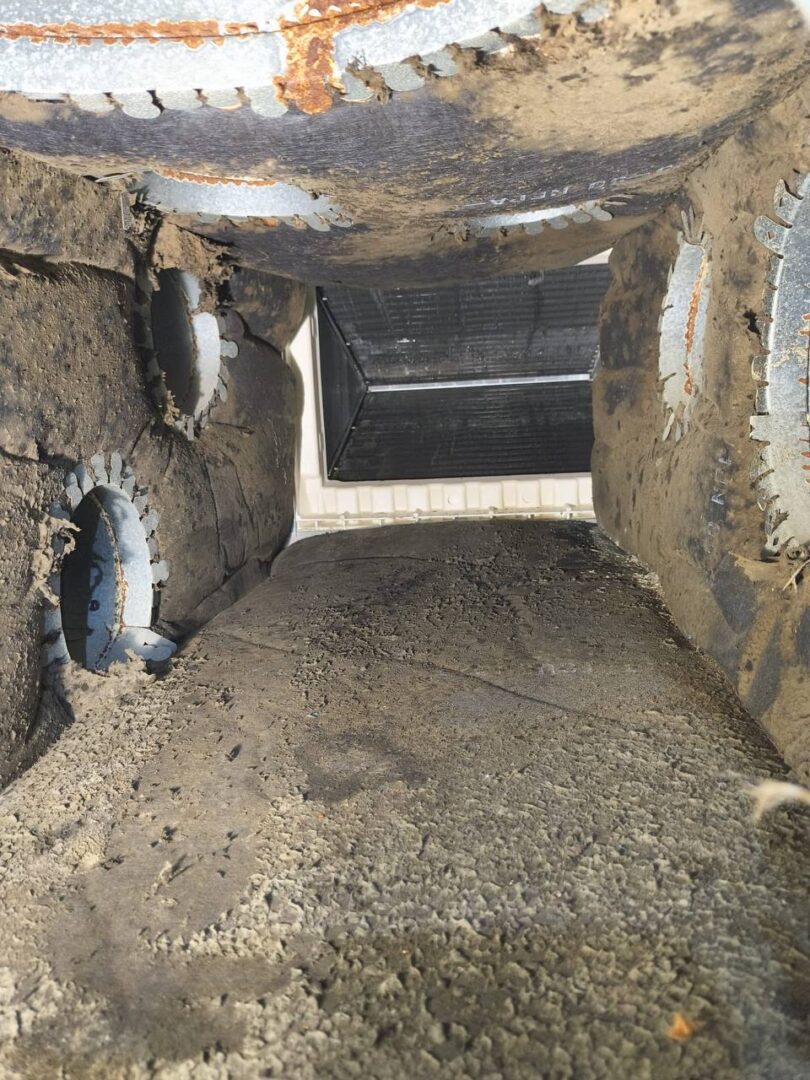
- Debris accumulation and recirculation. When dust, pollen, mold spores, and industrial particulates enter the duct system, they settle on duct surfaces. Every time your HVAC system runs, air moving over these settled contaminants picks up fresh particles and distributes them throughout your home.
- Condensation in uninsulated ducts. Lake Charles’ extreme humidity means that uninsulated ductwork — particularly in unconditioned attics and crawlspaces — frequently experiences condensation. Moisture inside ducts creates the ideal environment for microbial growth, turning your duct system into a mold propagation network.
- Leaky returns pulling in outdoor contaminants. Duct systems with leaky return air pathways can draw air from unconditioned spaces — attics, crawlspaces, garages — that may contain higher concentrations of mold spores, insulation fibers, or chemical fumes.
- HVAC filter limitations. Standard 1-inch HVAC filters capture large visible particles but are ineffective against fine PM2.5 particulates, mold spores, and many allergens. These smaller particles pass through filters and accumulate in the duct system.
Signs Your Lake Charles Home May Have Poor Indoor Air Quality from Duct Issues
If you notice any of these signs in your Lake Charles home, your duct system may be contributing to poor indoor air quality:
- Visible dust returning to surfaces soon after cleaning. If you dust and within days see fresh dust settling on furniture, your duct system may be recirculating accumulated debris.
- Musty or unusual odors when the HVAC runs. A musty smell when your air conditioner or furnace turns on is a strong indicator of microbial growth inside the duct system or on the evaporator coil.
- Family members experiencing allergy-like symptoms indoors. If allergy symptoms improve when you leave the house and worsen when you return, indoor air quality — and specifically your duct system — may be the culprit.
- Uneven temperatures between rooms. Leaky or obstructed ducts don’t just waste energy — they also fail to properly condition air, and the unfiltered air drawn through leaks can introduce contaminants.
- Visible mold on vent covers or air return grilles. Mold growth on visible HVAC components indicates that the conditions for microbial growth exist throughout the system.
Professional Solutions for Better Indoor Air Quality in Southwest Louisiana
Improving indoor air quality in Lake Charles requires addressing the root causes — debris-laden ducts, moisture issues, and the infiltration of outdoor contaminants. Here are the most effective approaches:
- NADCA-certified air duct cleaning. Source removal by a NADCA-certified professional is the only way to thoroughly clean the entire duct system. This includes source removal cleaning of supply and return ducts, registers, grilles, air handler, and evaporator coil. The AH-CHOO process uses HEPA-filtered vacuum equipment to capture contaminants rather than redistributing them.
- Duct sealing and insulation improvement. Sealing leaky duct joints and improving insulation on ducts in unconditioned spaces reduces both energy waste and the infiltration of outdoor contaminants. Properly sealed ducts also help control condensation by maintaining consistent air temperature inside the duct system.
- Antimicrobial duct treatment. In cases where microbial growth is present, an EPA-registered antimicrobial treatment can be applied to duct surfaces after cleaning to inhibit future growth. This is not a substitute for addressing moisture issues but provides additional protection in humid environments like Lake Charles.
- Regular HVAC maintenance. Changing filters regularly (every 30-60 days during peak seasons), keeping the condensate drain line clear, and scheduling annual HVAC inspections help maintain good indoor air quality between duct cleaning appointments.
Frequently Asked Questions About Indoor Air Quality in Lake Charles
Does air duct cleaning improve indoor air quality in Lake Charles?
Yes. NADCA-certified air duct cleaning removes accumulated dust, debris, and microbial contaminants from the duct system, directly improving the quality of air circulating through your home. In Lake Charles’ humid climate and industrial environment, this source removal is especially important because moisture accelerates debris breakdown and industrial particulates accumulate over time.
How often should Lake Charles homeowners clean their air ducts for good IAQ?
NADCA recommends duct inspection every 2-3 years, with cleaning based on inspection findings. Lake Charles homeowners — particularly those near the industrial corridor, in older historic homes, or homes with pets — may benefit from more frequent inspections given the city’s combination of high humidity, industrial particulate exposure, and ongoing construction activity from hurricane recovery.
What causes poor indoor air quality in Lake Charles homes?
The primary contributors are: high ambient humidity (80-90% year-round), industrial fine particulates from surrounding refineries and chemical plants, pine and oak pollen from surrounding forests, mold spore infiltration from coastal marsh environments, aging duct systems with condensation issues, and ongoing construction debris from hurricane rebuilding.
Can air duct cleaning help with Lake Charles humidity-related mold?
Yes — with an important distinction. Duct cleaning removes existing mold colonies and the nutrient source (dust, debris, pollen) that feeds future growth. However, if the underlying moisture problem — leaky ducts, uninsulated ductwork, high indoor humidity — is not addressed, mold will eventually return. Duct cleaning combined with proper duct sealing and HVAC maintenance provides the best long-term result in Southwest Louisiana’s humid climate.
How does the petrochemical environment affect indoor air quality in Lake Charles?
The petrochemical corridor surrounding Lake Charles releases fine particulate matter (PM2.5) and volatile organic compounds into the ambient air. These industrial emissions enter homes through open windows, doors, and HVAC return air intakes. Once inside, fine particulates settle in duct systems and recirculate. Routine duct cleaning reduces the accumulation of these industrial particulates, improving overall indoor air quality.
Does AH-CHOO serve all Lake Charles neighborhoods?
Yes. AH-CHOO provides NADCA-certified air duct cleaning and HVAC sanitation services throughout the Lake Charles metro area, including Calcasieu Parish. We serve Lake Charles proper, Sulphur, Westlake, Moss Bluff, Carlyss, DeQuincy, Vinton, Iowa, and all of Southwest Louisiana. Schedule your free inspection to learn more about your home’s indoor air quality.