Why Cedar Park Homes Face Unique Indoor Air Quality Challenges
Cedar Park’s position along the Balcones Fault Zone and its explosive suburban growth create a distinct indoor air quality profile unlike any other Austin suburb. Four local factors drive Cedar Park’s IAQ challenges:
Hill Country limestone geology. The Edwards Plateau formation underlying Cedar Park produces fine alkaline limestone dust that infiltrates homes through leaky duct returns, window seals, and door gaps. This mineral dust accumulates in ductwork over time, re-circulating each time the HVAC system runs.
Cedar/juniper pollen (cedar fever). December through February, the Ashe juniper (mountain cedar) trees surrounding Cedar Park release some of the highest pollen loads in Texas. This fine, lightweight pollen is easily drawn into HVAC return air intakes and becomes trapped in duct lining, prolonging indoor exposure well beyond outdoor pollen peaks.
Rapid suburban development. Cedar Park has grown from 26,000 residents in 2000 to over 80,000 today. Active construction within 1–2 miles of existing homes means drywall dust, concrete cutting particulates, and insulation fibers enter nearby HVAC systems through outdoor air intakes.
Hot-humid summers. Williamson County averages 30+ days above 100°F annually. Air conditioning runs 8+ months per year, increasing condensation risk in unconditioned attic ductwork — creating conditions for microbial growth inside ducts.
Common Cedar Park Indoor Air Pollutants
- Limestone dust — alkaline mineral particulate from the Edwards Plateau formation
- Cedar/juniper pollen — fine, lightweight pollen that re-circulates through HVAC during cedar fever season
- Construction debris — drywall dust, wood particles, and insulation fibers from nearby development
- Mold spores — species that thrive in humid attic duct environments
- Household allergens — dust mites, pet dander trapped in duct lining
- Oak and grass pollen — spring and fall pollen loads from surrounding Hill Country vegetation
How Your Air Ducts Affect Indoor Air Quality in Cedar Park
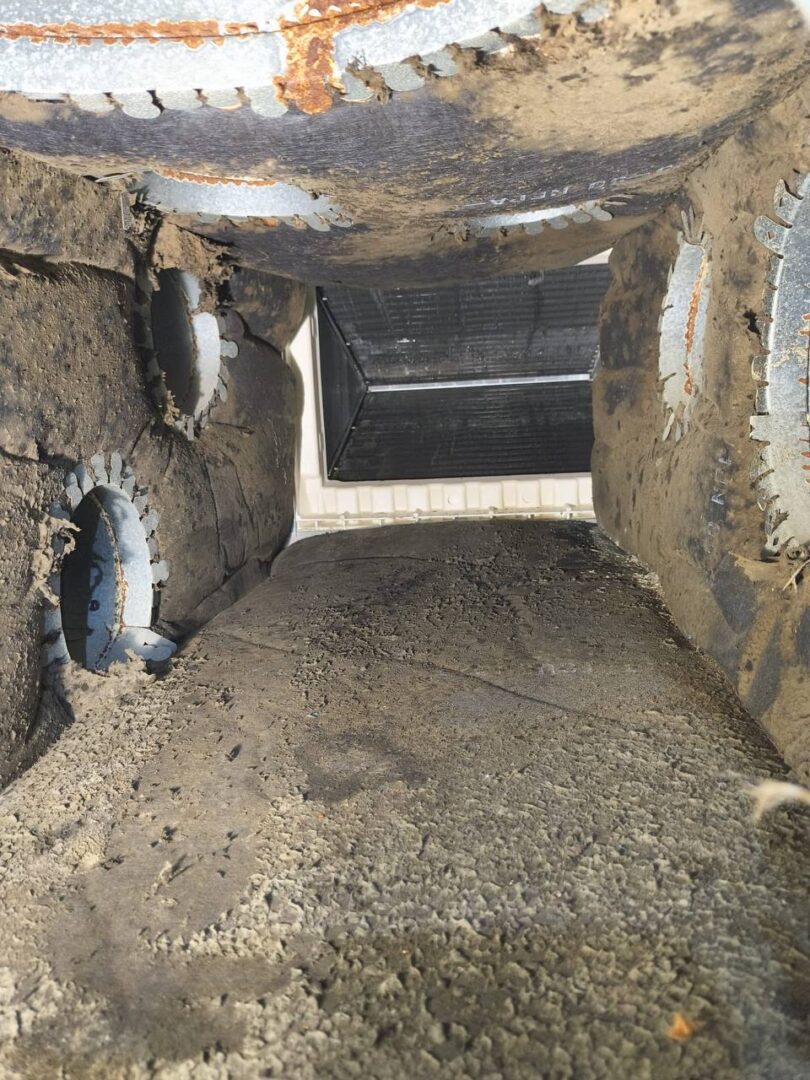
Your HVAC ductwork is the respiratory system of your home. When ducts contain accumulated debris, each cycle picks up and re-circulates contaminants throughout the living space. Hot attic temperatures (140°F+) bake debris onto duct surfaces. Leaky duct joints — common in 1990s–2000s Cedar Park homes with settling foundations — allow unconditioned attic air and its pollutants to be pulled into the system.
NADCA-certified source removal is the only cleaning method that addresses the duct lining itself — using negative air pressure containment and HEPA vacuum equipment to extract debris rather than pushing it further into the system.
Signs Your Cedar Park Home May Have Poor Indoor Air Quality from Duct Issues
- Visible dust on furniture and surfaces shortly after cleaning
- Musty or earthy odors when the HVAC system runs
- Uneven temperatures between rooms
- Visible debris or dust blowing from supply registers
- Unexplained increase in household dust accumulation
- Mold growth on vent covers or around air returns
Professional Solutions for Better Indoor Air Quality in Cedar Park
NADCA-certified air duct cleaning. Source removal with negative air pressure and HEPA vacuum eliminates accumulated debris from the entire duct system.
Duct sealing. Addressing leaky duct joints prevents unconditioned attic air and outdoor pollutants from entering the system.
Regular HVAC maintenance. Clean filters, proper airflow, and routine coil cleaning reduce the particulate load on your duct system.
Timing matters. For Cedar Park homeowners: schedule a duct inspection after cedar fever season (March), clean before summer AC season (April–May), and check filters monthly during peak cooling months (June–September).
Frequently Asked Questions About Indoor Air Quality in Cedar Park
How does air duct cleaning improve indoor air quality in Cedar Park?
Air duct cleaning removes accumulated debris — fine limestone dust, cedar pollen, construction particulates, mold spores, and household allergens — from the duct lining. NADCA-certified source removal using negative air pressure and HEPA vacuum eliminates these contaminants so they are no longer re-circulated through the HVAC system.
How often should Cedar Park homeowners clean their air ducts for good IAQ?
NADCA recommends every 3–5 years for most homes. Established neighborhoods like Buttercup Creek or Cypress Mill may benefit from 3-year cycles due to aging ductwork. Newer construction like Brushy Creek or Lakeline should inspect after year one.
What causes poor indoor air quality in Cedar Park homes?
Cedar Park’s IAQ challenges stem from Hill Country limestone geology, cedar/juniper pollen (cedar fever) from December through February, rapid suburban development introducing construction debris, and hot-humid summers increasing duct condensation risk.
Can air duct cleaning help with Cedar Park’s cedar fever allergy season?
Yes. Juniper/cedar pollen is fine and lightweight, easily drawn into return air intakes. Professional cleaning removes pollen deposits from duct surfaces, reducing indoor re-circulation. Best results when scheduled after cedar fever season ends in March.
Does AH-CHOO serve all Cedar Park neighborhoods?
Yes — AH-CHOO provides NADCA-certified air duct cleaning throughout Cedar Park including Brushy Creek, Lakeline, Buttercup Creek, Cypress Mill, The Preserve at Turkey Creek, Twin Creeks, and all Cedar Park subdivisions.
Is air duct cleaning more important in newer Cedar Park construction homes?
Yes — new construction homes in Cedar Park’s growing subdivisions (especially built 2020–present) often contain drywall dust, wood particles, insulation fibers, and fine limestone dust in ductwork. NADCA recommends an inspection within the first year.
Disclaimer: Regular air duct cleaning supports a cleaner home environment by removing accumulated debris and particulates from the HVAC system. Individual results may vary. This information is educational and not a medical claim about preventing or treating health conditions.
Related AH-CHOO resources: Austin air duct cleaning; schedule a free inspection.