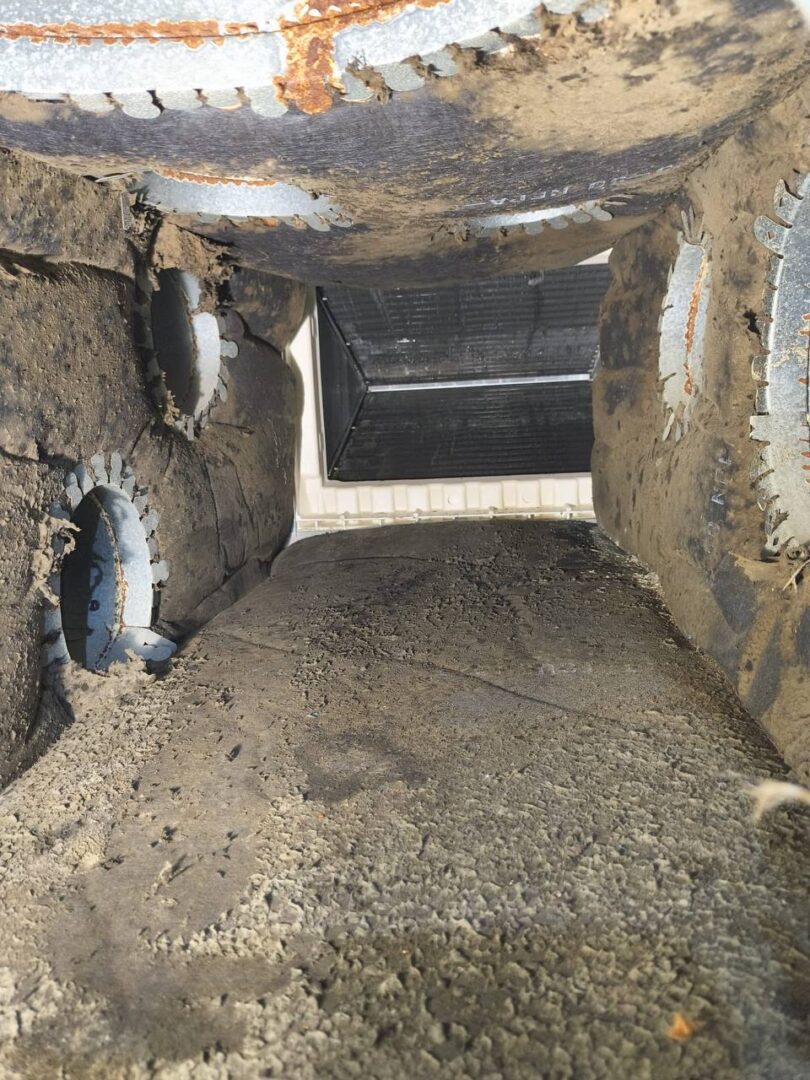
Homeowners in New Braunfels sometimes use “HVAC cleaning” and “air duct cleaning” as if they mean the same service. They do not. Both phrases relate to a home’s heating and cooling system, but they describe different areas of the system and different scopes of work. Knowing the distinction makes it easier to ask clear questions, review an inspection report, and decide what type of service fits the visible condition of the home.
New Braunfels homes face a mix of conditions that can make this distinction especially useful. Long humid summers, attic duct runs, limestone dust, river-corridor moisture, and rapid new construction can all affect the parts of a forced-air system differently. A careful evaluation starts by identifying the component involved instead of treating the whole system as one undefined problem.
What “HVAC cleaning” usually means
HVAC is shorthand for heating, ventilation, and air conditioning. In everyday conversation, HVAC cleaning can be a broad phrase. Depending on the provider, it may refer to accessible equipment components around the heating and cooling unit, such as the air handler cabinet, blower compartment, return area, accessible coils, condensate components, or filter rack.
That broad label is why homeowners should ask for specificity. The HVAC equipment is not the same thing as the network of supply and return ducts. A provider should be able to explain which components are accessible, what condition was observed, and which steps are included in the recommended scope. AH-CHOO! focuses on duct-system cleaning and inspection; it does not present equipment repair as duct cleaning.
What air duct cleaning means
Air duct cleaning focuses on the pathways that move conditioned air through a home: supply ducts, return ducts, register boots, grilles, and other accessible duct-system components. The goal is to remove accumulated debris from the duct system using appropriate containment and source-removal methods. A meaningful service discussion should include both supply and return sides, not just a quick pass at visible registers.
For a closer look at the local service scope, see AH-CHOO!’s New Braunfels air duct cleaning service. The useful question is not whether one phrase sounds broader than the other. It is whether the proposed work matches the documented condition of the component being discussed.
The practical difference: equipment versus airflow pathways
Think of the system in two connected sections. The HVAC equipment creates, heats, or cools airflow. The ductwork distributes that airflow through the house and returns it to the equipment. Debris can be present in either section, but the inspection approach and cleaning process are not automatically identical.
- Equipment-side discussion: concerns the accessible mechanical components near the indoor unit and whether a licensed HVAC technician is needed for equipment diagnosis or repair.
- Duct-side discussion: concerns the accessible pathways, returns, supply runs, boots, and registers that distribute air through the home.
- Whole-system clarity: means documenting which areas were inspected and avoiding assumptions that a single service automatically addresses every component.
A complete explanation should distinguish cleaning from repairs, sealing, replacement, or mechanical diagnosis. If a technician identifies a damaged duct, drainage issue, electrical concern, refrigerant concern, or equipment malfunction, that may require an appropriately qualified HVAC professional rather than a duct-cleaning scope.
Why New Braunfels homes benefit from a component-by-component look
Local building patterns create a variety of duct environments. Many homes have flex duct in hot attic spaces. Others have additions, remodeled rooms, or different generations of duct materials. New construction can leave drywall dust, insulation fragments, and other construction residue in accessible system areas. Older homes can have leaky return pathways that draw dust from attics or wall cavities.
Humidity also changes the questions worth asking. Moisture around ductwork or an air handler does not automatically identify a cause, and it should not be reduced to a one-size-fits-all conclusion. A visual inspection can document observable conditions such as dust buildup, insulation disturbance, disconnected runs, staining, or debris. If moisture sources or equipment operation need diagnosis, a qualified HVAC professional can address that separate question.
Homes near the Guadalupe and Comal river corridors may experience seasonal outdoor moisture along with normal Central Texas dust and pollen. Those local conditions are reasons to inspect thoughtfully, not reasons to assume every home needs the same work on the same schedule.
When a visual air duct inspection is useful
A visual duct inspection is an information-gathering step. It can be useful when a homeowner has recently completed construction or remodeling, moved into a previously occupied home, noticed visible dust around registers, found evidence of pests near accessible duct areas, or wants to understand the condition of an attic duct run before scheduling cleaning.
It is also useful when the language around a proposed service is vague. Ask the provider to identify the accessible components that were reviewed, show photos or video when available, and separate observed debris from assumptions. An inspection should help determine whether duct cleaning is relevant; it should not be used to make unsupported health, mechanical, or performance promises.
Questions to ask before scheduling any cleaning
- Which supply, return, and equipment-adjacent components will be inspected?
- What visible condition was found, and can it be documented with photos or video?
- Does the proposed scope include both supply and return ductwork?
- How will debris be contained and removed from accessible duct sections?
- Which findings, if any, should be referred to a licensed HVAC professional?
- Is the provider following recognized duct-cleaning standards and able to explain the process?
Standards are a useful way to compare process rather than marketing language. Read more about NADCA-certified duct cleaning in New Braunfels and the role of training and documented procedures in a duct-cleaning project.
Cleaning is not a substitute for HVAC repair
This distinction matters because duct cleaning does not repair a damaged blower motor, replace a failed part, correct refrigerant issues, or resolve electrical faults. Likewise, HVAC repair does not automatically remove construction debris from supply and return runs. Each service has a defined purpose.
If an inspection suggests a mechanical concern, a homeowner can use that observation to have the relevant equipment evaluated by an appropriate HVAC professional. If it identifies accessible duct debris, a duct-cleaning discussion can focus on source removal and the actual duct-system areas involved. Keeping those scopes separate supports more accurate decisions.
How to compare service descriptions
Look past a headline such as “HVAC cleaning.” A clear service description should name the areas to be addressed, explain what the crew can access, and state what is outside the scope. It should also avoid sweeping claims about every home, because duct configuration, occupancy history, renovation activity, and maintenance practices differ.
For example, an attic with accessible flex-duct runs calls for a different visual review than a compact system in a newer townhome. A home that recently underwent a kitchen remodel may warrant questions about construction dust. A long-term resident may simply want a documented baseline. The strongest recommendation is the one connected to observed conditions.
Frequently asked questions
Is HVAC cleaning the same as air duct cleaning?
No. HVAC cleaning is often used broadly for accessible heating and cooling equipment areas, while air duct cleaning focuses on the supply and return pathways that distribute air. Ask the provider to name the exact components included.
Should New Braunfels homeowners start with an inspection?
A visual inspection can be a practical first step when there is recent construction, visible dust, an attic-access question, or uncertainty about the scope of work. It documents accessible conditions before a cleaning decision is made.
Can duct cleaning fix an HVAC equipment problem?
No. Duct cleaning and HVAC diagnosis are different services. Mechanical, electrical, drainage, or refrigerant concerns should be evaluated by an appropriately qualified HVAC professional.
What should be included in a duct-cleaning explanation?
The explanation should identify accessible supply and return areas, describe the source-removal process, explain how debris is contained, and distinguish cleaning from repairs or replacements.
How can I request help for my New Braunfels home?
For a duct-system inspection or cleaning conversation, use the site to contact AH-CHOO!. Include your neighborhood, whether the home has recently been remodeled or built, and any accessible duct-area observations so the discussion can begin with relevant details.
Choose clarity over catch-all labels
“HVAC cleaning” and “air duct cleaning” overlap in conversation, but they are not interchangeable. In New Braunfels, a component-by-component inspection helps homeowners understand what is visible, what service applies, and when a different trade should be involved. Clear scope, documented observations, and realistic expectations are the best foundation for a useful duct-cleaning decision.
Related AH-CHOO resources: San Antonio air duct cleaning.