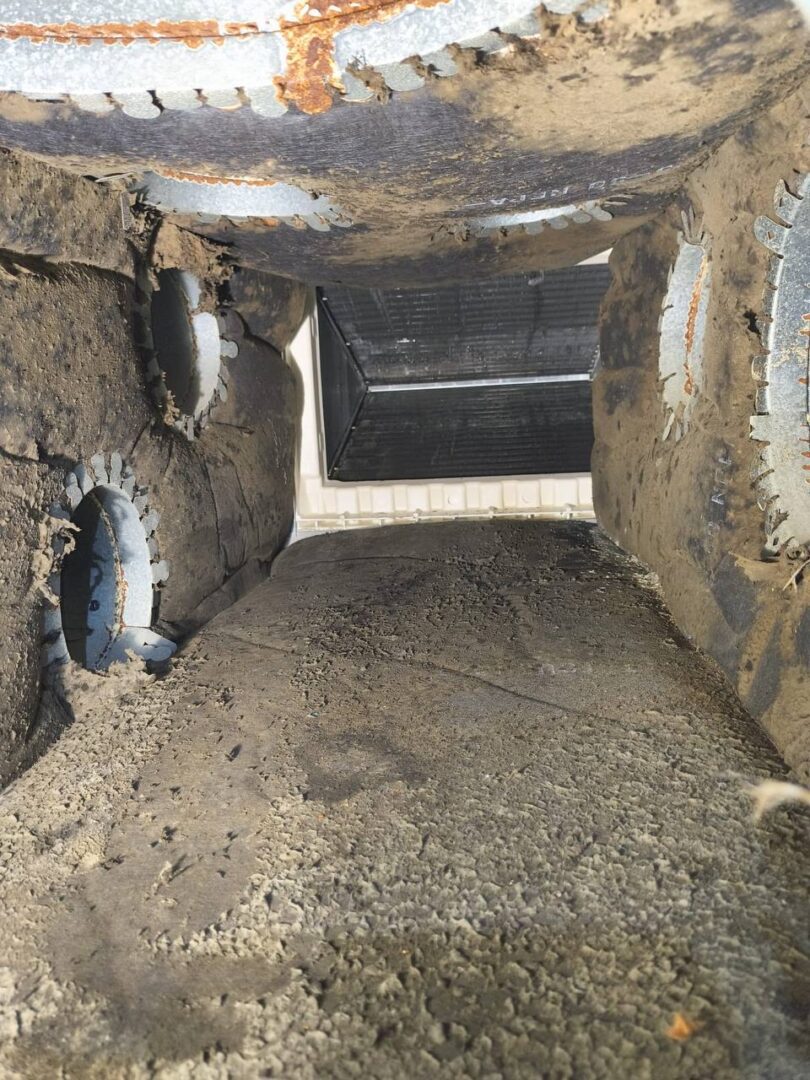
Houston’s Gulf Coast climate creates one of the most demanding environments for residential and commercial HVAC systems in the United States. While most homeowners understand the importance of changing air filters and scheduling annual AC maintenance, far fewer recognize when their entire HVAC system — not just the ductwork — needs professional cleaning.
This guide covers what HVAC system cleaning actually means for Houston homes, how to recognize when your system needs it, and the specific contaminants that Gulf Coast humidity introduces into every component of your heating and cooling system. No quoted figures, no scare tactics — just the information Houston homeowners need to make an informed decision about their HVAC system’s health.
What Is HVAC System Cleaning?
HVAC system cleaning goes well beyond air duct cleaning. While duct cleaning focuses specifically on the network of supply and return ducts that distribute conditioned air throughout your home, HVAC system cleaning addresses every component of your heating, ventilation, and air conditioning system:
- Evaporator coil. The indoor coil that absorbs heat from your home’s air. In Houston’s humid climate, evaporator coils accumulate dust, pollen, and microbial growth that reduce heat transfer efficiency and increase energy consumption.
- Blower wheel and fan assembly. The component that moves air across the evaporator coil and through your ductwork. A dirty blower wheel reduces airflow by 15-30%, forcing your system to run longer to achieve the same temperature.
- Condensate drain pan and drain line. The pan that collects moisture removed from your indoor air. Houston’s high humidity means your AC produces 5-15 gallons of condensation daily — and a clogged drain line can cause water damage and microbial growth.
- Air handler and plenum. The cabinet housing your blower, coil, and controls. Debris accumulation here recontaminates the air immediately after filtration.
- Ductwork. The distribution network — addressed when visible contamination, pest intrusion, or construction debris is present.
The National Air Duct Cleaners Association (NADCA) standard ACR 2024 provides the industry benchmark for HVAC system cleaning. NADCA-certified companies follow a standardized assessment and cleaning protocol that covers all visible components of the HVAC system — not just the ducts.
Why Houston Homes Need HVAC System Cleaning
Houston’s climate creates conditions that accelerate contaminant buildup in HVAC systems faster than in most other US markets. Several factors make regular system cleaning more relevant for Houston homeowners:
- Year-round AC operation. Houston’s cooling season runs from March through November — sometimes year-round. Continuous operation means your evaporator coil and blower wheel are constantly exposed to moisture, dust, and airborne contaminants without the drying period that seasonal climate changes provide.
- High relative humidity. Houston averages 75-90% relative humidity throughout the year. Your AC system removes this moisture from indoor air, but the constant condensate production creates an environment where microbial growth can occur on coil surfaces, drain pans, and in ductwork — especially when systems are oversized or operate below their optimal runtime.
- Outdoor pollen and particulates. Houston’s prolonged growing season (February-November) means tree pollen, grass pollen, and weed pollen overlap for months. Combined with vehicle emissions from the city’s extensive highway network, construction dust from continuous development, and seasonal wildfire smoke, Houston’s outdoor air carries a heavy particulate load that your HVAC system filters — and some of it accumulates on system components.
- Flood and storm debris. Houston’s periodic flooding events (most notably Hurricane Harvey in 2017, the Tax Day floods in 2016, and the Imelda floods in 2019) introduce sediment and microbial contaminants into HVAC systems through floodwater intrusion into ductwork and air handlers.
- Older housing stock with degraded ductwork. Substantial portions of Houston’s housing inventory were built before 2000, with duct systems that may have developed leaks, accumulated debris, or sustained pest intrusion over decades of use.
Signs Your HVAC System Needs Cleaning in Houston
Unlike a simple air filter change (which you can schedule on a calendar), HVAC system cleaning is condition-based. Here are the specific signs that indicate your Houston home’s HVAC system may benefit from professional cleaning:
- Reduced airflow from supply vents. If you notice that some rooms receive noticeably less air than others — or airflow has gradually diminished across the entire home — blower wheel contamination or evaporator coil fouling may be restricting airflow. This is one of the most common indicators in Houston homes with year-round AC operation.
- Musty or unpleasant odors from vents. A persistent musty smell when the system runs, especially when the AC first turns on, suggests microbial growth on the evaporator coil or in the condensate drain pan. In Houston’s humidity, this is typically the result of sustained moisture on coil surfaces.
- Visible mold or debris around vents. If you can see dust, debris, or discoloration around supply registers, or if the air blowing from vents carries visible particles, the entire system may be circulating accumulated contaminants.
- Unexplained increase in energy bills. A dirty evaporator coil or blower wheel forces your system to work harder to achieve the same temperature. The US Department of Energy estimates that a dirty coil can increase energy consumption by up to 30%.
- Excessive dust accumulation after cleaning. If dust settles on surfaces within hours of dusting, your HVAC system may be recirculating fine particles accumulated in ductwork, on the blower wheel, or in the air handler.
- Recent flood, renovation, or pest infestation. Any of these events can introduce contaminants into your HVAC system that standard operation won’t remove.
HVAC Cleaning vs Duct Cleaning — What’s the Difference?
Many Houston homeowners use “HVAC cleaning” and “duct cleaning” interchangeably, but NADCA standards distinguish between them:
- Standalone duct cleaning addresses the supply and return duct network only. It is appropriate when ducts have visible debris accumulation, pest intrusion, or construction debris but the HVAC equipment itself is clean.
- Full HVAC system cleaning includes duct cleaning plus cleaning of the evaporator coil, blower wheel, air handler interior, condensate drain pan and drain line, and the plenum. NADCA recommends full system cleaning rather than duct-only cleaning for comprehensive results.
For Houston homes that have never had system-level cleaning, or where the system has operated for several years in our humid climate, full HVAC system cleaning typically provides better results than duct cleaning alone. The evaporator coil and blower wheel — components that duct cleaning does not address — are often the primary sources of reduced airflow and musty odors in Gulf Coast homes.
If you are trying to decide between the two, see our detailed comparison: HVAC Cleaning vs Duct Cleaning in Cypress TX and our guide to HVAC Cleaning vs Duct Cleaning in Round Rock TX for context on how this applies across Texas markets.
The Houston HVAC Cleaning Process
A comprehensive HVAC system cleaning by a NADCA-certified company typically follows this sequence:
- 1. System inspection and assessment. A technician inspects the entire HVAC system — ductwork, air handler, evaporator coil, blower assembly, condensate system — using cameras and visual inspection to identify contamination levels and any mechanical issues.
- 2. Source removal. Contaminants are removed from the source using mechanical agitation (brushes, compressed air, or air whips) applied to duct surfaces, combined with continuous high-efficiency particulate vacuum collection to prevent contaminant release into living spaces.
- 3. Evaporator coil cleaning. The coil is cleaned using EPA-registered coil cleaners specifically formulated for evaporator coils — not household cleaning products — followed by a water rinse. This step is critical in Houston where coil fouling from year-round operation is the most common HVAC contaminant issue.
- 4. Blower wheel and fan assembly cleaning. The blower wheel is removed (in most systems) and cleaned to restore original airflow capacity. A dirty blower wheel is frequently the cause of reduced airflow that homeowners notice but attribute to other issues.
- 5. Condensate drain and pan treatment. The drain pan is cleaned and the drain line is flushed to restore proper condensate flow. A clean evaporator coil and drain system are essential for preventing microbial growth in Houston’s climate.
- 6. Final inspection and airflow verification. After cleaning, the technician verifies system operation, measures temperature drop across the coil, confirms condensate drainage, and documents the results.
FAQ About HVAC System Cleaning in Houston
How often should HVAC system cleaning be done in Houston?
NADCA recommends inspection-based cleaning rather than a fixed schedule. For Houston homes with year-round AC operation, an inspection every 2-3 years is reasonable, with cleaning performed when visible contamination is present. Homes with flood history, occupants with respiratory sensitivity, or recent renovation may benefit from more frequent inspection.
Does HVAC cleaning help with Houston humidity?
Yes — a clean evaporator coil and properly draining condensate system allow your AC to remove humidity more effectively. When the coil is coated with dust and debris, moisture removal efficiency decreases, and your system may cool the air without adequately reducing humidity levels.
Can HVAC cleaning improve indoor air quality?
Cleaning contaminated HVAC system components removes accumulated dust, pollen, and microbial growth from the system, preventing them from being recirculated through your living space. This is distinct from laboratory air analysis — it addresses visible contamination in the system itself.
What is the difference between HVAC cleaning and air duct cleaning?
Air duct cleaning addresses only the duct network. HVAC system cleaning includes the evaporator coil, blower wheel, air handler, condensate system, and ductwork. For Houston homes with year-round system operation, full HVAC cleaning typically provides more comprehensive results than duct cleaning alone.
Why Choose AH-CHOO! for HVAC Cleaning in Houston
AH-CHOO! Indoor Air Quality is NADCA-certified and serves the Houston market with equipment and protocols that meet NADCA ACR 2024 standards. Our technicians are trained to assess Houston-specific HVAC conditions — from evaporator coil fouling caused by extended cooling seasons to system contamination from flood events.
We operate in Houston and throughout the greater Houston metropolitan area. If you are unsure whether your Houston home’s HVAC system needs cleaning, we can perform an assessment that identifies contaminant buildup and provides clear recommendations — no pressure, just the information you need to make an informed decision.
Service area: Houston, Katy, Sugar Land, The Woodlands, Spring, Cypress, Pearland, League City, Kingwood, Humble, Missouri City, Richmond, Rosenberg, and all Houston-area communities served by our Houston HVAC cleaning operations.
Related reading: Houston Spring HVAC Checklist — preparation tips for Houston’s demanding cooling season, Blower Wheel Cleaning Guide — what to expect when this critical component is serviced, and Houston Humidity Duct Mold Prevention — understanding the relationship between Gulf Coast humidity and HVAC system health.
Related AH-CHOO resources: Houston air duct cleaning; schedule a free inspection.