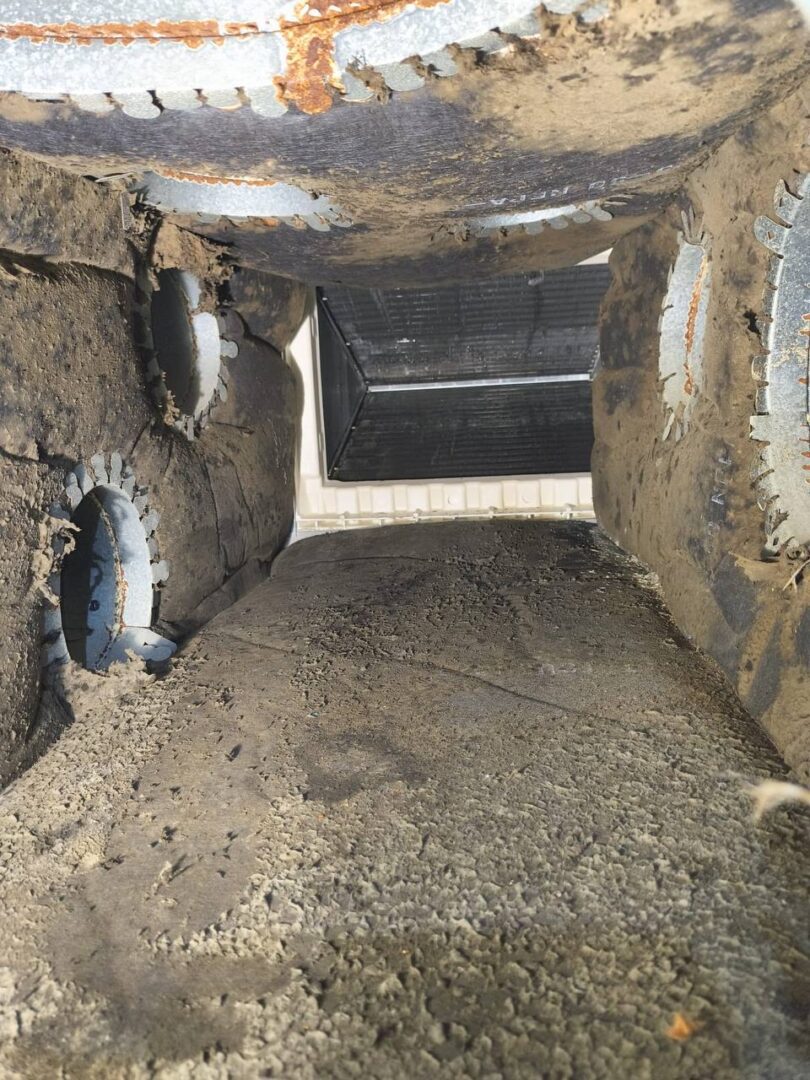
If you live in Spring, Texas, you may have noticed dust accumulating on surfaces faster than you’d expect, or a musty smell when your HVAC system kicks on. These are common signs of dirty air ducts — a problem that’s especially prevalent in Spring’s unique environment. Here’s what Spring homeowners should know about dirty air ducts, how to spot them, and what to do about it.
What Does “Dirty Air Ducts” Mean for Spring Homeowners?
Your home’s ductwork is the respiratory system of your house — it distributes heated and cooled air from your HVAC system to every room. Over time, these ducts accumulate dust, debris, pollen, pet dander, and other particles that are pulled into the system from your living spaces.
When we say “dirty air ducts,” we’re talking about ductwork that has accumulated enough debris to affect your home’s air quality, HVAC efficiency, or both. The level of contamination can range from light dust buildup to heavy accumulations that include mold spores, pest droppings, and construction debris.
For Spring homeowners, the question isn’t whether ducts get dirty — they always do — but whether the level of contamination has reached a point where professional cleaning is warranted.
Signs Your Spring Home’s Air Ducts Are Dirty
These warning signs suggest your ductwork may have contamination levels that warrant professional attention:
- Visible dust on vent registers: If you can see dust accumulation on the grilles or around the edges of your vents, there’s dust inside your ductwork being pushed through the system.
- Excessive dust on furniture: If you’re dusting surfaces more than once a week and the dust returns quickly after cleaning, your ducts may be circulating fine particulate matter throughout your home.
- Musty or stale odors when HVAC runs: A musty smell from your vents means organic matter in your ducts is decomposing or microbial growth is present.
- Uneven cooling or heating: Debris-blocked ducts restrict airflow to certain rooms, creating hot or cold spots throughout your home.
- Allergy symptoms that worsen at home: If family members experience sneezing, congestion, or eye irritation that improves when they leave the house, dirty ducts may be circulating allergens.
- HVAC system running constantly: Restricted airflow from dirty ducts forces your system to run longer cycles, increasing energy consumption.
Why Spring TX Homes Are Especially Prone to Duct Contamination
Spring’s specific geography and housing stock create conditions that make duct contamination more common than in some other Houston suburbs:
- Aging housing stock: Much of Spring’s housing was built in the 1970s through 1990s — the era of rapid suburban expansion along I-45. Older homes have aging ductwork that may have accumulated decades of debris, leaks, and deteriorated insulation.
- Spring Creek greenbelt proximity: Spring Creek and the surrounding greenbelt create a natural corridor for organic debris. Homes near the greenbelt experience higher levels of pollen, leaf matter, and humidity that affect ductwork.
- I-45 corridor pollution: Spring sits along one of the busiest highway corridors in Texas. Fine particulate matter from vehicle emissions infiltrates homes and accumulates in duct systems over time.
- Tree canopy debris: Spring’s mature tree canopy — oak, pine, and pecan trees common in established neighborhoods — produces significant leaf litter, pollen, and organic debris that gets tracked indoors and into HVAC systems.
- Mixed humidity profile: Spring’s location between the Piney Woods and the Gulf Coastal Plain creates humidity levels that fluctuate widely, leading to condensation cycles in ductwork that trap and hold debris.
What Happens When Dirty Ducts Go Unaddressed
Ignoring dirty air ducts doesn’t just mean living with dust — it can have cascading effects on your home and HVAC system:
- Reduced HVAC efficiency: A layer of dust on the evaporator coil and blower wheel reduces heat transfer and airflow. Your system has to work harder, using more energy to achieve the same cooling.
- Higher energy bills: Restricted airflow from dirty ducts can increase energy consumption by 15-25% as your system runs longer to reach the thermostat setting.
- Accelerated system wear: Components like the blower motor, compressor, and fan bearings work harder and wear out faster when airflow is restricted.
- Indoor air quality decline: Contaminants that accumulate in ducts don’t stay there — they’re continuously circulated through your living spaces as long as the HVAC system runs.
- Potential for mold growth: Dust and debris provide organic matter that mold needs to grow. If moisture is also present — from humidity, condensation, or duct leaks — dirty ducts can become moldy ducts.
How Professional Duct Cleaning Works
Professional duct cleaning is a systematic process that goes far beyond what DIY methods can achieve. For Spring homes, a thorough cleaning typically includes:
- Inspection and assessment: A NADCA-certified technician inspects your ductwork to determine the level and type of contamination.
- Negative pressure source removal: A powerful HEPA vacuum creates negative pressure in the system while specialized tools agitate debris, pulling contaminants out rather than pushing them deeper.
- Mechanical agitation: Compressed air jets or rotating brushes dislodge debris adhering to duct surfaces.
- Component cleaning: The evaporator coil, blower wheel, air handler interior, and drain pan are cleaned separately.
- Final inspection: After cleaning, the technician verifies that debris has been removed and the system is operating properly.
Next Steps for Spring Homeowners
If you’re noticing any of the signs mentioned above, the right first step is a professional duct inspection. This lets you find out exactly what’s in your ducts before deciding whether cleaning is needed. Our NADCA-certified technicians serve Spring homeowners and can assess your ductwork thoroughly. Schedule your free inspection and find out what your ducts have been hiding.
Related AH-CHOO resources: Houston air duct cleaning.