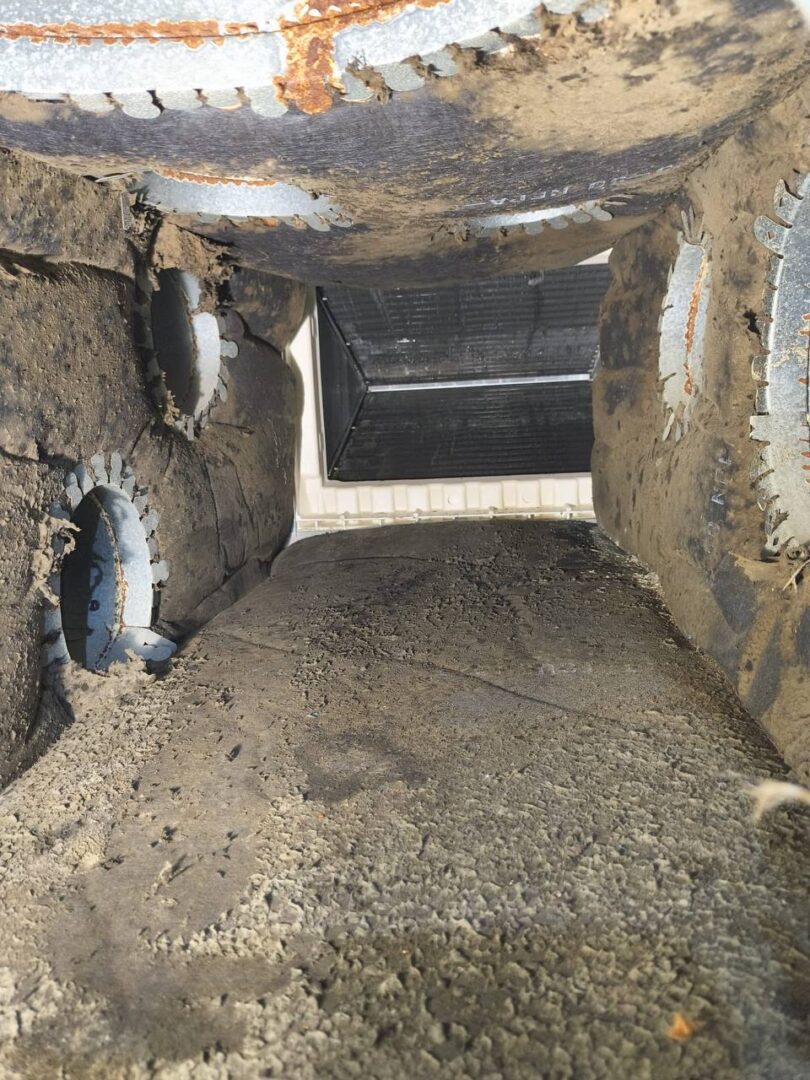
Dirty Air Ducts in Lake Charles, LA — Signs, Causes & When to Take Action
Dirty air ducts are a natural consequence of operating an HVAC system — every home accumulates some debris inside its ductwork over time. The question is not whether ducts are perfectly clean, but whether the level of accumulation warrants professional attention. In Lake Charles, the Gulf Coast climate, hurricane history, and I-10 corridor location create conditions that make regular duct inspection particularly valuable.
What you might notice
Many homeowners first suspect dirty ducts after observing something visible or measurable:
- Visible debris at registers: Dust, lint, or dark material accumulating around or on vent covers, or visible inside register boots when the cover is removed
- Persistent household dust: Furniture or surfaces that develop dust within a day or two of cleaning — especially if the dust is fine and dark in color
- Uneven airflow: Some rooms receiving noticeably less airflow than others, which can suggest debris or blockage in specific duct runs
- Musty or stale odors: Particularly when the HVAC system first starts, odors can indicate that debris has accumulated in a damp area of the system
- Visible debris after filter changes: A filter that loads rapidly or appears to trap less can indicate bypass leakage around the filter rack
What contributes to duct debris in Lake Charles
Several factors specific to Lake Charles and SW Louisiana can accelerate debris accumulation:
- I-10 corridor fine particulate: Homes near major transportation routes and industrial areas in Calcasieu Parish experience higher outdoor particulate levels. This fine material enters duct systems through normal air exchange and can bypass standard 1-inch filters.
- Post-hurricane construction debris: Lake Charles’s experience with Hurricanes Laura and Delta means many homes have undergone significant repairs. Drywall sanding, insulation replacement, and roofing work create fine dust that can enter ductwork through unsealed connections or during construction.
- High humidity effects on debris: When dust and particulate accumulate in a humid environment, they can adhere to duct surfaces rather than remaining loose. This makes the material harder to remove through normal airflow and more likely to support microbial growth in persistently damp sections.
- Vegetation and pollen: Calcasieu Parish’s mix of pine forests, wetlands, and residential landscaping means seasonal pollen loads can be significant. Pollen that enters through ventilation or open windows can settle in duct runs and contribute to allergen load.
- Slab foundation and attic duct issues: Many Lake Charles homes have ducts running through slab foundations or unconditioned attics. Both environments can introduce debris — slab ducts through pest intrusion and moisture wicking, attic ducts through insulation degradation and temperature-cycling particulate.
When duct cleaning is appropriate
NADCA standards state that duct cleaning is appropriate when a documented inspection reveals substantial debris accumulation, visible microbial growth, or evidence of pest infestation that could affect system performance or indoor air quality. The decision to clean should be based on documented conditions, not a fixed schedule.
Some situations where cleaning is more likely to be appropriate:
- After major renovation or construction: Duct cleaning is recommended after significant work that generates dust, followed by filter changes and re-inspection
- After water damage or flooding: If ductwork was exposed to floodwater or sustained moisture, cleaning and drying may be necessary before the system is returned to service
- When moving into a home with unknown history: An inspection can document conditions; cleaning provides a documented baseline for the new owner
- When visible debris is confirmed inside the duct system: Not at the register, but within the sealed duct runs themselves
What an inspection reveals
A professional inspection of accessible duct system components can answer these questions without guesswork:
- Is there visible debris inside duct runs, or only near registers?
- Is the debris dry particulate, or is there moisture involvement?
- Are there signs of pest activity, microbial growth, or insulation contamination?
- Is the air handler compartment and blower wheel clean or affected?
Next steps for Lake Charles homeowners
If you are observing signs that suggest dirty ducts in your Lake Charles home, the right first step is a professional inspection of the accessible portions of your duct system and HVAC equipment. Our NADCA-certified technicians at AH-CHOO! Indoor Air document current conditions and provide a clear written report. Cleaning is only recommended when the inspection confirms it is necessary.
Frequently asked questions
What causes dirty air ducts in Lake Charles homes?
Air ducts collect debris over time as part of normal operation. In Lake Charles’s SW Louisiana climate, several factors contribute: high outdoor humidity that causes particulate to stick to duct surfaces, fine dust from the I-10 corridor and industrial activity, seasonal pollen from the surrounding Calcasieu Parish vegetation, and residual construction debris in newer or recently rebuilt homes. After hurricane-related repairs, insulation particles and drywall dust can also enter ductwork through gaps or unsealed connections.
How can I tell if my Lake Charles air ducts are dirty?
Common observations include visible dust or debris blowing from vents when the system starts, accumulated material inside accessible register boots, persistent dust on furniture shortly after cleaning, and reduced airflow from individual registers. Any of these are reasons to schedule an inspection of accessible duct system components rather than assuming the ductwork alone is the source.
What’s inside dirty ductwork?
In Lake Charles homes, inspection commonly reveals: fine dust and particulate (from outdoor air infiltration and I-10 corridor traffic), construction debris (from post-hurricane repairs or new construction in fast-growing Calcasieu Parish neighborhoods), pet dander and hair, insect fragments or rodent evidence (more common in slab-foundation and attic ductwork), and condensation-related discoloration in humid sections.
Does dirty ductwork affect HVAC efficiency?
Significant debris accumulation can reduce airflow, which forces the HVAC system to run longer to maintain temperature. The EPA and NADCA note that debris on blower wheels and evaporator coils (not just in the ducts) is the more common cause of efficiency loss. A professional inspection of all accessible components — not just the ductwork — provides the full picture.
Contact AH-CHOO! Indoor Air or call (225) 251-8976 to schedule an inspection for your Lake Charles home. We serve Calcasieu Parish and the SW Louisiana region.
Learn more on our Lake Charles air duct cleaning page and our South Louisiana service hub.