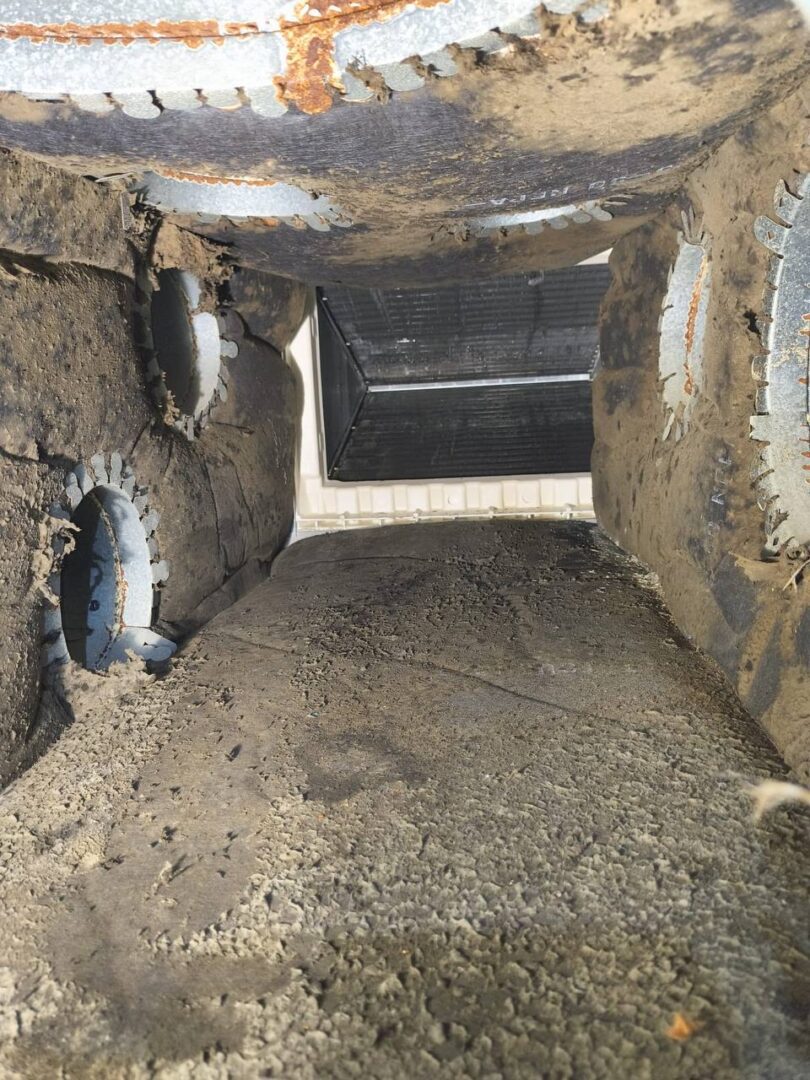
If you live in Pearland, Texas, and your home has experienced flooding — whether from Hurricane Harvey, Tax Day floods, or seasonal heavy rains along Clear Creek and Mary’s Creek — your air duct system may have been affected even if the water didn’t reach the living area. Flood-damaged ductwork is a hidden problem that can affect your indoor air quality for months or years after the water recedes.
How Floodwater Gets Into Pearland Air Ducts
Pearland’s geography — situated between Clear Creek to the north and Mary’s Creek to the south, with many neighborhoods built on former prairie — makes certain areas prone to flooding during heavy rain events. Communities like Shadow Creek Ranch, Silverlake, Southern Trails, and areas near the Texas Medical Center campus have experienced flood events that brought water into thousands of homes.
Floodwater enters ductwork through several pathways:
- Ground-level return vents near floors or in crawl spaces directly admit floodwater
- Slab-on-grade foundations common in Pearland can wick moisture upward into duct runs
- Air handler units in garages or attics can take in humid flood air, leading to condensation
- Silt and mud settle in low points of the duct system, creating a breeding ground for bacteria and mold
Why Flood-Damaged Ducts Are a Mold Risk in Pearland’s Humid Climate
Pearland’s subtropical climate — with average humidity above 75% for much of the year — creates an environment where damp ductwork rarely dries out naturally. Floodwater brings more than just water: it carries silt, bacteria, sewage overflow in some cases, and organic material that feeds mold growth.
According to the IICRC S520 standard for mold remediation, any porous material in a duct system that remains wet for more than 48 hours is at high risk for microbial growth. Since ductwork is enclosed and out of sight, mold can spread extensively before homeowners notice signs.
Signs Your Pearland Ducts May Have Flood Damage
- Musty or earthy smell when the air conditioner or heater runs
- Visible mud or dark debris around vent covers or registers
- Unexplained increase in allergy symptoms among household members
- Higher-than-normal dust accumulation on furniture shortly after cleaning
- Rust or corrosion on air handler components or metal duct surfaces
- HVAC system running longer to maintain temperature (reduced efficiency)
Professional Flood-Damaged Duct Restoration: What NADCA-Certified Cleaning Involves
A professional restoration of flood-affected ductwork follows a systematic process to ensure contaminants are fully removed:
- Thorough inspection — A certified technician examines all accessible ductwork, the air handler, evaporator coil, and registers to assess the extent of contamination and damage
- HEPA-filtered source removal — Specialized agitation and vacuum equipment remove mud, silt, and microbial growth from duct surfaces
- Antimicrobial application — Where appropriate, EPA-registered antimicrobial treatments are applied to inhibit future mold growth
- Post-restoration verification — Visual inspection and air quality monitoring confirm the system is clean and safe
- Documentation — A full report of findings and the restoration process is provided for your records
Pearland Flood History: Why This Matters for Your Ducts
Pearland has experienced multiple significant flood events in recent years that affected thousands of homes:
- Hurricane Harvey (2017) — Catastrophic flooding affected large portions of Pearland, especially near Clear Creek and Mary’s Creek
- Tax Day Floods (2016) — Widespread flooding from record rainfall overwhelmed drainage systems
- Spring 2024 storms — Heavy rain caused localized flooding in Shadow Creek Ranch and Southern Trails areas
- Seasonal thunderstorms — Pearland’s location in a low-lying coastal plain means flash flooding is a recurring risk
If your home was in any of these flood zones and you have not had your ductwork professionally inspected since, there may be hidden contamination affecting your indoor environment.
Frequently Asked Questions About Flood-Damaged Air Ducts in Pearland
Q: Can floodwater contaminate air ducts in Pearland homes?
A: Yes. When floodwater enters a home through ground-level vents, slab foundations, or first-floor returns, it carries silt, bacteria, and chemical residue into the ductwork. Even after surface water recedes, ducts can remain contaminated if not properly inspected and cleaned.
Q: How do I know if my Pearland air ducts have mold after a flood?
A: Look for musty or earthy odors when the HVAC runs, visible black or green spots near registers or in the air handler, persistent allergy-like symptoms indoors, and any visible mud or debris in duct vents. A professional inspection is the definitive way to check.
Q: Can you clean flood-damaged air ducts, or do they need replacement?
A: In many cases, NADCA-certified professionals can clean and restore flood-affected ductwork using HEPA-filtered source removal and antimicrobial treatment. However, if duct insulation is saturated or ductwork has structural damage, replacement sections may be necessary. A thorough inspection determines the right path.
Q: Does AH-CHOO handle flood-damaged ductwork in Pearland?
A: Yes — AH-CHOO Indoor Air Quality provides professional inspection and cleaning for flood-affected ductwork in Pearland, Shadow Creek Ranch, Silverlake, and all surrounding areas. Our certified technicians assess damage and recommend the appropriate restoration.
Q: How quickly should I address flood-contaminated ducts?
A: Mold can begin growing within 24-48 hours of moisture exposure. If your Pearland home experienced flooding, schedule an inspection as soon as the property is dry and safe to enter. Prompt action prevents mold spread throughout the duct system and living spaces.
Related Resources
Has your Pearland home experienced flooding? Contact AH-CHOO to schedule a free, no-obligation inspection of your ductwork. Our NADCA-certified technicians will assess flood damage, check for mold, and provide an honest recommendation for restoration — no pressure, no upselling.