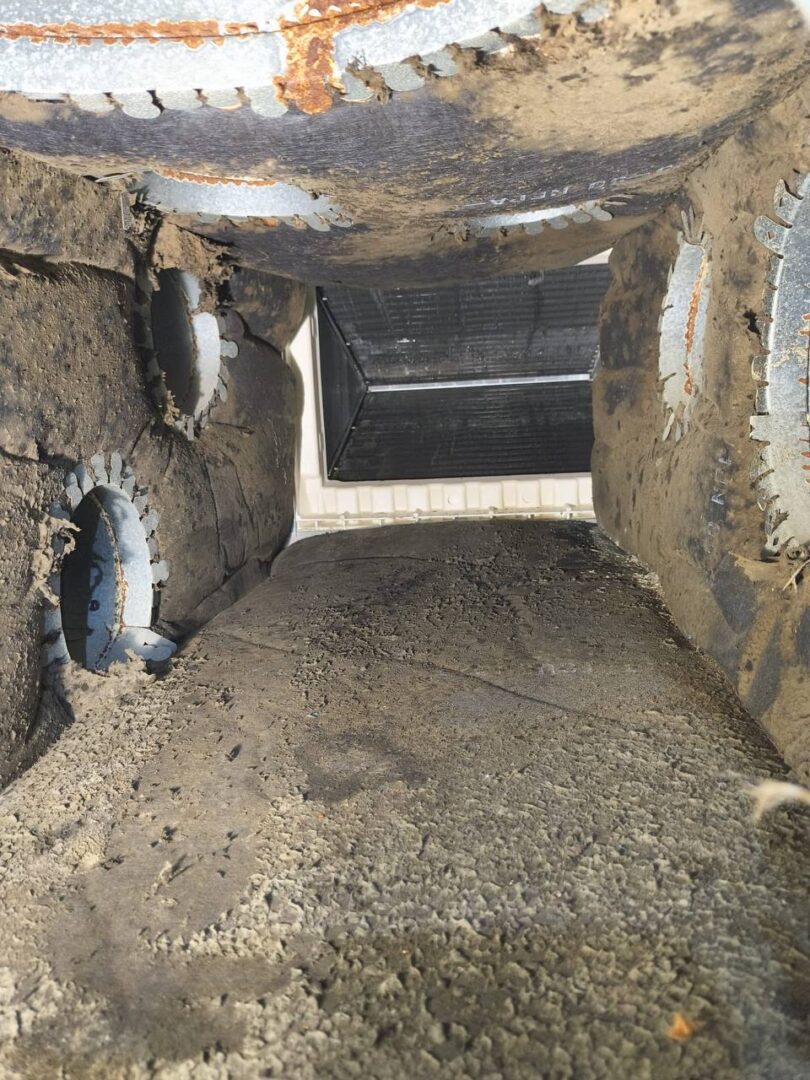
If you’ve recently completed a home renovation in Austin — whether it’s a kitchen update in Zilker, a bathroom remodel in Circle C, or a whole-house refresh in Mueller — you might be surprised to learn that your HVAC system may have captured a significant amount of the construction dust. Drywall dust, in particular, is fine enough to bypass standard HVAC filters and settle deep inside your ductwork.
The Problem with Drywall Dust in Ductwork
Drywall joint compound and sanding produce ultra-fine silica-based particles that are smaller than typical household dust. These particles:
- Bypass standard filters: Most 1-inch HVAC filters catch particles >10 microns. Drywall dust particles can be as small as 1-5 microns, passing through and accumulating in duct runs.
- Create abrasive buildup: Silica particles are abrasive. When recirculated, they can wear down blower wheel bearings and motor components over time.
- Settle in flex duct ridges: Austin-area homes commonly use flex duct in attics. The ribbed interior traps fine dust, making it difficult to remove without professional cleaning.
- Affect indoor air quality: Even after construction ends, residual drywall dust can be re-suspended when the HVAC system runs, causing respiratory irritation for sensitive household members.
Austin’s Remodel Boom Means More Post-Construction Duct Issues
Austin’s housing market has seen extensive renovation activity in 2025–2026. Neighborhoods like 78704 (South Austin), 78746 (Westlake), 78729 (Round Rock), and 78660 (Pflugerville) have high rates of permit activity for additions, ADUs, and whole-home remodels. Each renovation project creates the potential for construction debris to enter the duct system — especially when HVAC systems are left running during demolition and construction phases.
The problem is common enough that many Austin HVAC contractors recommend a post-renovation duct inspection before homeowners move back into freshly remodeled spaces. A quick inspection can reveal whether drywall dust, wood fragments, insulation debris, or other construction materials have found their way into the ductwork.
Signs Your Ducts May Have Construction Debris
- Visible dust escaping from vents: If you see fine white or gray dust near supply registers after the remodel, drywall dust is likely in the duct system.
- HVAC system running longer: Debris buildup restricts airflow, making the system work harder to maintain temperature.
- Unusual HVAC noises: Abrasive particles contacting the blower wheel can cause whining or grinding sounds.
- Allergy-like symptoms: Family members may experience eye, nose, or throat irritation when the HVAC runs — even weeks after construction ends.
- Increased dust on surfaces: Fine dust reappearing on furniture shortly after cleaning can indicate duct contamination.
What NADCA Standards Say About Post-Construction Cleaning
The National Air Duct Cleaners Association (NADCA) recommends duct cleaning when there is evidence of visible debris in the ductwork, including construction-related debris. NADCA Standard ACR 2022 defines “visible debris” as any particulate matter that can be seen with the naked eye — and drywall dust clearly qualifies. A NADCA-certified professional will:
- Inspect all accessible ductwork using visual assessment and, where appropriate, camera inspection.
- Document the type, location, and extent of debris present.
- Recommend cleaning only when debris exceeds NADCA’s threshold for acceptable cleanliness.
- Clean using mechanical agitation (brushing or air whips) combined with continuous HEPA vacuum negative pressure.
- Perform a post-cleaning visual inspection to verify debris removal.
Preventing Duct Contamination During Future Remodels
If you’re planning another renovation project, these steps can protect your ductwork from construction debris:
- Seal supply and return registers with plastic sheeting and tape before demolition begins.
- Turn off the HVAC system during dusty work phases (demo, sanding, cutting).
- Use temporary filtration — portable HEPA air scrubbers in the work zone capture airborne particles before they reach the return air system.
- Replace HVAC filters immediately after construction, then again after 30 days.
- Schedule a post-renovation duct inspection before moving back in for peace of mind.
Frequently Asked Questions
Q: Does drywall dust damage HVAC equipment?
A: Yes — drywall dust is abrasive and can wear down blower wheel bearings, motor components, and even compressor surfaces over time. Early removal prevents premature equipment failure.
Q: Will a standard HVAC filter catch drywall dust?
A: Standard 1-inch fiberglass filters (MERV 1-4) capture only large particles. Most drywall dust particles are small enough to pass through. A MERV 8 or higher filter during construction helps, but professional duct cleaning may still be needed for accumulated debris.
Q: How soon after remodeling should I have ducts cleaned?
A: Schedule an inspection immediately after construction is complete. If debris is found, cleaning should happen before you move furniture back in and resume normal HVAC operation.
Q: Does AH-CHOO serve Austin remodeling customers?
A: Yes — AH-CHOO serves all Austin metro areas including 78701-78759 zip codes, Round Rock, Cedar Park, Pflugerville, and Georgetown. We offer post-renovation duct inspections and NADCA-certified cleaning.
Had a recent remodel in Austin? Schedule a free post-renovation duct inspection with AH-CHOO. We’ll check your ductwork for drywall dust, construction debris, and any hidden issues — and provide an honest recommendation. Contact us today.
Related AH-CHOO resources: Austin air duct cleaning.