# Post-Construction HVAC Cleaning: Why New Homes and Renovations Need Professional Duct Cleaning
If you’ve recently built a new home, completed a major renovation, or added a room addition in Houston, Austin, San Antonio, or anywhere across the Gulf Coast, there’s something critical inside your HVAC system right now that wasn’t there before construction began: construction debris. Drywall dust, fine silica from concrete work, limestone caliche powder, insulation fibers, wood dust from framing and finish work, and sealant particles — all of these materials were pulled into your duct system during the months your home was under construction. And they’re still there.
Most homeowners assume that their HVAC system in a new construction home is clean. After all, everything is new. The ducts, the air handler, the registers — brand new. But “new” doesn’t mean “clean.” In fact, new construction homes in rapid-growth markets like Houston, Austin, and the Texas Gulf Coast carry some of the highest construction debris loads inside their duct systems of any home in the country.
Here’s why, what it means for your family’s air quality, and what you need to do about it before you settle into your new space.
## What Enters Your Ducts During Construction
During a typical new home build, your duct system is installed early in the construction timeline — before drywall, before paint, before insulation, before finish work. At that point, the duct openings are often left unprotected while the rest of the home is built around them.
Here’s what enters your duct system during a typical construction phase:
**Drywall dust (calcium sulfate dihydrate).** Every time walls are hung, taped, textured, and sanded, fine drywall dust becomes airborne. It’s among the most pervasive construction contaminants because its particles are small enough to penetrate deeply into duct liner material and flexible duct walls. Drywall dust is alkaline — meaning it can be irritating to respiratory passages when it’s recirculated through your home’s air supply.
**Silica dust from concrete, masonry, and tile work.** Silica dust is a serious long-term respiratory hazard. It’s produced when concrete is poured and ground, when brick is cut, when tile is trimmed, and when countertops are fabricated. Silica particles are microscopic and travel through air systems with ease.
**Limestone and caliche dust.** In the Houston and Texas markets, caliche soil is used as a base for driveways, foundations, and road construction. When this soil is disturbed by heavy equipment, it produces a fine limestone powder that becomes airborne and enters HVAC systems through return air intakes — and through open duct ends that haven’t yet been sealed.
**Insulation fibers.** Fiberglass insulation is handled extensively during construction. During installation, tiny fibers become airborne and enter the duct system. These fibers can persist inside ductwork for years, being recirculated through the air supply every time the HVAC system cycles.
**Wood dust and sawdust from framing and finish carpentry.** Every cut of every board produces fine dust. During framing, trim work, and cabinet installation, the volume of wood dust generated is enormous — and if duct openings are open or inadequately protected during these phases, a significant portion of that dust ends up inside your duct system.
**Sealants, adhesives, and paint particles.** These materials release volatile organic compounds (VOCs) and produce airborne particulates that settle on interior duct surfaces. While VOCs dissipate over time through ventilation, the particulate residues remain inside the ductwork.
## The Problem New Homeowners Don’t See
Your new home’s HVAC system has been circulating this accumulated construction debris through your living spaces since the day you moved in — likely for months, or in some cases years, before anyone thought to check. Here’s what that means in practice:
**You’re breathing construction-grade particulates inside your own home.** The fine dust from drywall, concrete, and limestone that accumulated inside your ducts during construction hasn’t gone anywhere. It’s being pulled into your return ducts, pushed through your supply ducts, and deposited into every room in your home every time your HVAC system runs.
**Your new HVAC system is working harder than it should.** Accumulated debris on the evaporator coil, blower fan, and inside the plenum restricts airflow and forces the system’s motor and compressor to work harder to maintain temperature. This reduces energy efficiency, increases utility costs, and shortens the lifespan of your new — and expensive — HVAC equipment.
**The debris attracts and traps moisture, creating mold-friendly conditions.** Construction dust and debris are organic and absorbent. In Houston’s 60-70% indoor humidity environment, accumulated debris inside ductwork creates a moisture-retaining layer that provides ideal conditions for mold growth. This is why we find mold in new construction homes in the Gulf Coast that have been occupied for only 1-3 years — the construction debris in their ducts created a mold-favorable environment from day one.
**Your ducts may never have been sealed properly.** During construction, duct connections are supposed to be sealed with mastic or mastic tape before the drywall stage. In many new builds — especially the ones produced at volume by production builders — this step is rushed or skipped entirely. Unsealed duct connections are an entry point for attic air, crawlspace air, and exterior air to infiltrate your duct system — introducing additional contamination beyond the construction debris already inside.
## Post-Construction Cleaning vs. Standard Residential Cleaning
A post-construction air duct cleaning is more intensive than a standard residential cleaning in a home that’s been occupied for several years. Here’s what’s different:
**Heavier debris loads.** New construction homes carry significantly more accumulated material inside their duct systems than homes where debris accumulation is primarily from normal living — dust, pet dander, skin cells, and pollen. Post-construction homes have industrial-grade contaminants: drywall dust, concrete residue, and insulation fibers packed into duct liner material.
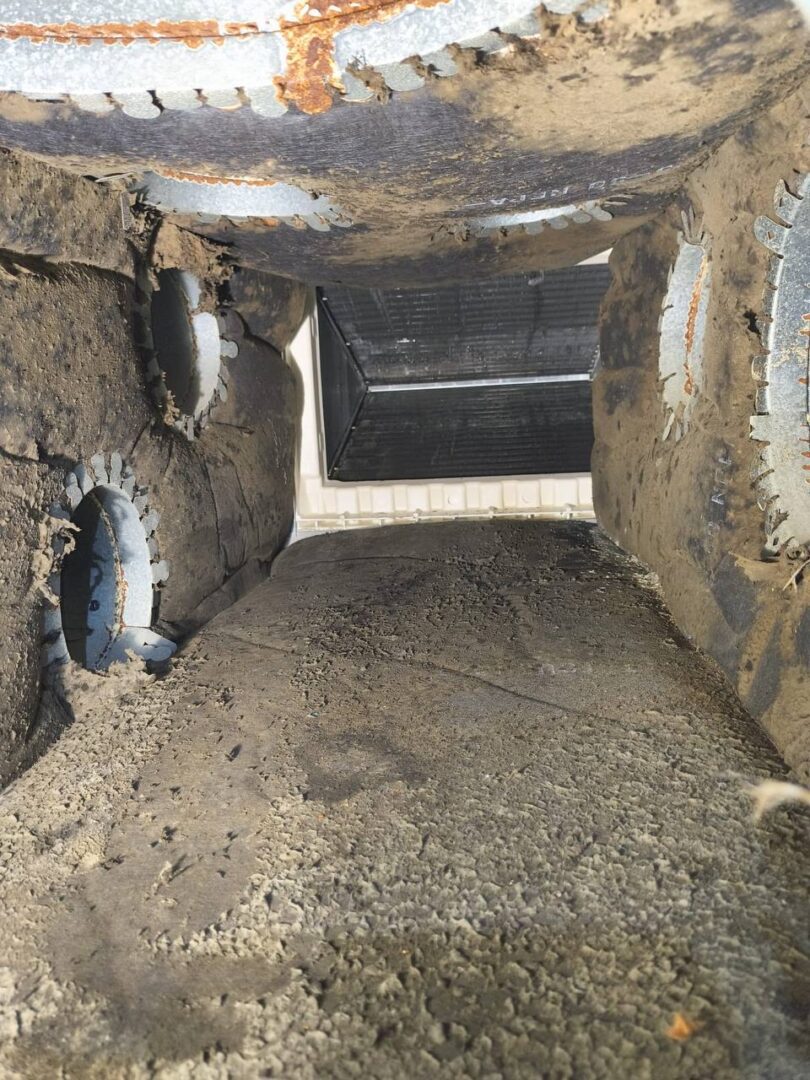
**First-time cleaning is the most impactful.** If your home is new and has never had its ducts professionally cleaned, the difference between before and after is dramatic. We’ve opened plenum boxes in new Gulf Coast homes and found layers of construction debris that genuinely shock homeowners who assumed their new home’s air system was clean.
**Additional components may need attention.** In post-construction cleaning, we frequently find that the evaporator coil, blower fan, and heating chamber have accumulated construction debris at levels far beyond what we typically see in established homes. Our post-construction service includes inspection and cleaning of all 8 HVAC components with heightened attention to areas where construction particulates tend to accumulate most heavily.
## When Should Post-Construction Duct Cleaning Be Scheduled?
Ideally, your first professional duct cleaning should be scheduled within 6-12 months of moving into a new construction home. However, if you’re experiencing any of the following, you should schedule sooner:
– Visible dust blowing from your supply vents when the HVAC system first turns on
– Musty odors that started within the first few months of occupancy
– Allergy or respiratory symptoms that are worse indoors than outdoors
– Excessive dust accumulation on surfaces within days of cleaning
– Your HVAC system seems to run longer than expected to reach your thermostat setpoint
For homes that had major renovation work — room additions, finished attics, kitchen or bathroom remodels that involved extensive drywall or tile work — the same post-construction cleaning logic applies. The renovation process generated the same types of construction contaminants that enter new homes during the building phase, and those contaminants are now inside your existing duct system.
## What We Clean: All 8 Components, Every Time
Our post-construction HVAC cleaning covers all 8 components of your system:
**Return air ducts** — where all contaminated air from the home re-enters the system
**Evaporator coils** — the cooling surface where construction dust is most likely to accumulate
**Blower fan** — the motor that circulates air through every contaminated component
**Heating chamber** — the heat exchange surface requiring debris removal
**Plenum box** — the highest debris concentration point in the entire system
**Supply ducts** — every branch line delivering conditioned air to your rooms
**Register boxes** — the termination points at each room where debris collects
**Grills** — the visible vent covers that need thorough washing and sanitization
Our cleaning takes approximately 7 hours for a standard residential job. Post-construction homes may require additional time depending on the severity of contamination, but we budget the full time needed to ensure all construction debris is removed from your system.
## NADCA Certified for Post-Construction Cleaning
The National Air Duct Cleaners Association (NADCA) standard applies to post-construction cleaning just as it does to any other residential or commercial duct cleaning service. Our NADCA-certified technicians follow the assessment, cleaning, and restoration protocol on every post-construction job — including the pre-cleaning photographic documentation, mechanical agitation of all accessible surfaces, negative pressure containment during cleaning, and post-cleaning verification that the system is returned to a clean, functional state.
## The Bottom Line
Your new home should feel new — not dusty, not musty, not like a construction zone with the paint dried over everything. Professional post-construction duct cleaning is the step that most new home buyers skip, and it’s the step that delivers the most immediate, noticeable improvement in your home’s indoor air quality.
**[Book your free post-construction inspection →](https://crm.ahchooindoorair.com/book)**
AH-CHOO! Indoor Air Quality — NADCA certified. 38 years of experience. One job per day, all 8 components, every job. Serving Houston, Austin, San Antonio, and South Louisiana.
Related: Commercial air duct cleaning in Austin.
Related: Air duct cleaning in Schertz TX.
Related: Air duct cleaning after home renovation in Houston.
Related AH-CHOO resources: Houston air duct cleaning; schedule a free inspection.