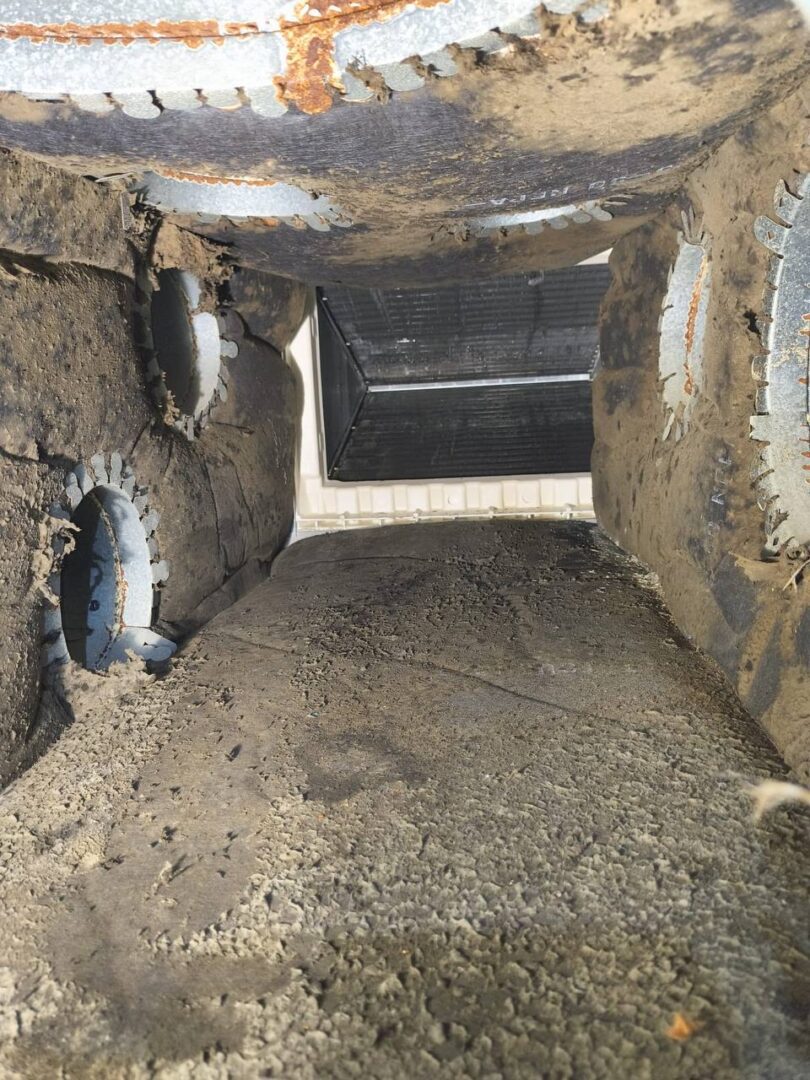
The Greater Houston metropolitan area has experienced some of the most devastating flooding events in American history. From Hurricane Harvey to Tropical Storm Imelda to the Memorial Day and Tax Day floods, Houston-area homes have a long history of water intrusion that creates one of the most serious indoor air quality threats a homeowner can face: mold colonization inside the HVAC system.
If your Houston-area home has experienced any degree of flooding, heavy rain intrusion, or water damage — even if the water level did not reach your living spaces — there is a very high probability that your HVAC system was exposed to contaminated water and is now colonized with mold.
How Floodwater Enters Your HVAC System
Flooding affects HVAC systems through several pathways that most homeowners do not consider:
**Outdoor unit submersion.** When floodwater rises around your condenser unit, it can introduce contaminated water into the refrigerant lines that connect to your indoor coil. Even if the condenser itself survives, the floodwater can carry sediment, bacteria, and mold spores into the connection points between the outdoor and indoor components.
**Standing water around the foundation.** Floodwater that pools around your home’s foundation can seep into the slab or crawlspace and reach the air handler unit, the plenum box, and the sections of ductwork that are located close to the floor level. Even a small amount of standing water that contacts the bottom of a plenum box introduces an enormous biological load.
**Roof leaks and water intrusion from above.** Heavy rainfall and flooding are frequently accompanied by roof damage, compromised flashing, and ice dam conditions that allow water to enter the attic space where ductwork and the air handler are typically located. Attic ductwork exposed to standing water on the attic floor or to leaking water from the roof above becomes contaminated.
**Condensate drain line backup.** During heavy rainfall and flooding events, the condensate drain line that carries water from your evaporator coil to the exterior of your home can become clogged with sediment and debris. When this drain line backs up, water overflows the drain pan and pours directly into the plenum box and the duct system.
Why Post-Flood Mold Is Different From Normal Mold Growth
Mold colonization that occurs after a flood event is fundamentally different from the slow, gradual mold growth that develops in a duct system over months or years of normal operation.
Floodwater carries biological contamination from the surrounding environment: bacteria from sewers and septic systems, mold spores from submerged vegetation and building materials, chemical contaminants from industrial and agricultural runoff, and fine particulate sediment that coats every interior surface it contacts.
When floodwater enters your HVAC system, it deposits this biological load directly onto the evaporator coil, the plenum box, and the interior surfaces of the ductwork. The combination of persistent moisture and an enormous biological inoculum creates conditions where mold colonies can establish and reach maturity within 24 to 48 hours.
The Hidden Danger: Mold Growth You Cannot See
The most dangerous mold contamination in a post-flood HVAC system is the contamination you cannot see. Mold that grows inside ductwork, on the interior surfaces of the plenum box, or on the fins of the evaporator coil releases spores into every room the system serves every time it cycles on. These spores are invisible, often odorless in the early stages of colonization, and can cause serious health effects before the homeowner realizes there is a problem.
Health effects from post-flood mold exposure include persistent nasal congestion, coughing, throat irritation, wheezing, skin rashes, eye irritation, fatigue, headaches, and in individuals with mold sensitivities or asthma, severe respiratory distress.
What You Must Do After Any Flood Event
**Do not turn on your HVAC system until it has been professionally inspected.** Running a contaminated system distributes mold spores and biological contaminants into your living spaces. The system should remain off until a qualified technician has examined the air handler, plenum box, accessible duct sections, and evaporator coil for contamination.
**Schedule professional mold inspection of the HVAC system.** Our NADCA-certified technicians will examine all 8 HVAC components for visible mold growth, moisture damage, and biological contamination. We document our findings with photographs and measurement data so you have a complete record of the system’s condition for insurance purposes.
**Professional mold remediation and HVAC cleaning are not optional after a flood.** Any flood event that contacts any part of your HVAC system requires professional remediation before the system is operated again. This is not a matter of preference. It is a health requirement.
Our NADCA-certified service includes complete source removal cleaning of all 8 HVAC components and anti-microbial treatment of affected surfaces. The average service takes approximately 7 hours because we treat every contaminated surface with the attention it requires.
Insurance Coverage and Post-Flood HVAC Documentation
Most homeowner’s insurance policies cover HVAC system damage and remediation caused by flooding, but they require thorough documentation of the system’s condition before and after remediation. Our inspection and cleaning service includes detailed photographic documentation and written reports that you can use when filing insurance claims.
Book Your Free Post-Flood HVAC Inspection
If your Houston-area home has experienced any flooding or water intrusion, do not turn on your HVAC system until it has been examined by a professional. Schedule a free inspection today and our NADCA-certified technicians will assess the condition of all 8 components and provide a clear, honest evaluation of what remediation your system requires before it can be safely operated.
[Book a Free Inspection](https://crm.ahchooindoorair.com/book)
AH-CHOO! Indoor Air Quality serves Houston, Austin, San Antonio, and South Louisiana. NADCA certified. Average job time: 7 hours. 8 components cleaned every service. 38 years of experience.
Related AH-CHOO resources: Houston air duct cleaning; schedule a free inspection.