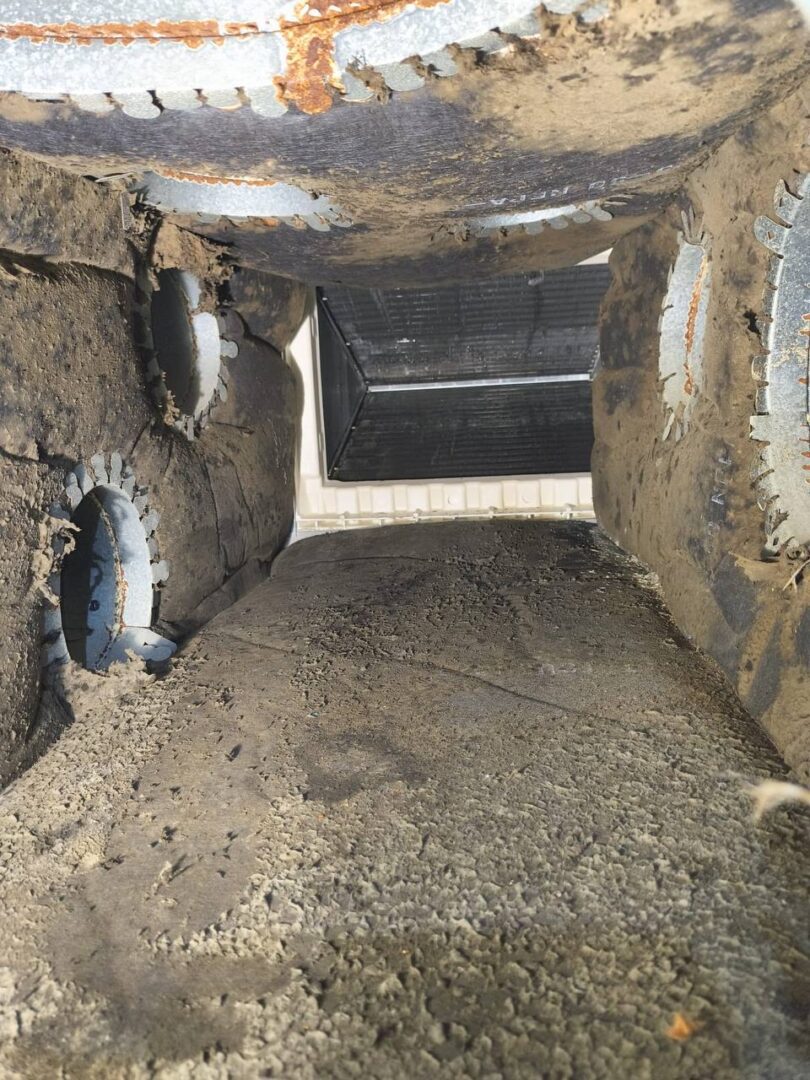
Houston’s hurricane season runs June through November, and the combination of extreme humidity, storm surge flooding, and prolonged power outages creates conditions where mold can colonize HVAC systems within 24-48 hours of water exposure.
If you experienced flooding, water intrusion, or prolonged humidity during any hurricane season, your HVAC system may have absorbed moisture that creates ongoing mold risk — even if the system appears to be running normally.
How Hurricanes Damage HVAC Systems
Storm surge flooding: When floodwater enters a home, the air handler, evaporator coil, and ductwork all absorb moisture. Even if water didn’t reach the unit directly, high humidity from standing water creates moisture loading inside sealed duct systems.
Power outages during storms: When AC runs continuously during hurricane season, the evaporator coil processes massive humidity loads. If the system stops working mid-storm, standing water in drain pans and ductwork creates biological growth conditions.
Post-storm humidity: Houston’s ambient humidity after a storm — often 90%+ for weeks — means even homes that didn’t flood experience increased moisture intrusion into HVAC systems through normal AC operation cycles.
Why Mold Grows in Sealed Ductwork
Mold needs three conditions to grow: moisture, organic food source, and warmth. Houston’s climate provides all three year-round, but hurricane conditions amplify the moisture component. Once moisture penetrates sealed ductwork, it becomes trapped — and mold growth can begin within 24-48 hours.
Unlike visible mold on walls or ceilings, ductwork mold is invisible and circulates throughout the home every time the system operates. This is why post-hurricane HVAC inspection is critical even for homes that appear to have escaped water damage.
Signs Your Post-Hurricane HVAC Needs Professional Assessment
- Musty or earthy odor when the AC first turns on each season
- Visible dark discoloration on or around supply vent registers
- Allergy symptoms that worsen after storm season, particularly in rooms closest to the air handler
- Increased dust accumulation on surfaces despite regular cleaning
- Any visible water staining on walls or ceilings near ductwork
- Standing water or persistent dampness in crawlspaces or near the air handler unit
What Professional Inspection Covers
AH-CHOO! provides free pre-service inspections for Houston homeowners concerned about post-hurricane HVAC condition. Our assessment includes:
- Visual inspection of accessible duct interiors for moisture damage and biological growth
- Evaporator coil condition assessment for corrosion, mineral deposits, or biological growth
- Blower wheel inspection for moisture-related contamination
- Drain system verification to ensure proper condensate removal
- Photographic documentation of any areas of concern
Prevention vs. Remediation
If your system has already experienced water intrusion or extended moisture exposure, cleaning alone may not be sufficient. NADCA-certified remediation addresses source removal of biological contamination — but if mold has penetrated structural components of the HVAC system, more extensive remediation may be required before the system can safely operate.
The key is inspection before the problem becomes severe. Annual pre-hurricane-season HVAC inspection gives you baseline documentation and allows for early intervention before contamination spreads.
AH-CHOO! Indoor Air Quality serves Houston, Austin, San Antonio, and South Louisiana. NADCA certified. Average job time: 7 hours. 8 components cleaned every service. 38 years of experience.
[Book Your Pre-Hurricane HVAC Inspection](https://crm.ahchooindoorair.com/book)
Related AH-CHOO resources: Houston air duct cleaning; schedule a free inspection.