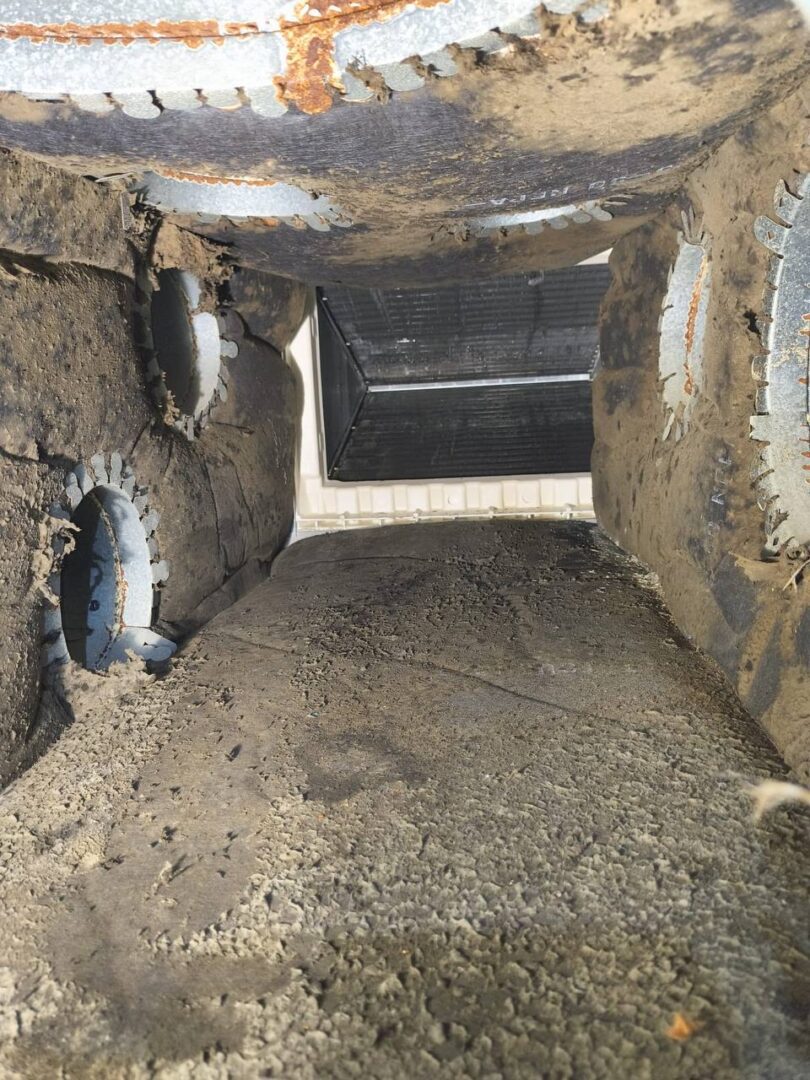
Houston’s eight-month cooling season means your HVAC system accounts for the majority of your home’s electricity consumption. When your air ducts are clean, your system operates at peak efficiency. When they’re contaminated, you’re paying a hidden tax on every utility bill.
How Contamination Reduces HVAC Efficiency
Your HVAC system is designed to move a specific volume of air through your ductwork with each cooling cycle. When debris accumulates on interior duct surfaces, the evaporator coil, and the blower fan, airflow is restricted. The system must run longer to achieve the same cooling output — consuming more electricity.
Evaporator coil contamination: A coil coated in dust and biological matter loses heat transfer efficiency. The compressor must work harder and run longer. In Houston’s humid climate, coil contamination is the single largest efficiency killer for residential systems.
Blower fan imbalance: Dust accumulating on fan blades unbalances the assembly, consuming more electricity while stressing motor bearings. An unbalanced fan can consume 15-20% more energy than a clean one.
Restricted airflow: Dirty ductwork reduces airflow volume, which reduces cooling capacity. Your system compensates by running longer cycles, multiplying the energy waste across every hour of operation.
Houston’s Climate Amplifies the Problem
Houston’s high humidity means your AC runs longer per cycle than in drier climates. The evaporator coil processes moisture as well as temperature, which adds to its workload. When the coil is contaminated, this processing capacity is significantly reduced — and the system’s response is to run even longer.
The extended cooling season (often 8+ months in Houston) means that even modest efficiency losses compound over the entire year. A 10-15% efficiency loss from dirty ducts multiplied across 8 months of heavy AC use translates to meaningful increases on your annual energy bills.
The Energy Research
The EPA and Department of Energy estimate that dirty HVAC components can reduce system efficiency by 15-25%. The National Air Duct Cleaners Association (NADCA) has documented cases where professional cleaning improved system efficiency by 30% or more in severely contaminated installations.
For the average Houston home, this means:
- Before cleaning: System runs 10-12 hours per day during summer months
- After cleaning: System runs 8-9 hours per day to achieve the same cooling output
- Annual savings: 500-700 fewer hours of compressor operation per year
What Professional Cleaning Accomplishes
Our NADCA-certified service addresses all 8 HVAC components: return ducts, evaporator coils, blower fan, heating chamber, plenum box, supply ducts, register boxes, and grills. The average residential cleaning takes approximately 7 hours because each component receives individualized, thorough treatment.
This is what separates professional source removal cleaning from “duct cleaning specials” that take 45 minutes and clean only the accessible supply vents. Full-system cleaning removes contamination from every component — which is where the efficiency gains come from.
Signs Your Ducts Are Costing You Money
- Energy bills are higher than neighbors with similar homes
- Your system runs almost constantly during summer months
- Some rooms cool noticeably slower than others
- You can hear or feel reduced airflow from supply vents
- It’s been more than 3 years since your last duct cleaning
- You notice visible dust immediately after changing air filters
Energy Efficiency vs. Indoor Air Quality
Many homeowners focus on air quality benefits of duct cleaning, but the efficiency improvements are equally compelling. Cleaner ducts mean lower bills, less strain on your compressor, and a longer system lifespan.
AH-CHOO! Indoor Air Quality serves Houston, Austin, San Antonio, and South Louisiana. NADCA certified. Average job time: 7 hours. 8 components cleaned every service. 38 years of experience.
[Book Your Energy Efficiency HVAC Inspection](https://crm.ahchooindoorair.com/book)
Related AH-CHOO resources: Houston air duct cleaning; schedule a free inspection.