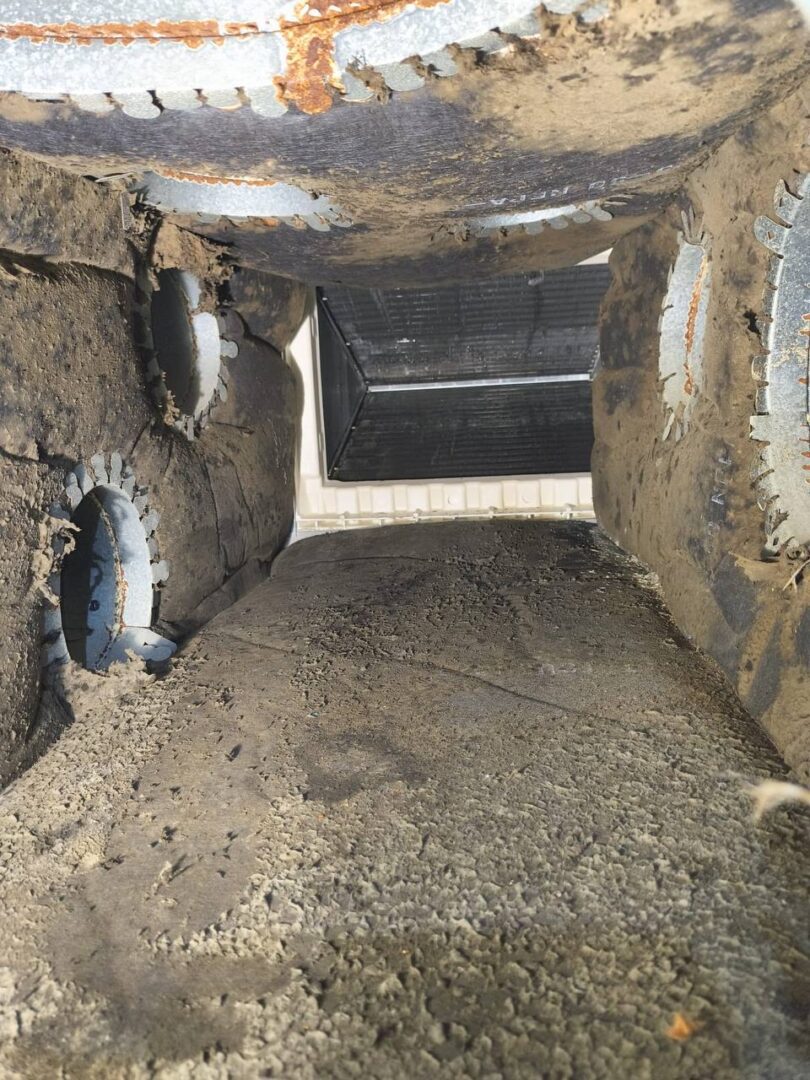
If you are a Houston homeowner, you already know about pollen season. What you may not know is that your HVAC system faces a year-round mold risk that is more persistent and more damaging to your indoor air quality than seasonal allergens.
Understanding when your system is most vulnerable to mold colonization — and what you can do about it — is one of the most important things you can know about your home’s indoor air quality.
The Three Conditions Mold Needs to Grow in Your HVAC System
Mold requires moisture, a food source, and appropriate temperatures to establish and grow. Houston area HVAC systems routinely provide all three simultaneously.
**Moisture from evaporation coil condensation.** When your air conditioner operates, warm humid Houston air passes over the cold evaporator coil, creating condensation. This condensate is supposed to drain away. Any interruption — clogged drain line, damaged drain pan — allows moisture to accumulate and create persistent conditions where mold colonies establish rapidly.
**Organic debris as a food source.** Pollen, pet dander, dust mite debris, construction dust, and general household particulates settle on moist interior duct surfaces and become a nutrient-rich substrate where mold spores can germinate and colonize. In Houston’s humid environment, this debris layer remains moist for extended periods, accelerating mold growth.
**Appropriate temperatures year-round.** Houston’s climate provides appropriate temperatures for mold growth inside an operating HVAC system throughout the entire year, from the cool surface of the evaporator coil to the warm environment inside the plenum box and ductwork.
When Houston Homes Face the Highest Mold Risk
**Summer months** are when mold growth inside Houston area HVAC systems is most rapid because the system is running continuously, producing condensation on the evaporator coil, and creating ideal conditions on every interior surface inside the system. **Post-flood events** from thunderstorms, heavy rain, or tropical storms introduce significant moisture and biological contamination into HVAC systems where mold can establish within 24 to 48 hours of exposure. **After extended periods without cleaning** when the organic debris layer on interior duct surfaces has accumulated to a thickness that provides sufficient nutrition for mold colonies to mature and begin producing spores.
What You Can Do to Reduce Your Houston Home’s Mold Risk
**Keep your condensate drain line clear.** Inspect and clear the drain line at least twice per year — once in spring before the cooling season begins and once in fall after it ends. A clogged drain line is the single most common cause of excess moisture accumulation inside Houston area HVAC systems.
**Maintain indoor humidity below 55 percent.** Use a whole-home dehumidifier if your HVAC system does not adequately control humidity during the most humid months of the year.
**Replace air filters on schedule.** For most Houston homes, replace standard 1-inch filters every 30 to 60 days.
**Schedule professional duct cleaning every 3 to 5 years.** Professional source removal cleaning eliminates the organic debris layer that mold feeds on from all 8 HVAC components: return ducts, evaporator coils, blower fan, heating chamber, plenum box, supply ducts, register boxes, and grills.
Book Your Free Inspection
If you want to understand your Houston home’s HVAC mold risk profile, schedule a free inspection today. Our NADCA-certified technicians will document the condition of all 8 components and provide an honest assessment.
[Book a Free Inspection](https://crm.ahchooindoorair.com/book)
AH-CHOO! Indoor Air Quality serves Houston, Austin, San Antonio, and South Louisiana. NADCA certified. Average job time: 7 hours. 8 components cleaned every service. 38 years of experience.
Related AH-CHOO resources: Houston air duct cleaning; schedule a free inspection.