If you are a parent in Houston, your child’s indoor air quality is one of the most important environmental factors you can control. Children breathe more air per pound of body weight than adults, their respiratory systems are still developing, and they spend a significant portion of their time indoors. The air quality inside your home directly affects your children’s respiratory health, their ability to sleep, their concentration in school, and their overall quality of life.
In Houston, the combination of extreme outdoor allergen levels, high humidity, and ongoing industrial activity creates an indoor air environment that demands more attention than in virtually any other major American city.
Why Houston Children Are More Vulnerable
Children’s respiratory systems mature gradually, and the air quality they breathe during their developmental years has a measurable impact on their long-term respiratory health. Houston’s unique environmental profile compounds this vulnerability.
**Higher breathing rates.** Infants and young children breathe approximately twice as much air per pound of body weight as adults. This means that airborne pollutants inside your home are concentrated in your child’s respiratory system at roughly twice the rate of exposure experienced by adults in the same environment.
**Developing immune and respiratory systems.** A child’s immune system learns to respond to environmental triggers during the first years of life. When indoor air quality is poor, the developing immune system may become sensitized to common allergens, creating long-term allergy and asthma conditions that persist into adulthood.
**Greater time spent indoors.** Young children in Houston spend the vast majority of their time indoors due to the extreme heat and humidity during much of the year. During the summer months, outdoor play is often limited by dangerous heat indexes and thunderstorms, meaning children are breathing indoor air for extended consecutive periods.
Common Indoor Air Pollutants in Houston Homes Affecting Children
**Pollen and mold spores.** Houston’s extended growing season and high humidity create the highest mold spore and pollen concentrations in the United States. These allergens enter your home through your HVAC system, open windows, and on clothing and shoes. Inside your home, pollen and mold spores trigger nasal congestion, coughing, sneezing, itchy eyes, and in children with asthma, wheezing and breathing difficulty.
**Pet dander and animal allergens.** Homes with pets generate continuous supplies of pet dander, saliva proteins, and other animal allergens that accumulate in HVAC ductwork, carpets, and upholstered furnishings. Cat allergens, in particular, are among the most persistent indoor allergens known to medicine.
**Dust mite debris.** Dust mites are microscopic arachnids that feed on human and animal skin cells and produce waste particles that are potent respiratory irritants. Houston’s climate provides ideal conditions for dust mite reproduction, and dust mite allergens are consistently found in the indoor air of homes where dust has been allowed to accumulate.
**Construction dust and chemical particulates.** Homes near active construction sites, whether from new residential development or road and infrastructure projects in the Houston area, are exposed to fine particulate dust that contains silica, drywall gypsum, and various chemical compounds from building materials and adhesives.
**Volatile organic compounds from household products.** Cleaning products, air fresheners, paints, new furniture, and personal care products release volatile organic compounds into indoor air that can irritate children’s respiratory systems and, in some cases, contribute to long-term health effects.
How Your HVAC System Affects Your Children’s Indoor Air Quality
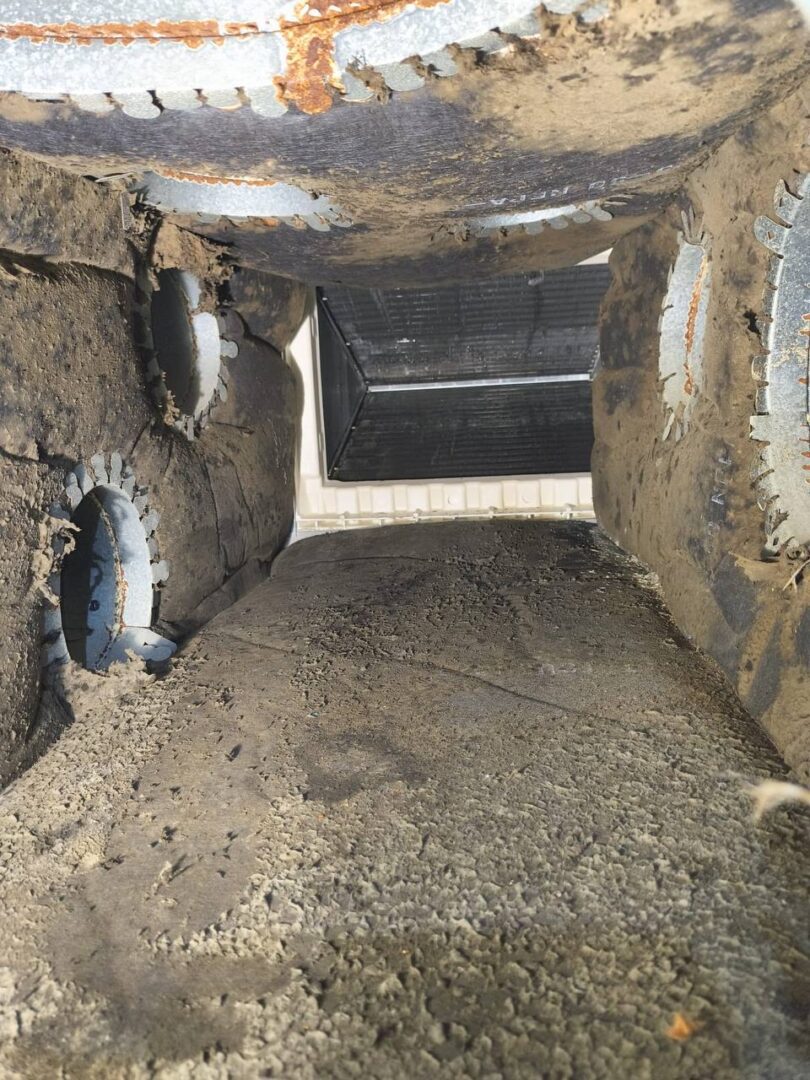
Your HVAC system is the single largest influence on your home’s indoor air quality. When the system’s interior components are clean, it delivers filtered, conditioned air to every room in your home. When the system is contaminated with accumulated debris, it becomes a continuous source of indoor air pollution.
The allergen and particulate matter that accumulates inside your return ducts, on the evaporator coil, in the plenum box, and on the blower fan is redistributed into your living spaces every time the system cycles. For children who are breathing at twice the adult rate, this redistribution means continuous exposure to allergens that trigger nasal congestion, coughing, restless sleep, and reduced concentration.
Professional air duct cleaning eliminates the allergen reservoir inside your HVAC system, so the air circulating through your children’s bedrooms, play areas, and living spaces is clean rather than contaminated. Our NADCA-certified cleaning service addresses all 8 HVAC components in a thorough process that takes approximately 7 hours. We include a free inspection so you can see exactly what is inside your system before making any commitment.
Practical Steps for Improving Your Children’s Indoor Air Quality in Houston
**Schedule professional air duct cleaning every 3 to 5 years.** This is the single most impactful step you can take. Homes with children, pets, or known allergy sensitivities should schedule cleaning at the shorter end of that range.
**Replace air filters every 30 to 60 days.** For homes with children, MERV 8 to MERV 11 filters are recommended for their balance of allergen capture and airflow efficiency. Higher-rated MERV 13 filters can be used if your HVAC system supports them.
**Control indoor humidity.** Maintaining indoor relative humidity between 40 and 55 percent eliminates the conditions that support mold growth and dust mite reproduction. Use a whole-home dehumidifier if your HVAC system does not adequately control humidity.
**Minimize carpet and fabric furnishings in children’s bedrooms.** Carpet acts as a continuous source of allergen release. Hard-surface flooring with area rugs that can be washed regularly is a better choice for children’s sleeping areas.
**Use range hoods during cooking.** Cooking emissions are one of the largest indoor air pollution sources in homes. Running a range hood during all cooking activity significantly reduces the particulate and chemical pollution that children are exposed to in your kitchen and adjacent living areas.
**Ensure adequate ventilation.** While Houston’s outdoor air quality is not ideal, controlled ventilation with filtered outdoor air dilutes indoor pollutant concentrations. Consider installing an energy recovery ventilator (ERV) that exchanges indoor air with filtered outdoor air while recovering energy from the outgoing airstream.
When to Seek Professional Help
If your child experiences persistent coughing, nasal congestion, difficulty breathing, or sleep disturbances that improve when they are away from home, poor indoor air quality is a likely contributing factor. Schedule a free inspection with our NADCA-certified technicians and we will document the condition of your HVAC system, identify allergen sources, and provide an honest assessment of what needs to be done.
[Book a Free Inspection](https://crm.ahchooindoorair.com/book)
AH-CHOO! Indoor Air Quality serves Houston, Austin, San Antonio, and South Louisiana. NADCA certified. Average job time: 7 hours. 8 components cleaned every service. 38 years of experience.
Related AH-CHOO resources: Houston air duct cleaning; schedule a free inspection.