If you spend most of your time indoors — and most Houstonians do, given the extreme heat and humidity — the quality of the air inside your home is one of the most important environmental factors affecting your family’s health. But the air inside Houston homes is rarely as clean as it should be, and the reasons for that extend beyond what you can see with your own eyes.
Understanding what pollutants are circulating in your home’s air, where they come from, and what you can do about them starts with understanding your HVAC system’s role as both a protector of and contributor to your indoor air quality.
What Pollutes the Air Inside Your Houston Home
**Outdoor allergens.** Cedar pollen from December through February. Oak, pine, and grass pollen during spring and summer. Ragweed and mold spores from August through November. These allergens enter through return vents and settle on interior ductwork surfaces where they remain as a persistent reservoir.
**Pet dander and skin cells.** Every household with pets generates a continuous supply of airborne dander that enters the HVAC system and accumulates on interior surfaces.
**Dust mite debris.** Houston’s high humidity creates ideal conditions for dust mite reproduction in carpets and upholstery. Their waste particles are drawn into return vents and contribute to the allergen load inside your HVAC system.
**Mold spores.** Houston’s outdoor environment carries heavy mold spore loads year-round. When these spores enter your HVAC system and encounter the moist surface of the evaporator coil, they can establish colonies that release additional spores into your home’s air supply.
**Volatile organic compounds.** Cleaning products, paints, adhesives, and personal care products release chemical compounds into indoor air that become trapped in enclosed living spaces and are recirculated through the HVAC system.
**Construction dust.** Houston’s rapid development generates fine particulate matter that settles on outdoor surfaces and enters homes through return vents and outdoor equipment intake.
How Your HVAC System Distributes These Pollutants
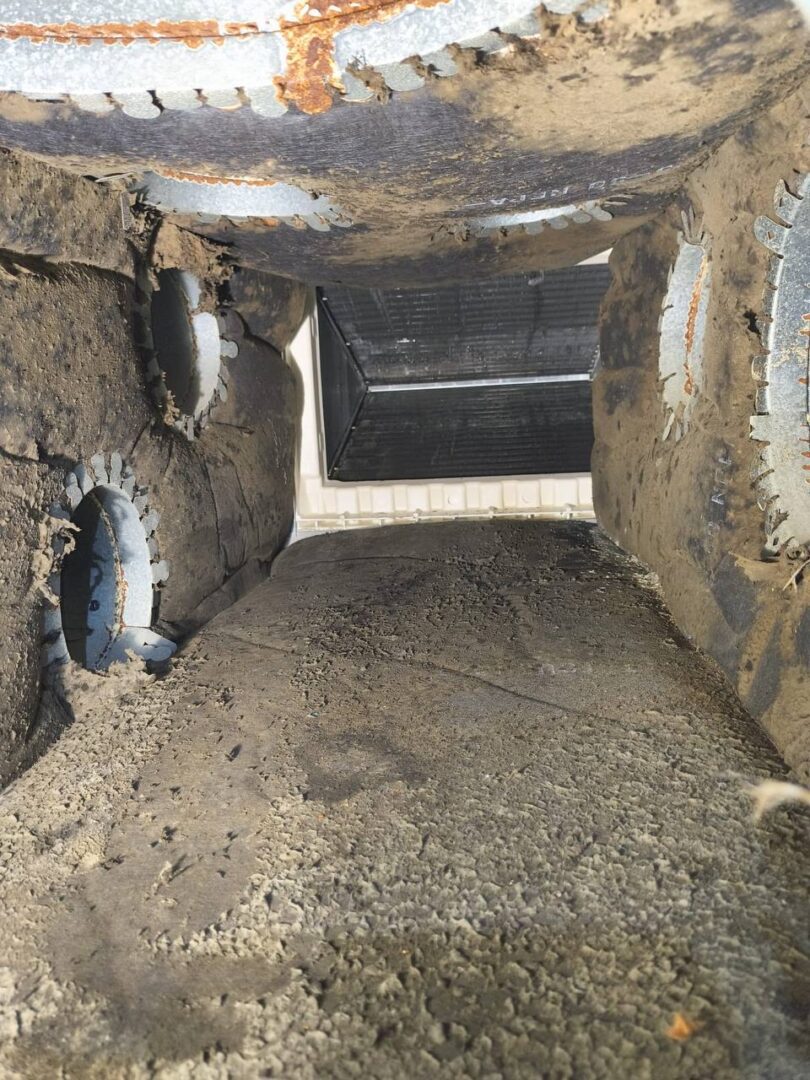
Every time your system cycles on, it pulls air from your living spaces through return vents. The air carries all of the pollutants listed above. Your air filter captures some particles. But particles smaller than your filter’s capture rating pass through and settle on interior duct surfaces where they accumulate over months of continuous operation.
When the system cycles on again, a fraction of that accumulated reservoir is disturbed and redistributed into your living spaces. This cycle repeats continuously, creating a persistent source of indoor pollutant exposure that no amount of surface cleaning or air freshener can address.
What You Can Do
Replace air filters every 30 to 60 days. Control indoor humidity below 55 percent. Schedule professional air duct cleaning every 3 to 5 years to eliminate accumulated pollutants from all 8 HVAC components. Address water intrusion events immediately before mold establishes inside the system.
[Book a Free Inspection](https://crm.ahchooindoorair.com/book)
AH-CHOO! Indoor Air Quality serves Houston, Austin, San Antonio, and South Louisiana. NADCA certified. Average job time: 7 hours. 8 components cleaned every service. 38 years experience.
Related AH-CHOO resources: Houston air duct cleaning; schedule a free inspection.