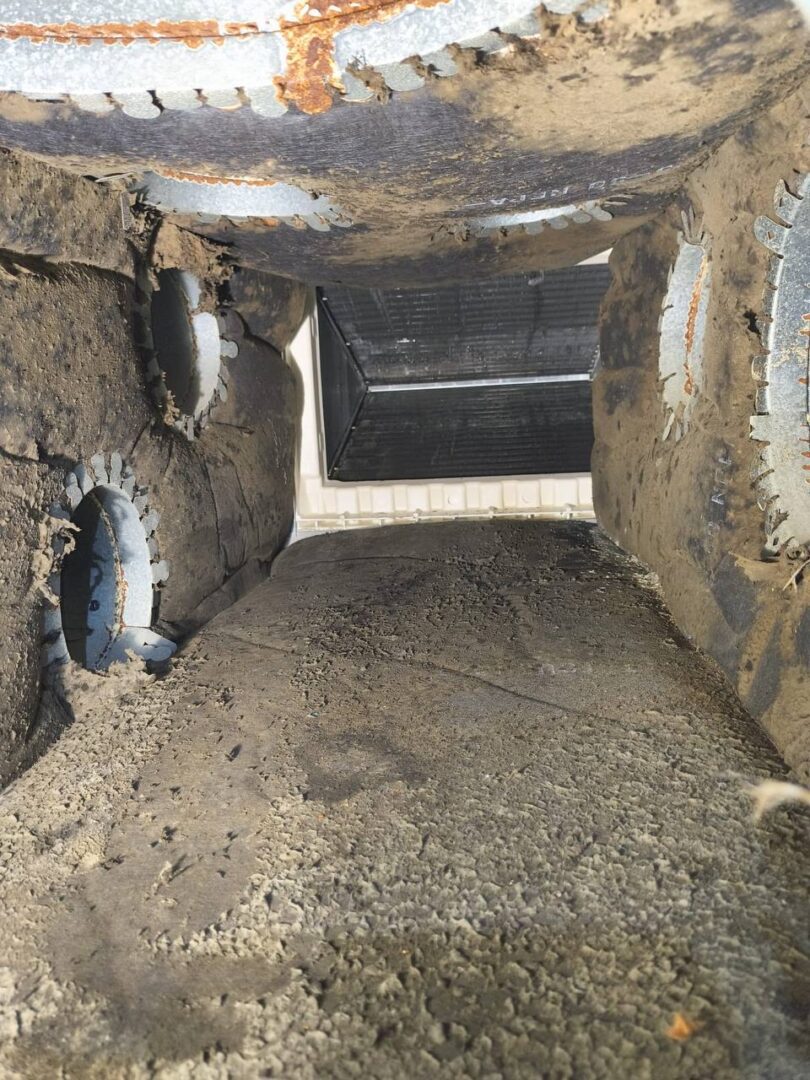
Houston’s average relative humidity exceeds 75% for most of the year, with summer months regularly pushing 85-90%. This persistent moisture in the air creates year-round conditions for biological growth inside residential HVAC systems — and your ductwork is the most overlooked component in that equation.
Why Houston’s Humidity Is Different for HVAC
Most climate-based HVAC advice comes from regions with defined dry seasons and winter months where humidity drops naturally. Houston doesn’t follow that pattern. The city averages over 200 days per year with relative humidity above 60% — which means your AC’s evaporator coil is processing moisture-heavy air almost every day the system runs.
When the coil processes humid air, condensation forms on its surfaces. In dryer climates, that moisture evaporates quickly. In Houston’s climate, it doesn’t — and the resulting damp environment on and around the coil becomes a growth medium for mold, bacteria, and dust mites.
How Humidity Creates the Mold Growth Cycle in Sealed Ductwork
Your ductwork is a sealed system — which means once moisture penetrates the seals or enters through the return air side, the humidity inside the ducts stays elevated. Unlike exposed surfaces that dry out between AC cycles, the interior of ductwork retains moisture because air circulation inside sealed ducts doesn’t allow for rapid evaporation.
The cycle works like this:
1. Humid air enters the return duct system
2. Moisture condenses on interior duct surfaces and the evaporator coil
3. Dust and organic particles already inside the ducts provide food for biological growth
4. The system runs, pulling contaminated air through the coil and distributing spore-laden air through supply vents
5. The moisture remains trapped inside the sealed ductwork between runs
Early signs of mold in air ducts often go unnoticed until the contamination is severe. Once you understand how the growth cycle works, it becomes clear why Houston homeowners need professional intervention — not just routine HVAC maintenance.
Why Standard AC Maintenance Doesn’t Address Ductwork Moisture
HVAC contractors service the equipment side — coils, refrigerant, filters, blower assembly. They don’t typically address ductwork interiors, where moisture-related contamination accumulates over years.
The evaporator coil may look clean from the equipment side, but the supply and return ducts connected to it often harbor years of accumulated biological contamination that the 8 HVAC components we clean in a full NADCA-certified service don’t touch at all in standard maintenance visits.
Houston’s Seasonal Mold Peaks
**Spring (March-May):** High humidity + warming temperatures create the first major mold growth window. Pollen season compounds allergen loads in ductwork.
**Summer (June-August):** Peak cooling season means the most continuous moisture processing. Evaporator coils run nearly continuously in July-August, and any pre-existing contamination in the ducts amplifies.
**Fall (September-November):** Hurricane season brings flooding risk and extended power outage scenarios. Post-storm humidity above 90% creates rapid colonization conditions.
**Winter (December-February):** Lower run time means less moisture processing — but also means January-February is the best window for pre-spring inspection and cleaning before the next growth cycle begins.
The Prevention Approach That Actually Works in Houston
Professional NADCA-certified source removal cleaning removes biological contamination from all 8 HVAC components — including supply and return ductwork — that standard maintenance doesn’t reach. After cleaning, the seasonal cycle starts from a clean baseline.
Houston homeowners who invest in annual pre-summer duct cleaning start each cooling season with uncontaminated ductwork. The moisture processing continues, but without the biological reservoir, the air quality impact is significantly reduced.
Knowing how often to schedule professional duct cleaning is key — especially in a climate like Houston’s where the growth cycle never truly stops. For most homes, annual cleaning before summer is the minimum. Homes near wooded areas, near the coast, or with older ductwork may need more frequent service.
Black dust from air vents is often one of the first visible signs that this cycle is already underway in your system. If you’re seeing it, the contamination has been building for some time.
AH-CHOO! Indoor Air Quality serves Houston, Austin, San Antonio, and South Louisiana. Commercial property managers face the same humidity-driven challenges — and in larger commercial systems, the consequences of neglected ductwork are amplified across more occupied spaces.
NADCA certified. Average job time: 7 hours. 8 components cleaned every service. 38 years of experience.
Schedule Your Houston Duct Cleaning
Related AH-CHOO resources: Houston air duct cleaning; schedule a free inspection.