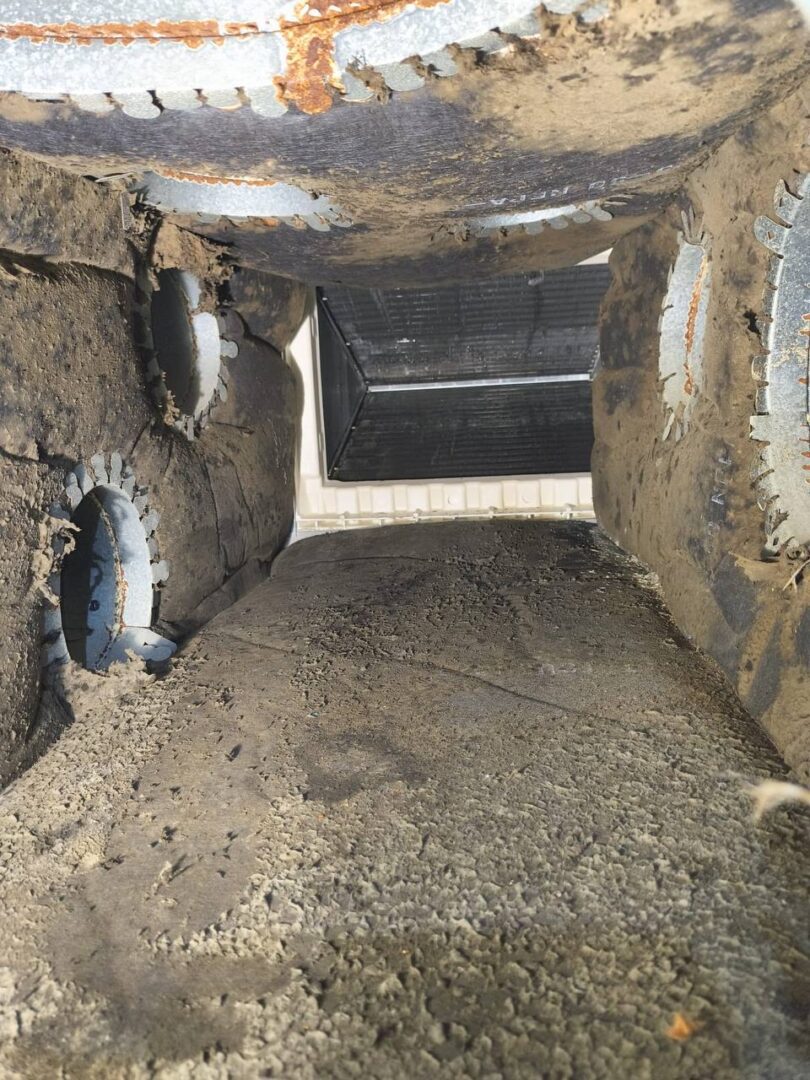
If you are among the hundreds of thousands of Houston residents who suffer from cedar fever, you already know that the season is relentless. Mountain cedar trees release enormous quantities of pollen between December and February, and what most people do not realize is that your home’s HVAC system plays a significant role in how much cedar pollen you are actually exposed to indoors.
How Cedar Pollen Enters Your HVAC System
Mountain cedar pollen is exceptionally fine — each grain measures approximately 25 microns in diameter. These particles are small enough to pass through most standard 1-inch and even some 4-inch residential air filters and enter the interior of your ductwork, where they settle on the inner surfaces of your return ducts, on the evaporator coil, and inside the plenum box.
During peak cedar season, a single mature tree can release over one billion pollen grains in a single season. When your HVAC system pulls indoor and outdoor air through return vents, a significant portion of that pollen load enters the system and deposits on interior components. This pollen remains inside your ductwork long after the outdoor season ends, serving as a continuous allergen source every time the system operates.
Why Cedar Pollen From Winter Becomes a Mold Problem in Spring
The cedar pollen that enters your system during winter months does not simply disappear when the season ends. It settles on interior duct surfaces and the evaporator coil, where it accumulates. When the cooling season begins and the evaporator coil starts producing condensation, this accumulated cedar pollen combines with coil moisture to create ideal conditions for mold growth.
This means that cedar pollen from December through February directly contributes to mold colonization on your evaporator coil during the spring cooling months — extending the allergen impact of cedar season well into the spring and summer.
What You Can Do During Cedar Season
Replace air filters every 20 to 30 days during peak cedar season instead of the standard 30 to 60 day interval. Keep windows and doors closed on dry, windy days when pollen counts are highest. Run your HVAC fan continuously during peak pollen hours to improve filtration.
Schedule professional duct cleaning in late winter, immediately after the peak of cedar season, to remove the heavy pollen accumulation before it can contribute to mold growth during the cooling season.
Book Your Free Inspection
If cedar season is affecting your family’s quality of life inside your Houston home, schedule a free inspection today. Our NADCA-certified technicians will document the extent of pollen and biological contamination inside all 8 components and provide an honest recommendation.
[Book a Free Inspection](https://crm.ahchooindoorair.com/book)
AH-CHOO! Indoor Air Quality serves Houston, Austin, San Antonio, and South Louisiana. NADCA certified. Average job time: 7 hours. 8 components cleaned every service. 38 years of experience.
Related AH-CHOO resources: Houston air duct cleaning; schedule a free inspection.