# Air Duct Cleaning for Rental Property Managers in Houston: Why HVAC Maintenance Matters for Tenant Health and Turnover
Rental property managers in Houston face a specific set of HVAC challenges that differ significantly from owner-occupied homes. When a tenant moves out, the condition of the HVAC system is often the last thing on a manager’s checklist — but it’s one of the most consequential for tenant satisfaction, turnover costs, and liability exposure. This guide covers what Houston rental property managers need to know about HVAC maintenance as a property management asset.
## Why Rental Properties Have Different HVAC Challenges
Tenant turnover creates HVAC stress that owner-occupied homes don’t face. Each new tenant brings different habits, different tolerance levels for maintenance issues, and different levels of care for the property. These factors compound in Houston’s climate in ways that make rental HVAC maintenance more challenging than owner-occupied homes.
**Different occupancy patterns:** Each tenant uses the HVAC system differently. Some keep the thermostat at 68 degrees year-round; others only turn it on when temperatures are extreme. Some leave the system running continuously; others turn it off when leaving for work. These varying patterns mean the system experiences different loads, different humidity processing demands, and different wear patterns than in an owner-occupied home where habits are consistent over years.
**Tenant reporting delays:** Tenants are less likely to report maintenance issues because they don’t want landlord disputes, don’t consider it their responsibility, or assume the landlord already knows. By the time a maintenance issue is reported, it has often been developing for months. In HVAC systems, a minor airflow issue that could have been addressed with a cleaning can develop into a major equipment repair.
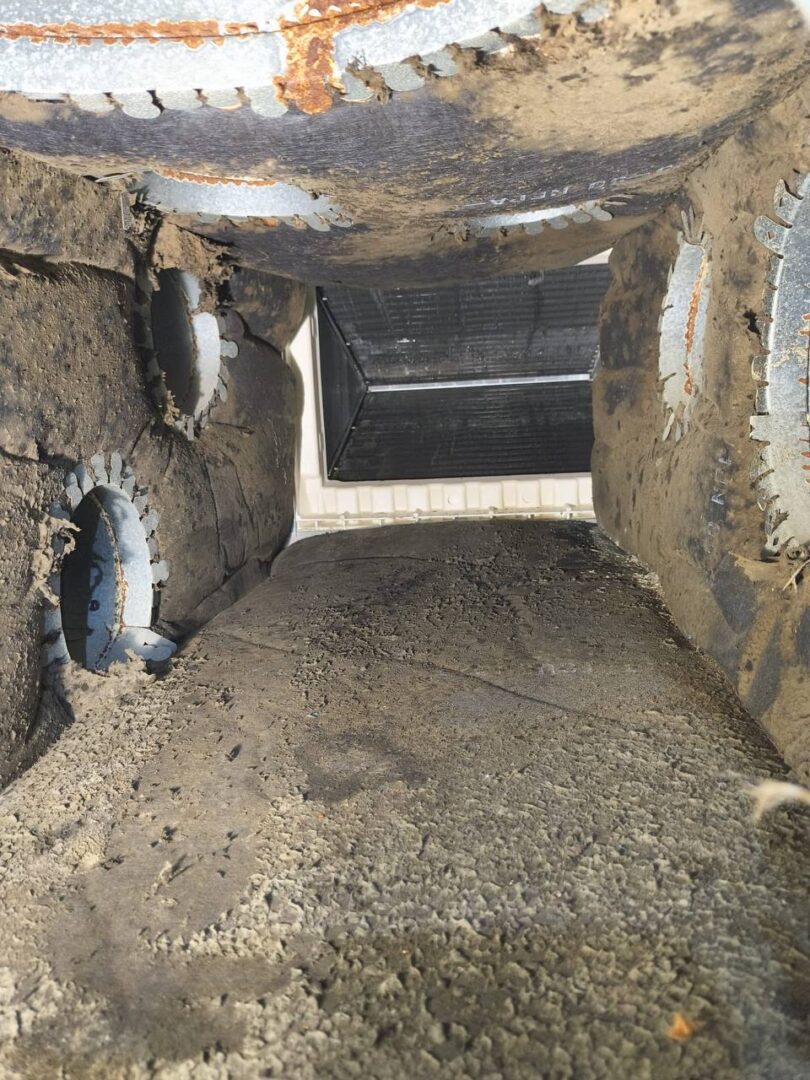
**Accumulated contamination between tenancies:** Each tenant contributes to ductwork contamination without any professional cleaning between them. In a rental property with 3-year tenant turnover, 3-5 different households may have lived in the home without a single professional duct cleaning. The contamination they accumulated compounds with each tenancy — the second tenant starts with the third tenant’s baseline, and so on.
**Short-term incentives:** A tenant on a 12-month lease has limited incentive to report minor issues like slightly reduced airflow or a musty smell when the system starts. They wait until the problem becomes severe, at which point the remediation cost is significantly higher than it would have been with earlier intervention.
In Houston’s humidity, these factors compound faster than in dryer climates. The biological contamination that accumulates in sealed ductwork — mold, dust mites, bacterial growth — develops more aggressively in Houston’s year-round humid environment. A rental property with 3-year tenant turnover might have had 3 different households contributing to ductwork contamination without any professional cleaning between tenancies.
## The Tenant Health Liability Issue
Landlords and property managers have a legal responsibility to provide habitable housing. In Texas, this responsibility is established under the Texas Property Code and has been interpreted by courts to include addressing conditions that affect indoor air quality in humid climates. Courts have found landlords liable for respiratory illnesses linked to documented HVAC contamination — particularly in cases where tenants reported symptoms and landlords failed to act.
The liability exposure isn’t theoretical. If a tenant can demonstrate that they reported HVAC-related symptoms (allergies, respiratory issues, musty odors, persistent sinus problems) and the property manager failed to address the condition, the liability case is significantly stronger. In Houston’s humid climate, where biological growth in HVAC systems is more aggressive than in dryer regions, the documentation requirements for landlord due diligence are higher.
The standard of care for landlords in humid climates includes:
– Responding to tenant complaints about air quality within a reasonable timeframe
– Maintaining HVAC systems to prevent conditions that promote biological growth
– Documenting professional maintenance of the HVAC system between tenancies
– Not allowing the system to operate with known contamination that could affect tenant health
The liability exposure isn’t theoretical. If a tenant can demonstrate that they reported HVAC-related symptoms (allergies, respiratory issues, musty odors) and the property manager failed to address the condition, the liability case is significantly stronger.
Documented professional duct cleaning between tenancies is evidence of the landlord’s due diligence. Without it, a tenant who develops health issues potentially linked to HVAC contamination has a much stronger case.
## The Turnover Cost Equation
Tenant turnover is expensive — typically 1-2 months of lost rent plus make-ready costs. Professional duct cleaning at turnover is a fraction of that cost and affects several turnover variables:
**Faster lease-up:** Units with documented clean HVAC systems lease faster. Tenant screening services increasingly include walk-through inspections that note HVAC condition. A unit with visible dust from vents or a documented history of neglected HVAC maintenance is a red flag for quality-conscious renters.
**Higher lease renewal rates:** Tenants who experience HVAC-related comfort issues (inconsistent cooling, musty odors, allergy symptoms) are significantly more likely to leave at lease end. A clean, well-maintained HVAC system is a retention asset.
**Lower repair costs:** Systems that are professionally maintained between tenants experience less accelerated wear. The evaporator coil and blower wheel in a tenant-neglected system can accumulate severe contamination in 2-3 years, resulting in repair bills that a professional cleaning would have prevented.
## What Property Managers Should Do
**Document HVAC condition at move-in and move-out.** Photographs at supply vents and the air handler closet document baseline condition. This protects against false tenant claims and supports insurance documentation if needed.
**Schedule professional cleaning at turnover.** The cost of professional duct cleaning at turnover is significantly lower than the repair costs or liability exposure it prevents. AH-CHOO! provides documented cleaning with before/after photographs that serve as turnover records.
**Establish a maintenance schedule.** For properties in humid climates like Houston, annual HVAC inspection plus cleaning every 2-3 years is more cost-effective than reactive remediation after tenant complaints. Budget for it as a property maintenance expense rather than an emergency repair line item.
**Include HVAC filter changes in the lease.** Many tenant-landlord disputes involve filter maintenance. Including a filter change schedule in the lease — with filters provided by the property manager — establishes clear maintenance responsibility and protects the HVAC system during tenancy.
## Special Considerations for Multi-Family Properties
Multi-family properties present additional challenges:
– Shared HVAC systems in duplexes, triplexes, and apartment complexes mean one tenant’s contamination affects adjacent units
– Larger buildings with multiple units require coordinated cleaning schedules that minimize tenant disruption
– HOA properties may have specific maintenance requirements that include HVAC system documentation
AH-CHOO! works with property managers to develop HVAC maintenance programs that include flexible scheduling, documented service records, and service options that fits property management budgets.
AH-CHOO! Indoor Air Quality provides professional air duct cleaning and HVAC maintenance services for Houston-area rental property managers. NADCA certified. 38 years of experience. Property management accounts available.
[Contact AH-CHOO! Property Management Services](https://crm.ahchooindoorair.com/book)
Quick answers about Rental Property
Why should Houston rental property managers prioritize duct cleaning?
Houston's humidity creates mold and mildew risks in ductwork that tenants may not notice until health issues arise. Proactive duct cleaning protects tenant health, reduces turnover complaints, and preserves HVAC assets across multiple properties.
How often should rental property ducts be cleaned in Houston?
At minimum, between tenants or every 2-3 years. High-turnover properties may benefit from annual inspection. Clean ducts also improve energy efficiency, reducing utility costs for landlords who include utilities in rent.
Does duct cleaning help with Houston rental property compliance?
Houston's hot-humid climate creates unique IAQ challenges. Documented duct cleaning history demonstrates property management diligence and can support compliance with Texas property maintenance standards.
What's the ROI of duct cleaning for rental properties?
Reduced HVAC repairs, lower turnover rates due to better air quality, and potential energy savings of 10-20% on HVAC costs. AH-CHOO provides property-wide inspection reports that document the condition of each unit's ductwork.
Schedule a free AH-CHOO inspection.
Related AH-CHOO resources: Houston air duct cleaning.