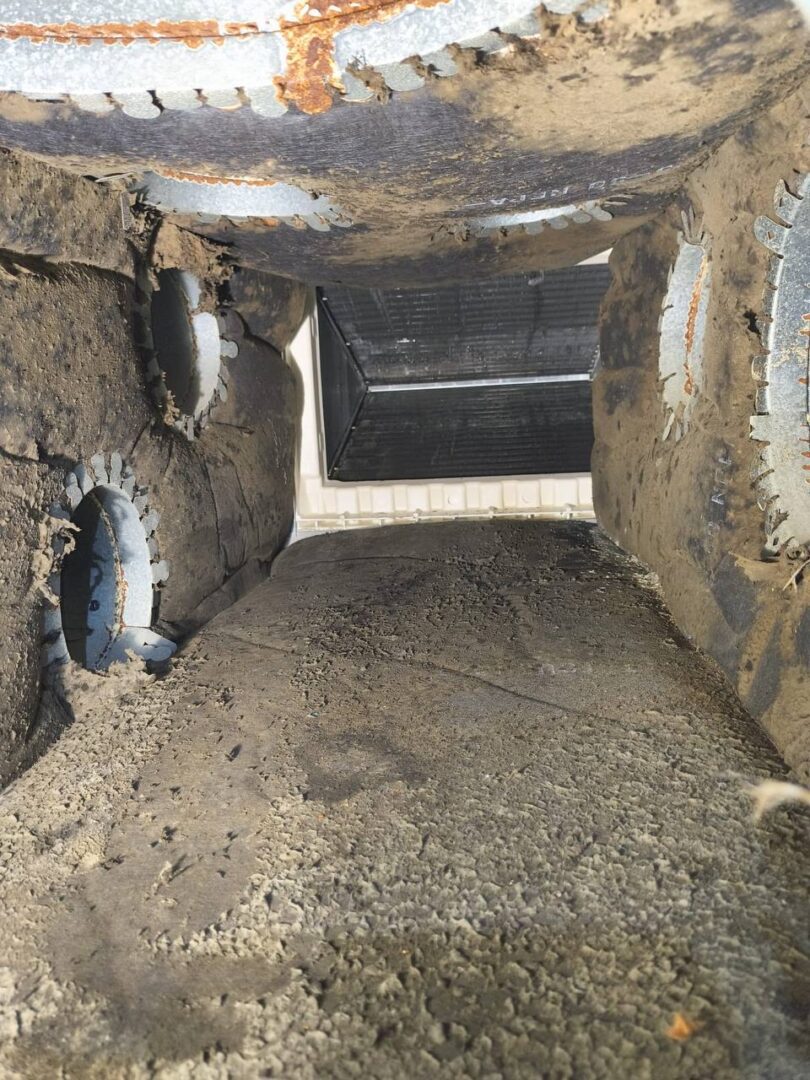
Houston’s construction boom shows no signs of slowing. Whether you’ve completed a major renovation, a kitchen remodel, or new construction on your property, the dust and debris generated during construction work doesn’t stay outside. It infiltrates your HVAC system within days — and if it’s not professionally cleaned before your AC runs, you’re breathing renovation debris for months.
What Construction Does to Your HVAC System
Renovation generates three types of HVAC-threatening contamination:
Mineral dust from drywall compound, concrete, and plaster penetrates deeper into ductwork than household dust. Standard vacuuming can’t reach it — it requires NADCA-certified source removal equipment to dislodge from interior duct surfaces.
Fiberglass particles from insulation work coat evaporator coils and reduce heat transfer efficiency. Coated coils run hotter, work harder, and fail earlier.
Chemical fumes from paint, adhesives, sealants, and stain finishes off-gas into your home’s air during and after renovation. If your AC runs during renovation, these fumes get pulled into the duct system and continue circulating for months.
Why You Should Clean Before Running AC Post-Renovation
Most Houston homeowners wait until they notice visible dust coming from their vents. By that point, contamination has already:
- Coated the evaporator coil (reducing efficiency 15-30%)
- Filled the return ducts with construction debris
- Accumulated in the plenum box near the air handler
- Created conditions for moisture-loving biological growth in humid Houston air
Professional air duct cleaning before you run your AC post-renovation removes all of this before it becomes entrenched.
What Professional Post-Renovation Cleaning Addresses
AH-CHOO! cleans all 8 HVAC components using NADCA-certified source removal:
- Supply and return ducts — full system, not just accessible runs
- Evaporator coil surfaces — where mineral dust most affects efficiency
- Blower wheel — fiberglass and dust accumulate here
- Plenum box — the main collection point for renovation debris
- Heating chamber — construction dust can create fire hazards in gas systems
- All registers and grilles
Houston’s Renovation Climate Problem
Houston’s 75%+ humidity means renovation debris doesn’t just sit in your ducts — moisture from the air helps it adhere to surfaces, making removal progressively harder the longer you wait. Construction dust mixed with Houston humidity creates a sticky residue that’s significantly harder to remove after 2-3 weeks.
The window for effective post-renovation cleaning is typically 2-4 weeks after construction completes, before the residue fully cures onto interior surfaces.
How to Know If You Need Post-Renovation Cleaning
- You can see dust coming from your supply vents
- You notice a persistent dusty smell when the AC runs
- Your home was under renovation for more than 2 weeks
- Construction involved drywall, concrete, plaster, or insulation work
- You see visible dust accumulation on furniture surfaces faster than usual
- Your AC seems to run longer without cooling as effectively
Pre-Renovation vs. Post-Renovation Cleaning
Before renovation: Protects your existing system from anticipated contamination. Worth doing if you’re planning major structural work that will generate significant dust.
After renovation: Essential. Removes construction contamination that has already entered the system and prevents it from circulating through your living spaces.
Most Houston homeowners who renovate find post-renovation cleaning essential, especially after projects involving:
- Drywall installation or repair
- Popcorn ceiling removal
- Flooring replacement
- Insulation installation
- Painting and texturing
AH-CHOO! Indoor Air Quality provides post-renovation HVAC inspection and cleaning for Houston homeowners. Free assessment, NADCA-certified service, 38 years of experience.
[Book Your Post-Renovation HVAC Inspection](https://crm.ahchooindoorair.com/book)
Related AH-CHOO resources: Houston air duct cleaning; schedule a free inspection.