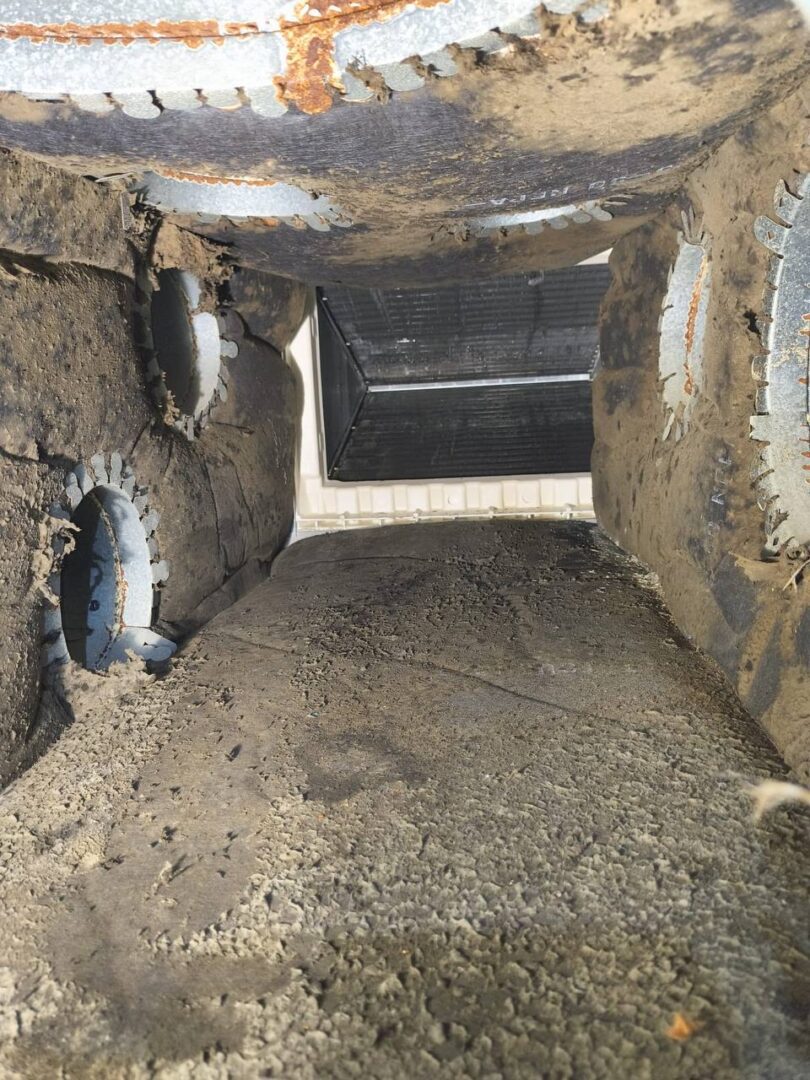
If your Houston-area home has experienced flooding or water intrusion during a hurricane or tropical storm, restarting your HVAC system without a professional assessment and cleaning is one of the most dangerous things you can do for your family’s indoor air quality.
Understanding exactly what happens to your ductwork during a flood event, why biological contamination establishes so quickly, and what steps must be taken before the system can be safely operated again will help you protect your family’s health during one of the most stressful times a homeowner can face.
What Hurricane Flooding Does to Your HVAC System
When floodwaters enter your home, they carry contaminated water containing bacteria, mold spores, sewage material, chemical runoff from surrounding areas, and fine sediment that infiltrates every part of your HVAC system — including the interior surfaces of your ductwork, your evaporator coil, and your plenum box.
Even if floodwater never reached living spaces, it may have contacted outdoor HVAC equipment, the air handler unit in a garage or crawlspace, or the condensate drain line, introducing contaminants that are drawn into the system when it is restarted.
Why Mold Establishes So Quickly After a Flood
Mold can begin colonizing inside a contaminated HVAC system within 24 to 48 hours of flood exposure. The combination of standing water, organic debris, and warm Texas temperatures creates the ideal environment for rapid fungal growth that is invisible from the living spaces but actively distributing spores into your home’s air every time the system operates.
By the time you notice visible signs or musty odors, mold colonies inside your HVAC system may have already reached a mature, spore-producing state that requires professional remediation.
What Must Be Done Before You Restart Your System
**Do not turn the system on** until it has been professionally inspected. Restarting a contaminated system distributes mold spores, bacteria, and chemical particulates into every room simultaneously.
**Professional assessment of all 8 components.** A NADCA-certified technician must examine return ducts, evaporator coils, blower fan, heating chamber, plenum box, supply ducts, register boxes, and grills to determine the extent of contamination.
**Source removal cleaning or remediation.** Components that are lightly contaminated can be cleaned using professional source removal methods. Heavily contaminated components — particularly insulation-lined ductwork and evaporator coils with established mold growth — may require replacement.
What Our Post-Hurricane Service Includes
Our NADCA-certified technicians have decades of experience cleaning HVAC systems after every major Gulf Coast storm event, including Hurricane Harvey. We know what flood-contaminated systems look like and what proper remediation requires. Our comprehensive post-hurricane service includes inspection, source removal cleaning, anti-microbial treatment where appropriate, and detailed documentation that you can use when filing insurance claims.
[Book a Free Inspection](https://crm.ahchooindoorair.com/book)
AH-CHOO! Indoor Air Quality serves Houston, Austin, San Antonio, and South Louisiana. NADCA certified. Average job time: 7 hours. 8 components cleaned every service. 38 years of experience.
Related AH-CHOO resources: Houston air duct cleaning; schedule a free inspection.