# Musty Smell from Air Vents? What Houston Homeowners Need to Know
**Meta Description:** A musty smell from air vents in your Houston home almost always means mold inside the duct system. Learn the causes, the risks, and how to fix it permanently.
—
“`json
{
“@context”: “https://schema.org”,
“@graph”: [
{
“@type”: “Article”,
“headline”: “Musty Smell from Air Vents? What Houston Homeowners Need to Know”,
“description”: “A musty smell from air vents in your Houston home almost always means mold inside the duct system. Learn the causes, the risks, and how to fix it permanently.”,
“author”: {
“@type”: “Organization”,
“name”: “AH-CHOO! Indoor Air Quality”
},
“publisher”: {
“@type”: “Organization”,
“name”: “AH-CHOO! Indoor Air Quality”,
“url”: “https://ahchooindoorair.com”
},
“mainEntityOfPage”: “https://ahchooindoorair.com/blog/mold-smell-from-vents-houston”
},
{
“@type”: “FAQPage”,
“mainEntity”: [
{
“@type”: “Question”,
“name”: “Why does my air conditioner smell musty when it first turns on?”,
“acceptedAnswer”: {
“@type”: “Answer”,
“text”: “A musty smell when your AC starts is typically caused by mold or mildew growing on the evaporator coil, in the drain pan, or inside the ductwork. In Houston’s humid climate, this is especially common and should be professionally inspected. The odor usually indicates an active mold problem, not just stale air.”
}
},
{
“@type”: “Question”,
“name”: “Is musty air from vents harmful?”,
“acceptedAnswer”: {
“@type”: “Answer”,
“text”: “Yes. A musty odor from vents is the smell of mold VOCs (microbial volatile organic compounds) and indicates mold spores are being circulated through your home. Prolonged exposure to mold spores can cause respiratory irritation, allergy symptoms, headaches, and in sensitive individuals, more serious health effects.”
}
},
{
“@type”: “Question”,
“name”: “What causes musty smells from air vents specifically in Houston?”,
“acceptedAnswer”: {
“@type”: “Answer”,
“text”: “Houston’s high humidity — often 75–90% in summer — creates near-ideal conditions for mold growth inside HVAC systems. Humidity condenses on cool duct surfaces, the evaporator coil stays wet between cycles, and organic debris in ductwork provides a food source. The combination makes musty duct odor extremely common in Houston homes.”
}
},
{
“@type”: “Question”,
“name”: “Can changing my air filter fix a musty smell from vents?”,
“acceptedAnswer”: {
“@type”: “Answer”,
“text”: “Changing your filter is a good first step and should always be done, but it rarely resolves a musty vent odor. The mold causing the smell is typically on the evaporator coil, in the duct system, or in the drain pan — areas a filter cannot clean. Professional inspection and cleaning is needed.”
}
},
{
“@type”: “Question”,
“name”: “How do I permanently get rid of the musty smell from my vents?”,
“acceptedAnswer”: {
“@type”: “Answer”,
“text”: “Permanent resolution requires identifying and cleaning the source of mold growth — typically the evaporator coil, drain pan, and duct system — combined with addressing the moisture conditions that caused it. This usually means professional duct cleaning, coil cleaning, and steps to improve humidity control in your home.”
}
}
]
}
]
}
“`
—
There’s a specific moment every Houston homeowner recognizes: the thermostat drops, the air handler kicks on, and a musty, earthy smell fills the room. You wrinkle your nose, the kids complain, and you assume the system just needs a new filter.
You change the filter. The smell persists.
That smell isn’t a quirk of your HVAC system. It isn’t leftover dampness from yesterday’s rain. It is the smell of mold — specifically, the microbial volatile organic compounds (MVOCs) produced by active mold colonies growing somewhere inside your HVAC system. And in Houston, that somewhere is almost always the ductwork.
After 38 years of inspecting homes across Houston and the surrounding Gulf Coast region, our NADCA-certified team has encountered this scenario thousands of times. Here’s what the smell actually means, where it comes from, and what permanently fixes it.
—
## What That Musty Smell Actually Is
Mold produces chemical compounds called microbial volatile organic compounds, or MVOCs, as a metabolic byproduct. These compounds are what you’re smelling when a room, a basement, or an air vent smells musty or earthy. The odor doesn’t require a massive colony — even small amounts of active mold growth produce detectable MVOCs.
The reason the smell is most noticeable when your HVAC first kicks on is simple physics: the blower starts moving air that has been sitting in contact with mold colonies inside the duct system. That first burst of air is rich with MVOCs. As the system continues running, air dilution and olfactory adaptation make the smell seem to fade — but the mold is still there, still releasing spores into your home.
This is an important distinction: the smell fading doesn’t mean the problem is gone. It means your nose has adjusted to the baseline level of contamination.
—
## The Three Most Common Sources of Musty Vent Odor
Not all musty HVAC odors come from ductwork. A thorough diagnosis identifies which component is the primary source — because the fix for each is different.
### 1. The Evaporator Coil
Your air conditioner’s evaporator coil is a cold, constantly wet surface inside the air handler. It’s exactly the environment mold loves: dark, damp, with dust accumulating on its fins over time. A mold-contaminated evaporator coil produces a strong musty odor that’s immediately distributed through the entire duct system every time the fan runs.
Coil cleaning is separate from duct cleaning but often needs to happen in conjunction with it.
### 2. The Condensate Drain Pan
The drain pan collects condensation from the evaporator coil and routes it outside. When the drain line becomes clogged — which happens frequently in Houston, where systems run almost continuously — water backs up into the pan and creates a stagnant pool of standing water. Algae and mold grow in this pan and produce strong musty odors that enter the airstream directly.
Drain pan cleaning and drain line clearing are often quick fixes that eliminate part of the odor problem — but rarely all of it, if the ductwork has also developed mold growth.
### 3. The Duct System
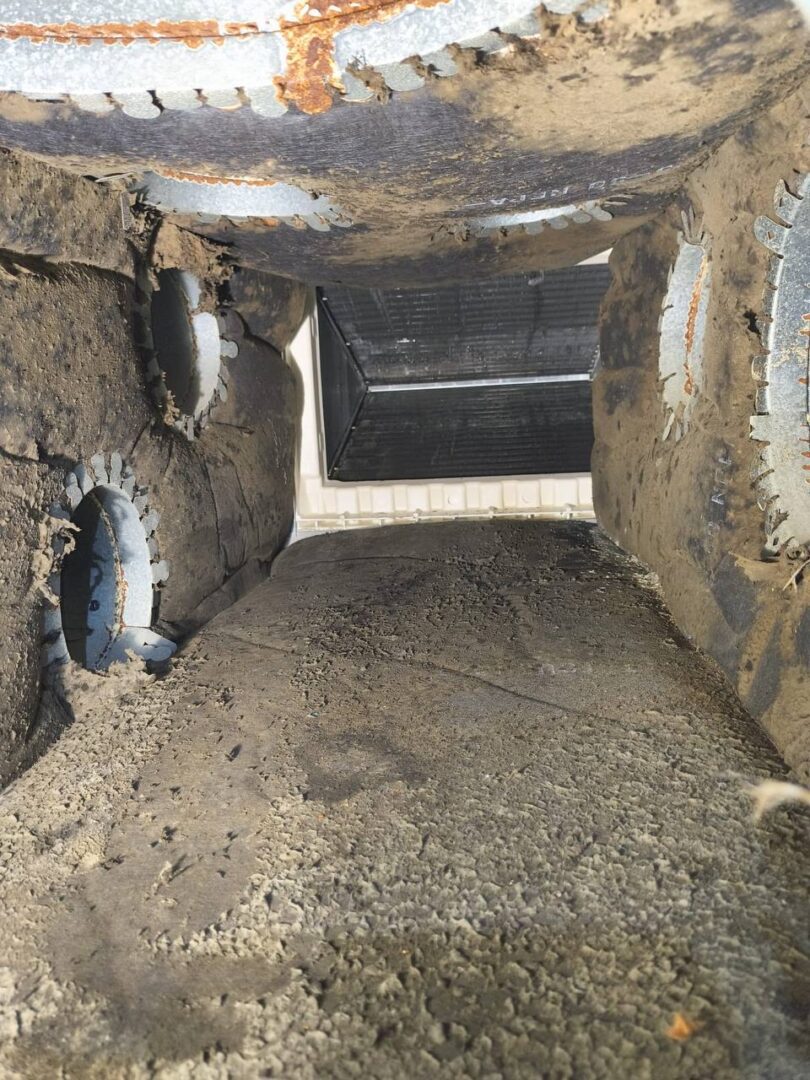
This is the most common and most significant source of musty vent odor in Houston homes. Ductwork that has accumulated organic debris over years of operation and has been repeatedly exposed to moisture — from condensation, humidity infiltration, or moisture events — provides ideal conditions for sustained mold growth.
Mold colonies inside ductwork can develop at:
– Low points in flex duct where condensation pools
– Connection points and transitions where air leaks allow humid attic air to infiltrate
– Near the air handler where the duct is exposed to coil condensation
– At return registers where dust-rich air is pulled toward the system
[Professional duct cleaning](/residential-duct-cleaning) is the only way to address this source effectively.
—
## Why Houston Homes Are Particularly Prone to This Problem
Houston’s climate is exceptional in the United States for several humidity-related reasons that directly affect HVAC systems:
**Year-round humidity:** Unlike northern markets where HVAC systems get a rest in mild, dry spring and fall seasons, Houston systems run nearly continuously. There’s almost no extended dry period during which duct surfaces can dry out naturally.
**High dew points:** Houston’s summer dew points regularly exceed 70°F — a level meteorologists consider “oppressive.” This means the moisture content of outdoor air is extremely high, creating a massive dehumidification burden for home HVAC systems.
**Attic temperatures:** Houston attics commonly reach 140°F–160°F in summer. Ductwork running through these spaces is subject to extreme temperature differentials that cause condensation on duct surfaces, particularly at connection points where insulation is thinnest.
**Extended growing season for mold:** Mold grows most actively in temperatures between 60°F and 90°F. Houston’s climate keeps indoor surfaces in that range for most of the year. Combined with consistent moisture availability, mold colonies in Houston HVAC systems grow faster and more extensively than in drier climates.
—
## Why Air Fresheners and Filters Don’t Work
Homeowners often try several things before calling a professional:
**New air filter:** Good hygiene practice, but filters don’t clean duct interiors, coils, or drain pans. Replacing a filter with established mold in the duct system will not eliminate the odor source.
**Air fresheners or odor absorbers:** These mask the smell temporarily. They do not address the mold producing the MVOCs. The odor returns within days.
**Running the system more:** Counterproductive. More runtime means more spore dispersal and more moisture cycling through the system.
**Vent covers sprayed with bleach:** This cleans the outermost surface of one register. It does nothing for the mold inside the ductwork behind it and risks releasing spores during the cleaning.
The only fix that permanently resolves musty vent odor is addressing the mold source — which requires professional equipment and expertise.
—
## What a Professional Fix Involves
Resolving musty vent odor in a Houston home typically requires a combination of:
**NADCA-standard duct cleaning:** Mechanical agitation of duct interior surfaces combined with HEPA vacuum extraction under negative air pressure removes the organic debris and mold growth that is producing the odor. Our NADCA-certified team spends approximately 7 hours on a thorough residential duct cleaning — because that’s what complete access to a typical duct system requires.
**Evaporator coil cleaning:** The coil is cleaned with appropriate coil cleaner to remove debris and biological growth from fin surfaces.
**Drain pan and drain line service:** Pan is cleaned, drain line is cleared, and the system is tested to confirm proper drainage.
**Antimicrobial treatment:** After mechanical cleaning, EPA-registered antimicrobials are applied to duct surfaces and the coil area to address residual mold and inhibit regrowth.
If the [mold remediation](/mold-remediation) finds extensive growth beyond what standard cleaning addresses, the scope is escalated accordingly — but this is determined during inspection, not assumed.
—
## After the Fix: Keeping the Smell Gone
The smell comes from mold. Mold grows where there’s moisture. Preventing recurrence requires controlling moisture:
– Maintain indoor relative humidity below 60% year-round (purchase a hygrometer — they’re inexpensive and invaluable in Houston)
– Check that your drain pan is draining properly every season
– Replace air filters on schedule (every 1–3 months in Houston, depending on household factors)
– Schedule annual duct inspections to catch early moisture issues before they become mold problems
A properly maintained system in a humidity-controlled Houston home can stay odor-free year after year. It takes consistent attention — but it’s far less disruptive than a full mold remediation.
—
## The Smell Is Trying to Tell You Something
A musty smell from your vents is not a quirk or a minor nuisance. It’s your HVAC system telling you something is wrong inside it. In Houston’s climate, that message deserves to be taken seriously.
**[Book your free inspection at crm.ahchooindoorair.com/book](https://crm.ahchooindoorair.com/book)**
Our NADCA-certified technicians will identify the source of the odor, show you what’s causing it, and explain exactly what’s needed to permanently resolve it. No guesswork, no pressure — just 38 years of Houston HVAC experience applied to your specific situation.
—
## Frequently Asked Questions
**Why does my air conditioner smell musty when it first turns on?**
A musty smell when your AC starts is typically caused by mold or mildew growing on the evaporator coil, in the drain pan, or inside the ductwork. In Houston’s humid climate, this is especially common and should be professionally inspected. The odor usually indicates an active mold problem, not just stale air.
**Is musty air from vents harmful?**
Yes. A musty odor from vents is the smell of mold VOCs (microbial volatile organic compounds) and indicates mold spores are being circulated through your home. Prolonged exposure to mold spores can cause respiratory irritation, allergy symptoms, headaches, and in sensitive individuals, more serious health effects.
**What causes musty smells from air vents specifically in Houston?**
Houston’s high humidity — often 75–90% in summer — creates near-ideal conditions for mold growth inside HVAC systems. Humidity condenses on cool duct surfaces, the evaporator coil stays wet between cycles, and organic debris in ductwork provides a food source. The combination makes musty duct odor extremely common in Houston homes.
**Can changing my air filter fix a musty smell from vents?**
Changing your filter is a good first step and should always be done, but it rarely resolves a musty vent odor. The mold causing the smell is typically on the evaporator coil, in the duct system, or in the drain pan — areas a filter cannot clean. Professional inspection and cleaning is needed.
**How do I permanently get rid of the musty smell from my vents?**
Permanent resolution requires identifying and cleaning the source of mold growth — typically the evaporator coil, drain pan, and duct system — combined with addressing the moisture conditions that caused it. This usually means professional duct cleaning, coil cleaning, and steps to improve humidity control in your home.
Also serving: Austin | Houston | South Louisiana
Related AH-CHOO resources: Houston air duct cleaning; schedule a free inspection.