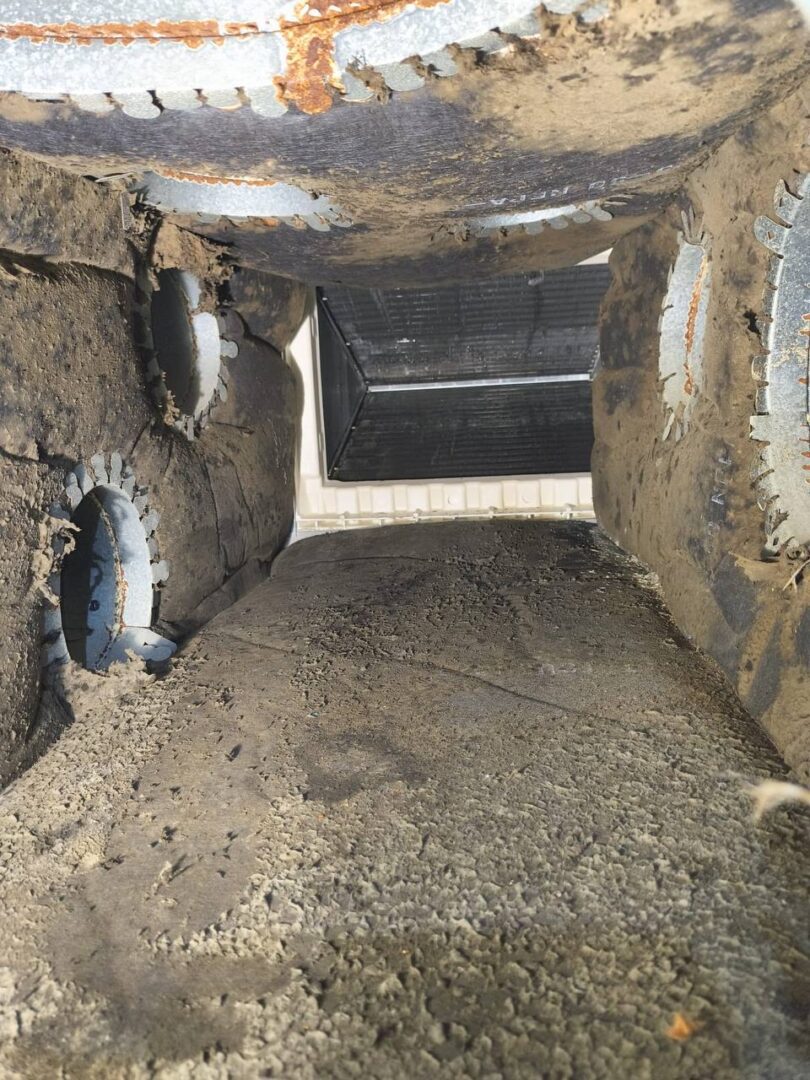
Meta Description: The IICRC S520 standard governs professional mold remediation. Learn what it requires, why it matters, and how to use it to verify your contractor is doing the job right.
“`json
{
“@context”: “https://schema.org”,
“@graph”: [
{
“@type”: “Article”,
“headline”: “IICRC S520 Mold Remediation Standard: What Homeowners Should Know”,
“description”: “The IICRC S520 standard governs professional mold remediation. Learn what it requires, why it matters, and how to use it to verify your contractor is doing the job right.”,
“author”: {
“@type”: “Organization”,
“name”: “AH-CHOO! Indoor Air Quality”
},
“publisher”: {
“@type”: “Organization”,
“name”: “AH-CHOO! Indoor Air Quality”,
“url”: “https://ahchooindoorair.com”
},
“mainEntityOfPage”: “https://ahchooindoorair.com/blog/iicrc-s520-homeowner-guide”
},
{
“@type”: “FAQPage”,
“mainEntity”: [
{
“@type”: “Question”,
“name”: “What is the IICRC S520 standard?”,
“acceptedAnswer”: {
“@type”: “Answer”,
“text”: “The IICRC S520 is the Standard and Reference Guide for Professional Mold Remediation published by the Institute of Inspection, Cleaning and Restoration Certification. It establishes best practices for the assessment and remediation of mold in buildings, covering everything from containment and personal protective equipment to cleaning methods, antimicrobial treatments, and post-remediation verification.”
}
},
{
“@type”: “Question”,
“name”: “Is IICRC S520 compliance required for mold remediation?”,
“acceptedAnswer”: {
“@type”: “Answer”,
“text”: “S520 is a voluntary industry standard, not a federal regulation. However, it is widely recognized as the benchmark for professional mold remediation practice, and many insurance companies and courts treat S520 compliance as the professional standard of care. Hiring a contractor who follows S520 is the most reliable way to ensure your remediation is done correctly.”
}
},
{
“@type”: “Question”,
“name”: “What does proper mold remediation containment look like under S520?”,
“acceptedAnswer”: {
“@type”: “Answer”,
“text”: “S520 specifies containment protocols based on the size and severity of the mold contamination. For larger or more severe situations, this includes negative air pressure containment — HEPA-filtered air scrubbers that create negative pressure in the work area to prevent spores from migrating to unaffected areas — and physical barriers to isolate the remediation zone.”
}
},
{
“@type”: “Question”,
“name”: “How does NADCA certification relate to IICRC S520 for duct mold?”,
“acceptedAnswer”: {
“@type”: “Answer”,
“text”: “NADCA (National Air Duct Cleaners Association) certification governs professional standards for HVAC duct cleaning, while IICRC S520 governs mold remediation broadly. When mold is found in ductwork, both standards are relevant — NADCA standards apply to the duct cleaning methodology, and S520 principles apply to the mold remediation approach. A contractor working on duct mold should be familiar with both.”
}
},
{
“@type”: “Question”,
“name”: “What should be documented after a mold remediation job?”,
“acceptedAnswer”: {
“@type”: “Answer”,
“text”: “S520 and professional best practices call for documentation that includes pre-remediation assessment findings, the scope of work performed, methods and products used, post-remediation verification results (including any air testing), and a clearance statement if applicable. Request this documentation from any remediation contractor — it protects you for insurance purposes and any future real estate transactions.”
}
}
]
}
]
}
“`
Most Houston homeowners who discover mold in their home have never heard of the IICRC S520 standard. That’s understandable — it’s an industry document, not consumer literature. But understanding its key principles gives homeowners a significant advantage: the ability to verify that any mold remediation contractor they hire is actually performing the job to professional standards rather than taking shortcuts.
After 38 years in the indoor air quality industry, our NADCA-certified team has seen every variation of mold remediation — from excellent work that comprehensively solves the problem to rushed, inadequate jobs that leave mold active behind freshly painted walls. The difference almost always comes down to whether the contractor followed the principles of S520 or ignored them.
This guide gives homeowners the essential knowledge to understand what professional mold remediation should look like — and how to identify when it isn’t.
What the IICRC S520 Standard Is
The IICRC S520 is the *Standard and Reference Guide for Professional Mold Remediation*, published by the Institute of Inspection, Cleaning and Restoration Certification (IICRC). It is the primary industry consensus document that establishes best practices for assessing and remediating mold contamination in residential and commercial buildings.
S520 is not a government regulation — it’s a voluntary industry standard. However, it is widely recognized as the professional benchmark for mold remediation work. Insurance companies, property managers, courts, and public health officials commonly reference S520 compliance as the standard of care for this work. When you hire a contractor and something goes wrong, S520 defines what “right” looks like.
The standard covers:
- Mold assessment and inspection protocols
- Contamination category classification
- Containment requirements by contamination level
- Personal protective equipment standards
- Cleaning and removal methods
- Antimicrobial treatment guidelines
- HVAC and ductwork handling
- Post-remediation verification and clearance
- Documentation requirements
Contamination Categories Under S520
S520 classifies mold contamination into categories based on the size and location of the affected area. This classification drives the level of containment and remediation effort required:
Condition 1 (Normal): Normal fungal ecology — no elevated levels of mold indicative of an amplification event. This is the target condition after successful remediation.
Condition 2 (Settled spores): Settled mold spores or fragments from a previous mold contamination event, without a clear current source. Elevated but not actively growing.
Condition 3 (Active growth): Active mold growth present. This is what most homeowners are dealing with when they call for remediation.
The contamination condition — combined with the affected area size — determines the containment protocol. Condition 3 contamination in a large area requires the most extensive containment measures; small, localized Condition 3 contamination may be handled with less elaborate isolation.
Containment: The Most Important Step Most Homeowners Don’t Know About
If there is one thing from S520 that every homeowner should understand, it’s containment.
When you disturb mold — through cleaning, scrubbing, removing contaminated materials — you release spores. Without proper containment, those spores travel to unaffected areas of the home and settle on surfaces, creating new growth potential wherever they land. A remediation done without adequate containment can make the spore count throughout the home significantly worse before it gets better.
S520 specifies negative air pressure containment for remediation of significant mold growth. This means:
- Physical barriers (typically plastic sheeting) that isolate the remediation work area from the rest of the building
- HEPA-filtered air scrubbers that run continuously, creating negative pressure in the work zone so air flows *into* the area rather than out of it
- Properly sealed containment barriers that prevent spore migration during cleaning
When mold is found in ductwork — where the distribution pathway is inherently the entire house — negative air pressure within the duct system itself is established before cleaning begins. This is the duct-specific application of the containment principle.
A contractor who skips containment and simply scrubs visible mold without isolation is not following S520. And they’re potentially making your spore count worse.
Personal Protective Equipment (PPE) Standards
S520 specifies PPE requirements for remediation workers based on contamination level. For Condition 3 remediation, this includes respiratory protection (minimum N-95 respirator, full-face respirator for significant exposures), disposable coveralls, gloves, and eye protection.
If a contractor shows up to remediate significant mold in your home in regular work clothes with no respiratory protection, that’s a red flag for their professional standards overall — not just their PPE compliance.
Cleaning and Removal Methods Under S520
S520 distinguishes between different types of remediation approaches based on the material being treated:
Porous materials with significant mold growth (drywall, ceiling tiles, carpet, insulation) typically require removal and proper disposal rather than surface cleaning. Mold penetrates porous materials and cannot be fully removed by surface treatment alone.
Semi-porous materials (wood framing, concrete) can sometimes be cleaned in place using appropriate methods — but requires thorough cleaning that reaches into the material, not just surface treatment.
Non-porous materials (metal ductwork, glass, some plastics) can be cleaned in place with appropriate mechanical cleaning and antimicrobial treatment.
For ductwork, this means that metal ducts can be cleaned and treated. Flex duct with significant mold growth may need replacement, as the porous liner inside flex duct can harbor mold that mechanical cleaning cannot fully address. [Our residential duct cleaning team](/residential-duct-cleaning) assesses each section individually to make this determination.
Antimicrobial Treatment: What It Does and Doesn’t Do
S520 addresses the use of antimicrobial products in mold remediation. The important point for homeowners: antimicrobials are a finishing step, not a substitute for mechanical cleaning.
No antimicrobial product can penetrate a significant mold colony and kill it from outside. The biofilm and organic matter of the colony protect interior cells from contact with surface-applied biocides. The sequence must be: mechanical removal first, antimicrobial application second.
Be skeptical of any contractor who proposes to spray antimicrobials on mold without thorough mechanical cleaning first. This is a surface treatment that creates the appearance of remediation without the substance.
EPA-registered antimicrobial products are appropriate as a finishing step after mechanical cleaning to address residual spores and inhibit regrowth. They’re valuable in that role — just not as a standalone treatment.
Post-Remediation Verification: How You Know It Worked
S520 specifies that remediation work should be followed by post-remediation verification — assessment to confirm that the work was successful and the area has been returned to Condition 1.
Verification can include:
- Visual inspection of cleaned areas confirming no visible mold growth remains
- Air sampling to confirm that mold spore counts are within normal parameters
- Surface sampling if specific documentation of surface cleanliness is required
For duct mold remediation, post-remediation verification typically involves a combination of visual inspection of accessible duct sections and potentially air sampling at supply registers to confirm that spore counts have returned to normal.
This documentation matters: it’s your evidence that the job was done correctly, and it’s what you’ll need if a real estate transaction, insurance claim, or health concern ever requires documentation of your home’s mold status.
How NADCA and S520 Work Together for Duct Mold
When mold is found in ductwork, two sets of professional standards are relevant:
NADCA ACR (Assessment, Cleaning and Restoration) standards govern the duct cleaning methodology — equipment, techniques, and quality standards for cleaning HVAC systems.
IICRC S520 governs the mold remediation aspects — containment, antimicrobial treatment, documentation, and verification.
A contractor performing [mold remediation](/mold-remediation) on HVAC ductwork should be familiar with and operating according to both. Our NADCA-certified team applies both sets of standards on every duct mold job.
Using This Knowledge to Protect Yourself
When you’re evaluating mold remediation contractors, the following questions — informed by S520 — help you distinguish between professionals and those cutting corners:
- What containment protocol will you use for this remediation?
- Will you establish negative air pressure in the affected area?
- What PPE will your crew be wearing?
- How will you handle removal of porous contaminated materials?
- What antimicrobial products will you use, and in what sequence relative to mechanical cleaning?
- What post-remediation verification will you provide?
- What documentation will I receive at the end of the job?
A contractor who can answer all of these questions clearly and specifically is operating like a professional. One who gets vague or defensive is worth reconsidering.
Get It Done Right From the Start
Understanding what professional mold remediation looks like is the first step. The second step is hiring a team that actually delivers it.
[Book your free inspection at crm.ahchooindoorair.com/book](https://crm.ahchooindoorair.com/book)
Our NADCA-certified team follows professional standards — both NADCA methodology and IICRC S520 principles — on every job. You’ll know exactly what we’re doing, why we’re doing it, and what documentation you’ll receive when we’re done. 38 years of experience means we’ve seen what happens when standards are skipped — and we’re committed to ensuring it doesn’t happen on your home.
Frequently Asked Questions
What is the IICRC S520 standard?
The IICRC S520 is the Standard and Reference Guide for Professional Mold Remediation published by the Institute of Inspection, Cleaning and Restoration Certification. It establishes best practices for the assessment and remediation of mold in buildings, covering everything from containment and personal protective equipment to cleaning methods, antimicrobial treatments, and post-remediation verification.
Is IICRC S520 compliance required for mold remediation?
S520 is a voluntary industry standard, not a federal regulation. However, it is widely recognized as the benchmark for professional mold remediation practice, and many insurance companies and courts treat S520 compliance as the professional standard of care. Hiring a contractor who follows S520 is the most reliable way to ensure your remediation is done correctly.
What does proper mold remediation containment look like under S520?
S520 specifies containment protocols based on the size and severity of the mold contamination. For larger or more severe situations, this includes negative air pressure containment — HEPA-filtered air scrubbers that create negative pressure in the work area to prevent spores from migrating to unaffected areas — and physical barriers to isolate the remediation zone.
How does NADCA certification relate to IICRC S520 for duct mold?
NADCA certification governs professional standards for HVAC duct cleaning, while IICRC S520 governs mold remediation broadly. When mold is found in ductwork, both standards are relevant — NADCA standards apply to the duct cleaning methodology, and S520 principles apply to the mold remediation approach. A contractor working on duct mold should be familiar with both.
What should be documented after a mold remediation job?
S520 and professional best practices call for documentation that includes pre-remediation assessment findings, the scope of work performed, methods and products used, post-remediation verification results (including any air testing), and a clearance statement if applicable. Request this documentation from any remediation contractor — it protects you for insurance purposes and any future real estate transactions.