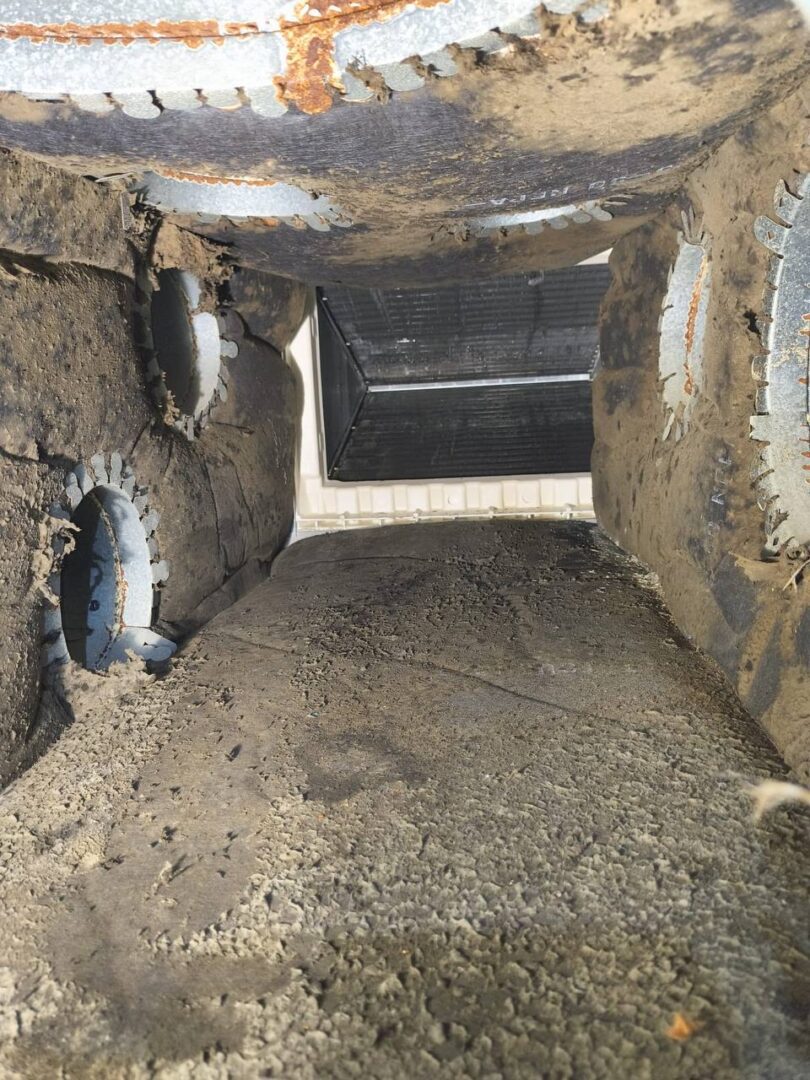
If you’ve lived in Texas for any length of time, you’ve encountered mold. In bathrooms, under sinks, around window frames during hurricane season — Texas’s climate produces mold with the same inevitability that other states produce ice in winter. What most Texas homeowners don’t fully appreciate is that the most significant mold risk in their home isn’t on the walls they can see. It’s inside the ductwork they can’t.
Texas HVAC systems face a combination of conditions that virtually no other state in the country replicates: extreme summer heat that drives continuous operation, Gulf humidity that loads the air with moisture, attic environments that generate condensation on ductwork, and a climate that never really allows HVAC components to fully dry out. The result is a system that, without proper maintenance, becomes a mold colony by degrees — slowly, invisibly, and with real consequences for the air quality of every room in your home.
After 38 years of HVAC and duct work across Texas’s Gulf Coast markets, our NADCA-certified team has a detailed picture of exactly why this happens and what it takes to prevent it.
The Texas Climate: Why It’s Different
Heat That Doesn’t Stop
Texas HVAC systems run. In Houston, the average cooling season runs approximately nine months out of twelve. In August, Houston’s air conditioning demand is among the highest of any major metropolitan area in the United States. Systems that in cooler states might run 8–10 hours per day are running 16–20 hours per day in a Houston summer.
More runtime means more condensation cycles on the evaporator coil, more moisture accumulation in drain pans, more temperature cycling in ductwork — and more opportunity for moisture to establish itself inside the system.
Gulf Humidity Load
The Gulf of Mexico is effectively a massive humidifier positioned on Texas’s doorstep. Southeast winds from the Gulf carry air with dew points that can reach 75°F or higher during peak summer — an extraordinary moisture load that HVAC systems must continuously combat. Your air conditioner removes this moisture from indoor air on every cooling cycle. When the system isn’t properly removing it — due to oversizing, poor maintenance, or refrigerant issues — that humidity circulates through the duct system repeatedly.
Attic Conditions
Texas homes typically route the majority of their ductwork through attic spaces. Texas attics are among the most extreme environments in residential construction: temperatures of 130°F–160°F in summer are common. When cold supply air flows through ducts in these spaces, the temperature differential creates condensation on duct surfaces — particularly at connection points, flex duct sags, and areas where insulation has deteriorated.
This condensation is a persistent moisture source that standard HVAC maintenance rarely addresses.
Year-Round Growing Season for Mold
In northern states, winter temperatures below 40°F slow or halt mold growth for months at a time. Texas rarely provides this natural interruption. Mold grows actively in temperatures from roughly 60°F to 90°F — a range that Gulf Coast Texas maintains indoors for essentially 12 months of the year. There is no seasonal die-off that reduces the mold pressure on Texas HVAC systems.
The Specific Conditions That Drive Mold in Texas HVAC Systems
Oversized Equipment and Short Cycling
One of the most common contributors to HVAC mold problems in Texas homes is equipment that’s been oversized for the home’s actual load. Oversized air conditioners cool the home quickly — dropping the temperature in 8–12 minutes — and then shut off. These short cycles don’t allow the system to complete a full dehumidification pass. The result: temperature-comfortable rooms with 65–75% relative humidity. That indoor humidity is the moisture mold uses to grow in ductwork.
Clogged Drain Lines
In Texas’s continuous-operation climate, condensate drain lines clog with algae, scale, and debris regularly. A clogged drain line causes water to back up into the drain pan. When that pan fills, water can overflow toward the air handler and introduce moisture to ductwork connections and components that should remain dry. This is a common and preventable cause of localized mold problems near the air handler.
Duct Leaks and Thermal Bypassing
Studies of Texas homes consistently find significant air leakage rates in duct systems — often 20–30% of system airflow lost through unsealed seams, disconnected flex duct, and failed connections. In the context of mold: every air leak is an entry point for hot, humid attic air into the cool duct interior. That introduction of hot humid air to a cool surface generates condensation reliably.
Flex Duct Sags and Low Points
Flex duct — the flexible, corrugated duct material commonly used in Texas homes — sags between support points over time. These sags create low points where condensation collects, debris accumulates, and moisture sits. Without regular inspection and correction, these accumulation points become localized mold zones within the duct system.
How Mold Travels Through Your Home
Once mold establishes a colony inside your Texas HVAC system, the mechanism for home-wide contamination is already in place. Your blower fan circulates conditioned air through 200, 400, or more linear feet of ductwork and distributes it through every supply register in your home. Mold spores released by colonies anywhere in that system are carried along by the airstream and deposited throughout every room.
This is what makes HVAC mold different from surface mold in a single bathroom or under a sink. A mold problem in the duct system is effectively distributed to your entire living space automatically, continuously, and invisibly.
The HVAC Components at Highest Risk
Evaporator Coil
The evaporator coil is wet during every cooling cycle. Dust and debris accumulate on the coil’s fin surfaces despite filtration. This creates biofilm — a nutrient-rich, moist layer — that supports mold growth. A dirty, mold-colonized coil produces musty odors and releases spores into every cubic foot of air that passes through the system.
Condensate Drain Pan
Located beneath the evaporator coil, the drain pan collects condensation. In a continuously running Texas system, this pan sees significant daily water volume. Algae and mold commonly grow here. A full, overflowing, or moldy drain pan is a direct moisture source for surrounding ductwork and building materials.
Return Air Ductwork
Return ducts pull air from living spaces back toward the air handler. They also pull from wherever they’re pulling from — attic air if there are leaks, crawl space air if returns are poorly sealed. Return ductwork that’s contaminated distributes that contamination throughout the entire system.
Supply Duct Flex Runs
The sagging, insulated flex duct runs between supply plenums and registers are one of the most common locations for localized mold growth. They’re difficult to inspect without camera equipment and difficult to clean without proper tools.
What Proper Prevention Looks Like
For Texas homeowners, mold prevention in HVAC systems requires a multi-layer approach:
Regular professional duct cleaning: Removing the organic debris that serves as mold’s food source is the foundation of prevention. NADCA-certified cleaning — mechanical agitation plus HEPA vacuum extraction — is the standard that actually removes interior duct contamination.
Annual system maintenance: Coil cleaning, drain pan treatment, drain line flushing, and refrigerant checks maintain the components most prone to moisture accumulation. These tasks are separate from duct cleaning but equally important.
Humidity monitoring and control: A hygrometer in each zone of your home lets you track actual indoor humidity. Maintaining levels consistently below 60% removes the primary growth driver from the equation.
Duct sealing and insulation assessment: Addressing leaks and insulation deficiencies removes the pathways through which humid attic air enters the duct system.
Annual inspections: Our NADCA-certified team conducts comprehensive duct inspections that identify moisture risks, early mold growth, and system deficiencies before they become major problems.
If mold is already established, prevention measures aren’t sufficient. Professional mold remediation is required to address active contamination before prevention can be effective.
Texas Homeowners Can’t Afford to Ignore This
The combination of factors that make Texas HVAC systems particularly vulnerable to mold isn’t going away. The heat, the humidity, and the demand on these systems are permanent features of Texas life. What Texas homeowners can control is how proactively they respond.
Our NADCA-certified technicians will inspect your Texas HVAC system, identify mold risk factors specific to your equipment and home design, and give you a clear picture of where you stand. 38 years of experience in Gulf Coast markets means we understand these systems — and this climate — as well as anyone in the industry.
Frequently Asked Questions
Why do Texas homes have more mold in HVAC systems than other states?
Texas HVAC systems run longer, work harder, and operate in higher ambient humidity than systems in most other states. The Gulf Coast region in particular combines extreme summer heat with consistently high humidity, creating near-perfect conditions for mold growth inside ductwork, on evaporator coils, and in drain pans year-round.
Does running air conditioning more often increase mold risk?
Ironically, yes — in certain conditions. An oversized or poorly maintained AC system that short-cycles (turns on and off frequently without completing full dehumidification cycles) can maintain comfortable temperatures while leaving humidity levels high. That humidity circulating through the duct system over months creates ideal mold growth conditions.
What parts of a Texas HVAC system are most prone to mold?
The evaporator coil and drain pan are the highest-risk components because they are perpetually wet during operation. The ductwork — particularly flex duct in attic spaces and return air sections — is the second highest risk area. Return ducts that pull air from humid spaces or have leaks allowing attic air infiltration are especially vulnerable.
How can I tell if my Texas home’s HVAC has a mold problem?
Key indicators include a musty odor when the system runs, dark discoloration around supply or return vents, household members experiencing allergy or respiratory symptoms that improve outside the home, and visible growth on accessible duct sections or around the air handler. A professional inspection with camera equipment is the definitive assessment tool.
Is mold in HVAC systems a year-round problem in Texas?
Yes. Unlike northern states where winter temperatures slow or halt mold growth, Texas temperatures rarely drop low enough to meaningfully interrupt mold’s growth cycle. Gulf Coast cities like Houston see mold-favorable conditions for essentially 12 months of the year.
For a deep dive into the root causes, see our guide: What Causes Mold in Air Ducts?