Meta Description: Dirty ducts force your Texas HVAC system to work harder, driving up energy bills. Learn how duct contamination reduces efficiency and what professional cleaning restores.
“`json
{
“@context”: “https://schema.org”,
“@graph”: [
{
“@type”: “Article”,
“@id”: “https://ahchooindoorair.com/blog/hvac-efficiency-dirty-ducts-texas”,
“headline”: “How Dirty Ducts Kill Your HVAC Efficiency (and Your Energy Bill)”,
“description”: “Dirty ducts force your Texas HVAC system to work harder, driving up energy bills. Learn how duct contamination reduces efficiency and what professional cleaning restores.”,
“url”: “https://ahchooindoorair.com/blog/hvac-efficiency-dirty-ducts-texas”,
“datePublished”: “2026-03-26”,
“dateModified”: “2026-03-26”,
“author”: {
“@type”: “Organization”,
“name”: “AH-CHOO! Indoor Air Quality”,
“url”: “https://ahchooindoorair.com”
},
“publisher”: {
“@type”: “Organization”,
“name”: “AH-CHOO! Indoor Air Quality”,
“logo”: {
“@type”: “ImageObject”,
“url”: “https://ahchooindoorair.com/logo.png”
}
}
},
{
“@type”: “FAQPage”,
“mainEntity”: [
{
“@type”: “Question”,
“name”: “How do dirty ducts affect HVAC efficiency?”,
“acceptedAnswer”: {
“@type”: “Answer”,
“text”: “Debris accumulation inside ducts increases airflow resistance, forcing the blower to work harder and run longer to move the same volume of conditioned air. A dirty evaporator coil — one of the most common findings in uncleaned systems — can reduce HVAC efficiency by 20-40% by impairing heat transfer between the coil and the air passing over it.”
}
},
{
“@type”: “Question”,
“name”: “Can dirty ducts increase my electricity bill in Texas?”,
“acceptedAnswer”: {
“@type”: “Answer”,
“text”: “Yes. A Texas HVAC system running during summer can be the largest single energy expense in a home. When debris-laden ducts increase airflow resistance and a dirty coil reduces heat transfer efficiency, the system runs longer per cycle and uses more electricity to achieve the same cooling. The DOE estimates dirty systems can consume 25-40% more energy than clean systems.”
}
},
{
“@type”: “Question”,
“name”: “What parts of my HVAC system are most affected by debris buildup?”,
“acceptedAnswer”: {
“@type”: “Answer”,
“text”: “The evaporator coil is most critically affected — debris coating the coil fins dramatically reduces heat transfer efficiency. The blower wheel is second — debris buildup on blower blades reduces airflow output while increasing motor load. The return duct system third — restricted return airflow creates the pressure imbalances that stress the entire system.”
}
},
{
“@type”: “Question”,
“name”: “Does duct cleaning extend HVAC system life?”,
“acceptedAnswer”: {
“@type”: “Answer”,
“text”: “Yes. A system running against increased airflow resistance runs longer cycles and works harder, generating more heat in the motor and compressor. Reduced operating stress through clean ducts and coils translates to fewer breakdowns, reduced wear on components, and longer system lifespan.”
}
},
{
“@type”: “Question”,
“name”: “Why does my AC seem to run constantly but never reach the set temperature?”,
“acceptedAnswer”: {
“@type”: “Answer”,
“text”: “Continuous running without reaching setpoint is a classic sign of an efficiency problem. The most common cause in Houston homes is a dirty evaporator coil reducing heat transfer, combined with duct debris limiting airflow. The system can’t transfer enough heat to achieve the target temperature no matter how long it runs.”
}
}
]
}
]
}
“`
Texas HVAC systems work harder than almost any others in the country. During Houston summers, your air conditioning may run nearly continuously — and your electricity bill reflects it. What most Texas homeowners don’t realize is that a portion of that electricity cost isn’t the price of cooling a hot climate. It’s the penalty for running a dirty system.
Dirty duct systems don’t just compromise your air quality. They make your HVAC work significantly harder, run longer, and wear out faster. Understanding how this works — and what it costs you — makes the case for professional duct cleaning much clearer than most homeowners expect.
The Airflow Physics of Dirty Ducts
Your HVAC system is designed around airflow. The blower motor moves a specific volume of air — measured in cubic feet per minute — through a duct system sized to accept that airflow with minimal resistance. When conditions change the resistance of the duct system, the blower has to work harder to move the same amount of air.
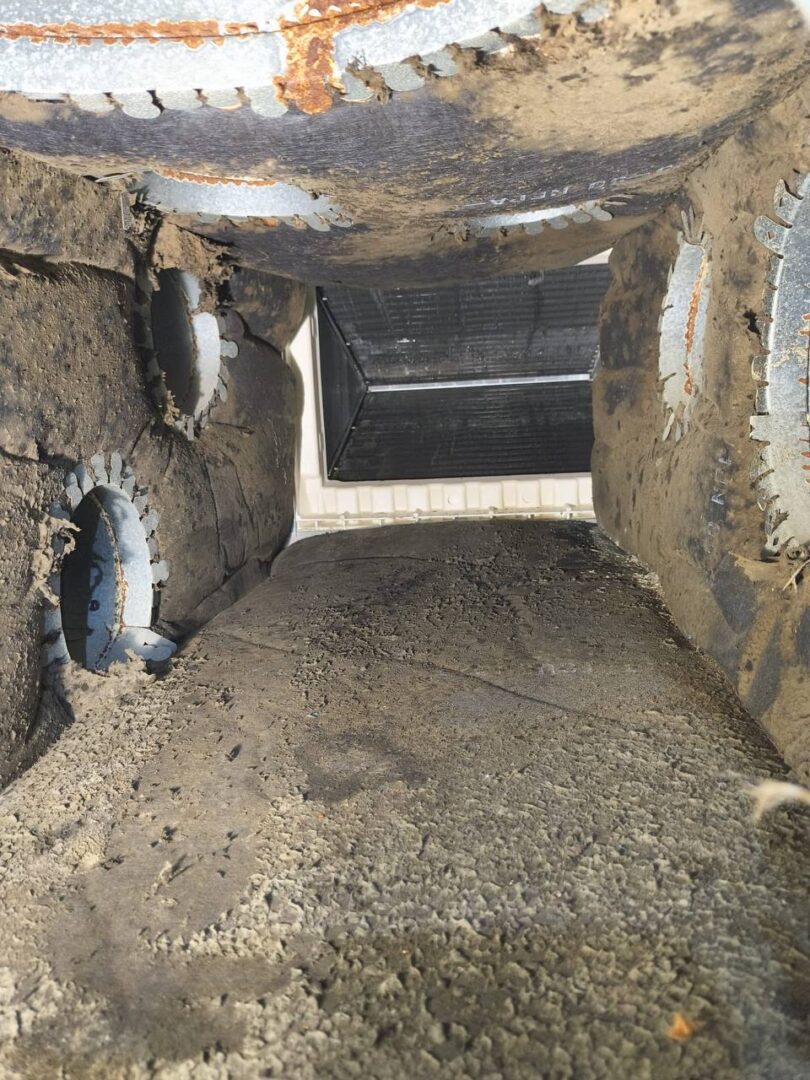
Debris accumulation changes the duct’s effective internal diameter. A flex duct section with significant interior wall buildup has a smaller effective cross-section than a clean section of the same nominal size. More debris means more resistance. More resistance means the blower works harder — running at higher amperage, generating more heat, and moving less air for the same energy input.
In a residential HVAC system, even a relatively modest reduction in effective duct diameter can increase system energy consumption measurably. The cumulative effect across an entire debris-loaded duct system is significant.
The Texas-Specific Problem
Texas homes run HVAC systems for 10-11 months per year. The cumulative debris accumulation is higher than in cooler climates simply because the system runs more. A five-year-old duct system in Houston has had more runtime — and accumulated more debris — than a seven-year-old system in a northern climate.
Add Houston’s humidity, which causes debris to compact and adhere to duct surfaces more effectively than dry debris, and you have a recipe for progressively deteriorating airflow efficiency that goes unnoticed until the system is either inspected or stops meeting demand.
The Evaporator Coil: Where Efficiency Dies
The most significant efficiency impact from system contamination doesn’t come from the ducts themselves — it comes from the evaporator coil in the air handler.
The evaporator coil is the heat transfer heart of your air conditioning system. Refrigerant runs through the coil at temperatures well below the desired supply air temperature. As air passes over the coil fins, it gives up heat to the refrigerant, drops in temperature, and continues through the duct system as conditioned supply air.
This heat transfer process depends entirely on direct contact between air and the coil surface. When debris accumulates on the coil — dust, biological growth, and in severe cases a matted layer of particulate matter — it acts as thermal insulation, reducing the rate of heat transfer between the air and the refrigerant.
The consequences compound:
Reduced cooling per unit of runtime. The system runs its full cycle but transfers less heat, delivering supply air that’s warmer than it should be. Your thermostat calls for more cooling because the setpoint isn’t being reached.
Extended runtimes. The system runs longer to achieve the same cooling effect it would reach quickly with a clean coil.
Higher energy consumption. Longer runtimes plus the compressor running harder to maintain refrigerant pressure against reduced heat transfer.
Potential coil freeze. Severely restricted airflow across a dirty coil can cause ice to form on the coil, further reducing efficiency and eventually shutting the system down entirely.
The Department of Energy has cited estimates that a dirty coil can reduce air conditioning efficiency by 20-40%. On a Texas electricity bill during a Houston summer, that percentage represents a substantial dollar amount.
One of our jobs in Cypress involved a home that had never had the air handler coil cleaned in 11 years. The coil was so heavily loaded with debris that airflow through it was visibly restricted during our inspection. The homeowner had been complaining to their HVAC company for two years that the system ran constantly but the house never got below 74°F. After cleaning, the system reached its setpoint for the first time in years.
The Blower Wheel: A Often-Overlooked Culprit
The blower wheel is the fan that moves air through the entire system. It’s positioned in the air handler, pulling air from the return side and pushing it through the supply side.
Blower wheel blades accumulate debris over time — particularly the small curved blades in squirrel-cage style fans found in most residential systems. As debris coats the blades, two things happen:
Reduced airflow. Blade geometry is engineered to move air efficiently. Debris changes the blade profile, reducing its ability to impart velocity to air. The wheel spins at the same RPM but moves less air.
Increased motor load. Moving a debris-coated wheel requires more energy from the motor, increasing electricity consumption and generating more heat in the motor itself.
We’ve seen blower wheels in neglected systems that were visibly clogged with matted debris — barely recognizable as blades. The homeowner’s system was consuming significant energy while delivering a fraction of its rated airflow.
Duct Leakage: The Efficiency Problem That Compounds Everything
Beyond contamination, duct leakage represents a separate but related efficiency drain that’s common in older Texas homes.
When supply ducts lose conditioned air through leaks before it reaches the living space, the system has to work longer to compensate. When return ducts draw in hot, humid attic air through leaks rather than return air from the conditioned space, the system is fighting against that infiltration on every cycle.
In Houston attics — where temperatures regularly exceed 140°F in summer — return duct leakage is particularly costly. Every cubic foot of attic air pulled in through return duct leaks is unconditioned air the system must then cool to setpoint.
[Residential duct cleaning](https://ahchooindoorair.com/residential-duct-cleaning) includes inspection of the duct system for leakage and disconnection issues. Identifying and addressing these compound the efficiency benefits of cleaning.
What Cleaning Restores
Professional duct cleaning addresses the efficiency-impacting contamination at each point in the system:
- Duct interiors cleaned: Airflow resistance returns to design specifications
- Evaporator coil cleaned: Heat transfer efficiency restored
- Blower wheel cleaned: Airflow output increases and motor load decreases
- Register boots cleaned: No localized obstruction at supply outlets
The combination typically produces measurably improved system performance — shorter cycles to reach setpoint, lower runtime totals, and in many cases noticeably improved airflow from registers that had been delivering reduced volume.
For businesses managing large commercial HVAC systems, [commercial duct cleaning](https://ahchooindoorair.com/commercial-duct-cleaning) applies these same principles at a scale where the efficiency impact on monthly energy spend can be substantial.
When biological contamination like mold is found in the process, [mold remediation](https://ahchooindoorair.com/mold-remediation) ensures the problem is fully resolved rather than redistributed.
The System Longevity Argument
Beyond energy costs, there’s a second financial argument for maintaining a clean duct system: your HVAC equipment lasts longer.
A system running against elevated resistance works harder during every cycle. The compressor — the most expensive component in the system — runs at higher load. The blower motor runs hotter. Components that are rated for 15-20 years of service under normal operating conditions wear faster under the elevated stress of a dirty, restricted system.
Early compressor failure on an otherwise functional system is an expensive outcome. In Houston’s climate, with the HVAC running as much as it does, the operating stress on a clean system versus a contaminated one is a meaningful factor in equipment lifespan.
Take the First Step
A free inspection tells you what state your system is actually in. Many homeowners discover efficiency-impairing contamination they had no idea existed — and understand for the first time why their summer bills have been trending upward.
[Book your free inspection at crm.ahchooindoorair.com/book](https://crm.ahchooindoorair.com/book)
Frequently Asked Questions
How do dirty ducts affect HVAC efficiency?
Debris accumulation inside ducts increases airflow resistance, forcing the blower to work harder and run longer to move the same volume of conditioned air. A dirty evaporator coil — one of the most common findings in uncleaned systems — can reduce HVAC efficiency by 20-40% by impairing heat transfer between the coil and the air passing over it.
Can dirty ducts increase my electricity bill in Texas?
Yes. A Texas HVAC system running during summer can be the largest single energy expense in a home. When debris-laden ducts increase airflow resistance and a dirty coil reduces heat transfer efficiency, the system runs longer per cycle and uses more electricity to achieve the same cooling. The DOE estimates dirty systems can consume 25-40% more energy than clean systems.
What parts of my HVAC system are most affected by debris buildup?
The evaporator coil is most critically affected — debris coating the coil fins dramatically reduces heat transfer efficiency. The blower wheel is second — debris buildup on blower blades reduces airflow output while increasing motor load. The return duct system third — restricted return airflow creates the pressure imbalances that stress the entire system.
Does duct cleaning extend HVAC system life?
Yes. A system running against increased airflow resistance runs longer cycles and works harder, generating more heat in the motor and compressor. Reduced operating stress through clean ducts and coils translates to fewer breakdowns, reduced wear on components, and longer system lifespan.
Why does my AC seem to run constantly but never reach the set temperature?
Continuous running without reaching setpoint is a classic sign of an efficiency problem. The most common cause in Houston homes is a dirty evaporator coil reducing heat transfer, combined with duct debris limiting airflow. The system can’t transfer enough heat to achieve the target temperature no matter how long it runs.
Related AH-CHOO! resources:
- Houston residential duct cleaning — complete home HVAC maintenance
- Commercial air duct cleaning — workplace efficiency solutions
- Signs your air ducts need cleaning — know when it’s time
Learn more about schedule a duct cleaning appointment.