Meta Description: Houston’s extreme humidity makes air duct mold prevention critical for every homeowner. Learn how moisture gets in, what stops it, and when to call a professional.
“`json
{
“@context”: “https://schema.org”,
“@graph”: [
{
“@type”: “Article”,
“headline”: “Houston Humidity and Your Air Ducts: A Mold Prevention Guide”,
“description”: “Houston’s extreme humidity makes air duct mold prevention critical for every homeowner. Learn how moisture gets in, what stops it, and when to call a professional.”,
“author”: {
“@type”: “Organization”,
“name”: “AH-CHOO! Indoor Air Quality”
},
“publisher”: {
“@type”: “Organization”,
“name”: “AH-CHOO! Indoor Air Quality”,
“url”: “https://ahchooindoorair.com”
},
“mainEntityOfPage”: “https://ahchooindoorair.com/blog/houston-humidity-air-duct-mold-prevention”
},
{
“@type”: “FAQPage”,
“mainEntity”: [
{
“@type”: “Question”,
“name”: “What humidity level prevents mold in air ducts?”,
“acceptedAnswer”: {
“@type”: “Answer”,
“text”: “Maintaining indoor relative humidity below 60% — ideally between 45% and 55% — is the most effective way to prevent mold growth in air ducts and throughout your home. In Houston, achieving this often requires a properly sized HVAC system and may benefit from supplemental dehumidification.”
}
},
{
“@type”: “Question”,
“name”: “How does humidity get into air ducts?”,
“acceptedAnswer”: {
“@type”: “Answer”,
“text”: “Humidity enters ductwork through several pathways: leaky duct seams that allow humid attic or crawl space air to infiltrate, condensation on duct surfaces when cold air flows through hot spaces, and inadequate dehumidification that allows humid indoor air to circulate without moisture removal.”
}
},
{
“@type”: “Question”,
“name”: “How often should Houston homeowners have their ducts inspected?”,
“acceptedAnswer”: {
“@type”: “Answer”,
“text”: “Annual inspections are recommended for Houston homes. Given the city’s humidity levels, an inspection before the peak summer season helps identify moisture issues and early mold growth before they become major problems.”
}
},
{
“@type”: “Question”,
“name”: “Does duct cleaning prevent mold?”,
“acceptedAnswer”: {
“@type”: “Answer”,
“text”: “Duct cleaning removes the accumulated debris — dust, skin cells, organic matter — that mold uses as a food source. By removing that fuel, you make your ductwork a much less hospitable environment for mold growth. It’s a key prevention tool, but must be combined with humidity control to be effective long-term.”
}
},
{
“@type”: “Question”,
“name”: “Can new homes in Houston get mold in the ducts?”,
“acceptedAnswer”: {
“@type”: “Answer”,
“text”: “Yes. New construction in Houston is not immune. In fact, the construction process can introduce moisture into building materials before the home is occupied, and a new HVAC system that isn’t properly commissioned for Houston’s humidity load can create conditions for early mold growth in ductwork.”
}
}
]
}
]
}
“`
Ask any Houston homeowner what they spend the most on utilities and you’ll get the same answer every time: air conditioning. This city runs its HVAC systems longer, harder, and more continuously than virtually anywhere else in the continental United States. What most homeowners don’t fully appreciate is that the more you run your system in Houston’s climate, the greater the ongoing battle against moisture inside your ductwork.
Humidity isn’t just uncomfortable in Houston. It’s a structural threat to your indoor air quality. And your air ducts are the primary battlefield where that threat plays out — invisibly, continuously, and often without any warning until mold has already established a foothold.
This guide is built on 38 years of inspecting Houston ductwork. What we’ve learned is that mold prevention in this climate isn’t about one magic fix — it’s about understanding the moisture pathways and systematically closing them off.
Understanding Houston’s Humidity Problem
Houston’s climate is classified as humid subtropical. That means long, hot, intensely humid summers and mild winters — with humidity that rarely drops to comfortable levels even in the cooler months.
Key humidity facts for Houston homeowners:
- Average summer relative humidity: 75–90%
- Average annual relative humidity: approximately 76%
- Dew points regularly reach 70°F or higher in peak summer (dew points above 65°F feel oppressive and signal extremely high moisture content in the air)
- Houston receives approximately 50 inches of rainfall annually — more than Seattle
The implications for your home are significant. Your HVAC system is constantly working to remove moisture from the air, not just cool it. When that system is slightly undersized, poorly maintained, or running with leaky ducts, moisture accumulates inside the ductwork — and mold follows.
How Moisture Gets Into Your Air Ducts
Understanding the pathways is the first step to blocking them. In Houston homes, moisture infiltrates ductwork through four primary mechanisms:
1. Attic Heat Differentials and Condensation
Houston attics regularly reach 140°F–160°F in summer. When cold supply air flows through ducts routed through these spaces, the temperature differential between the duct interior and the hot exterior environment creates condensation — particularly at connection points, transitions, and areas where duct insulation has deteriorated.
This condensation creates persistent surface moisture inside and outside the ductwork. It’s a slow drip, but over a Houston summer, it adds up to significant moisture exposure.
2. Duct Leaks Allowing Humid Air Infiltration
Studies suggest that the average home loses 20–30% of conditioned air through duct leaks. In Houston, this isn’t just an energy efficiency problem — it’s a humidity control problem. Every gap or unsealed seam in your duct system is an entry point for hot, humid attic air to enter the duct interior.
Return ducts are particularly vulnerable. A return duct pulling from an attic space is essentially vacuuming humid air into the system with every cycle.
3. Inadequate Dehumidification
Your air conditioner removes moisture from indoor air as part of the cooling process. But in Houston, an air conditioner that’s oversized — which is common, because contractors often err on the side of bigger — short-cycles, meaning it runs for brief periods and shuts off before completing a dehumidification cycle. The result is a home that reaches the target temperature but remains excessively humid.
Humid air circulating through your duct system continuously deposits small amounts of moisture on duct interior surfaces over months and years.
4. Construction Moisture and New Homes
Houston’s construction pace is rapid. In many cases, framing, drywall, and HVAC installation occur during wet weather, trapping construction moisture inside building assemblies. Duct systems installed during wet periods can have elevated interior moisture from day one.
The Mold Growth Equation in Ductwork
Mold requires three things to grow: moisture, an organic food source, and the right temperature range. Your ductwork provides all three:
- Moisture: From condensation, duct leaks, and inadequate dehumidification
- Food source: The dust, skin cells, pollen, and organic debris that accumulates on duct interior surfaces over time
- Temperature: Your HVAC system cycles between cool and ambient, keeping duct surface temperatures within the range mold prefers for most of the year
Remove one of these three elements and you interrupt the growth cycle. The most practical element to control in Houston is moisture — through proper dehumidification, duct sealing, and adequate insulation. The food source can be reduced through [professional duct cleaning](/residential-duct-cleaning). Temperature is not realistically controllable.
Prevention Strategies That Actually Work
After decades of working in Houston homes, we’ve identified the prevention measures that make a measurable difference:
Regular Professional Duct Cleaning
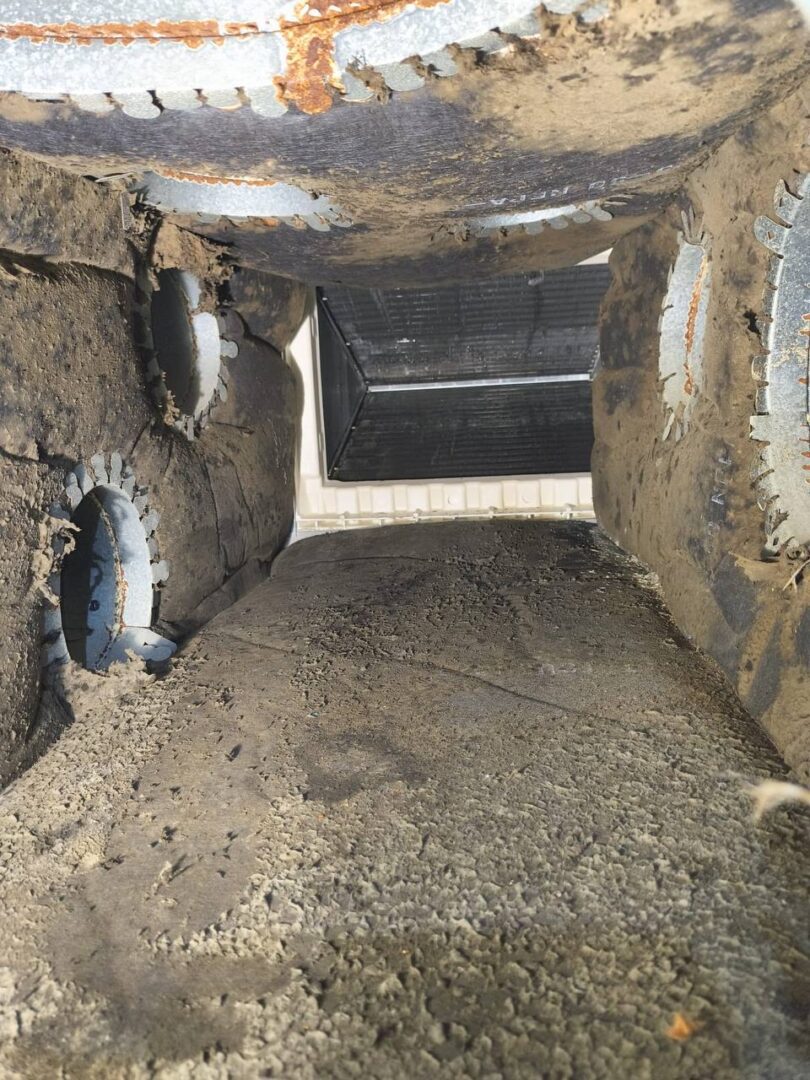
Removing accumulated organic debris from duct interiors eliminates the food source mold needs. [Professional duct cleaning](/residential-duct-cleaning) using NADCA-standard methodology — mechanical agitation combined with HEPA vacuum extraction — is the only way to meaningfully reduce interior debris. Consumer-grade vacuums attached to flexible rods cannot reach the majority of a residential duct system.
Our NADCA-certified technicians spend approximately 7 hours on a thorough residential cleaning. This isn’t arbitrary — it’s what complete access to a typical duct system requires.
Maintaining Indoor Relative Humidity Below 60%
This is the single most important prevention measure. At 60% relative humidity, mold growth potential drops significantly. At 55% and below, most common indoor mold species cannot sustain growth.
For Houston homes, maintaining this level requires:
- A properly sized and calibrated HVAC system
- Regular filter changes to maintain system efficiency
- In many cases, a dedicated whole-home or standalone dehumidifier
A hygrometer — an inexpensive humidity meter — lets you monitor indoor humidity in real time. If your home regularly runs above 60%, address it before mold establishes itself.
Duct Sealing and Insulation Upgrades
Sealing duct connections, transitions, and seams with mastic sealant (not tape, which degrades) closes off the pathways that allow humid attic air to infiltrate the duct interior. This is one of the highest-value improvements a Houston homeowner can make.
Ensuring adequate duct insulation (minimum R-8 in Houston’s climate zone) reduces the temperature differential that causes condensation on duct surfaces.
Annual Inspections
An annual inspection — ideally before the peak Houston summer season — allows a professional to identify early moisture issues, condensation points, and any early mold growth before it becomes an established problem. This is far less disruptive and less expensive than a full remediation after the problem is advanced.
When Prevention Isn’t Enough: Signs You Need Remediation
Even diligent prevention can be outpaced by Houston’s climate, particularly after unusual weather events, HVAC system failures, or in homes with significant duct deficiencies. Watch for these signs that prevention has already failed:
- Musty odor specifically when the HVAC system runs
- Visible dark staining around supply or return registers
- Respiratory symptoms or allergy flare-ups that improve when you leave home
- Visible mold growth inside accessible duct sections
If you’re seeing these signs, [mold remediation](/mold-remediation) — not just prevention — is what the situation requires.
The Long Game in Houston
Houston homeowners who manage their indoor humidity and maintain their duct systems consistently have dramatically better indoor air quality outcomes than those who react only when problems become visible. The city’s climate makes this a ongoing commitment rather than a one-time fix.
Think of it like maintaining a car in a city where roads are rough and salt is heavy. You can ignore maintenance and deal with the consequences when they become unavoidable — or you can stay ahead of the deterioration with regular attention.
[Book your free inspection at crm.ahchooindoorair.com/book](https://crm.ahchooindoorair.com/book)
Our team will assess your current duct condition, identify moisture risk factors specific to your home, and give you a clear prevention roadmap. No surprises, no pressure — just the Houston-specific insight that 38 years in this market provides.
Frequently Asked Questions
What humidity level prevents mold in air ducts?
Maintaining indoor relative humidity below 60% — ideally between 45% and 55% — is the most effective way to prevent mold growth in air ducts and throughout your home. In Houston, achieving this often requires a properly sized HVAC system and may benefit from supplemental dehumidification.
How does humidity get into air ducts?
Humidity enters ductwork through several pathways: leaky duct seams that allow humid attic or crawl space air to infiltrate, condensation on duct surfaces when cold air flows through hot spaces, and inadequate dehumidification that allows humid indoor air to circulate without moisture removal.
How often should Houston homeowners have their ducts inspected?
Annual inspections are recommended for Houston homes. Given the city’s humidity levels, an inspection before the peak summer season helps identify moisture issues and early mold growth before they become major problems.
Does duct cleaning prevent mold?
Duct cleaning removes the accumulated debris — dust, skin cells, organic matter — that mold uses as a food source. By removing that fuel, you make your ductwork a much less hospitable environment for mold growth. It’s a key prevention tool, but must be combined with humidity control to be effective long-term.
Can new homes in Houston get mold in the ducts?
Yes. New construction in Houston is not immune. In fact, the construction process can introduce moisture into building materials before the home is occupied, and a new HVAC system that isn’t properly commissioned for Houston’s humidity load can create conditions for early mold growth in ductwork.
Related AH-CHOO resources: Houston air duct cleaning; schedule a free inspection.