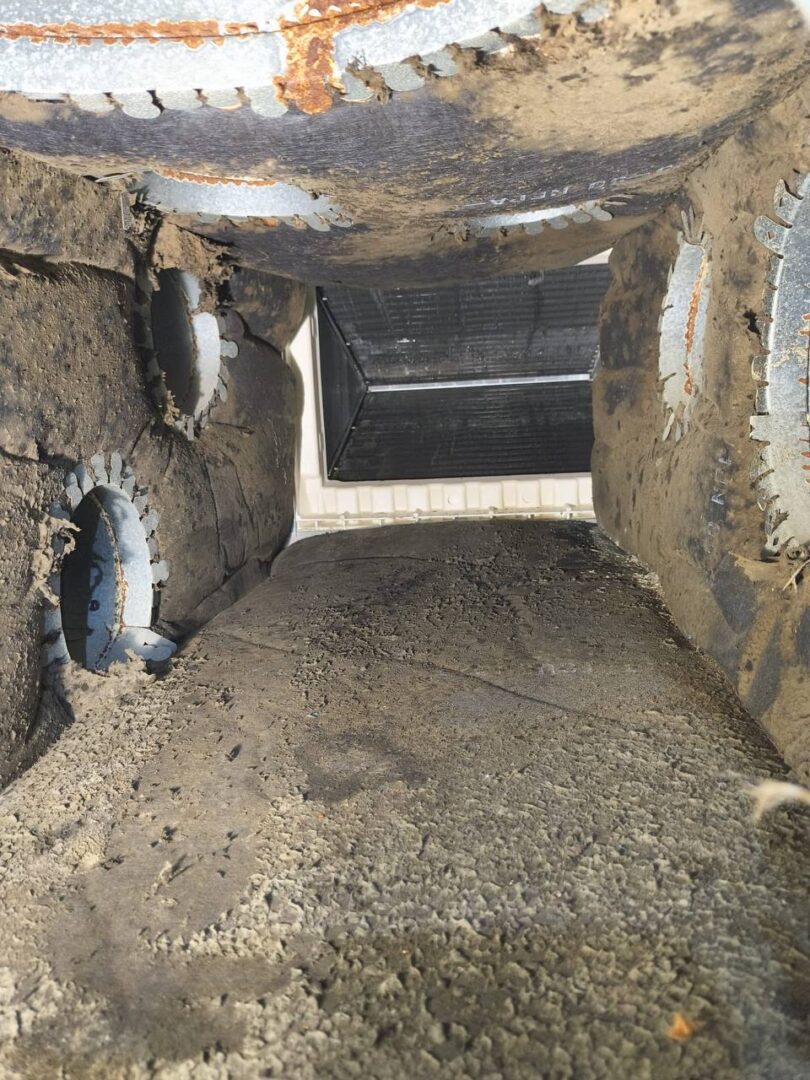
Commercial HVAC cleaning for hospitals and healthcare facilities is one of the most critical — and most regulated — maintenance tasks a facility manager oversees. Unlike standard commercial duct cleaning, healthcare HVAC work must align with ASHRAE Standard 170, NADCA’s ACR 2025 standard, and infection control protocols that protect vulnerable patients from airborne pathogens, mold spores, and construction contaminants.
Why Healthcare HVAC Cleaning Is Different From Standard Commercial Work
In most commercial buildings, dirty ductwork is an air quality nuisance. In hospitals, clinics, and surgical centers, it can be a life-threatening infection source. Patients in ICUs, post-operative recovery, and immunocompromised wards are far more susceptible to airborne pathogens than the general public. A contaminated HVAC system in a healthcare environment doesn’t just circulate dust — it can circulate Aspergillus, Legionella, and other opportunistic pathogens that healthy people tolerate but vulnerable patients cannot.
Healthcare HVAC systems are also architecturally complex. They’re designed with pressure differentials — positive pressure in operating rooms to push contaminants out, negative pressure in isolation rooms to contain them. Cleaning protocols must preserve these balances, not disrupt them. This is why healthcare HVAC cleaning requires specialized technicians, not a generalist crew with a shop vac.
What Standards Govern Hospital HVAC Cleaning?
Healthcare facility managers in Texas and across the country navigate a matrix of overlapping standards. Here are the primary ones governing HVAC cleanliness in medical environments:
- ASHRAE Standard 170 — Ventilation of Health Care Facilities: Defines minimum air change rates, filtration requirements (MERV 13 minimum for general patient care areas, HEPA for surgical suites and immunocompromised units), and pressure relationship requirements between spaces.
- NADCA ACR 2025 — Assessment, Cleaning & Restoration of HVAC Systems: The internationally recognized standard for HVAC cleaning methodology. The 2025 edition, recently updated, establishes minimum cleaning thresholds, verification procedures, and documentation requirements that directly support accreditation compliance.
- The Joint Commission (TJC) Environment of Care Standards: Require that healthcare organizations maintain HVAC systems in a manner that prevents the spread of airborne contaminants. Inspectors look for maintenance logs, service records, and evidence of routine cleaning.
- CDC Guidelines for Environmental Infection Control: Address construction and renovation dust management, post-incident cleaning protocols, and ventilation system maintenance as infection prevention measures.
- OSHA General Industry Standards: Technicians working in healthcare environments must follow confined space and respiratory protection protocols, particularly relevant during duct access work in occupied facilities.
When Is Emergency HVAC Cleaning Required in a Healthcare Facility?
Routine maintenance schedules matter — but certain events trigger the need for immediate HVAC inspection and cleaning regardless of the calendar. NADCA’s ACR 2025 standard and CDC infection control guidelines both identify emergency cleaning triggers that healthcare facility managers should recognize:
- Post-water intrusion or flooding: Any moisture event inside ductwork creates conditions for rapid mold colonization. Within 24–48 hours, mold can establish in contaminated duct sections. Healthcare facilities that experienced flooding during Houston’s major weather events — Harvey in 2017, the 2021 freeze, and subsequent flooding — required emergency duct inspections and cleaning before systems could safely resume operation.
- Post-construction or renovation: Construction generates fine silica dust and fungal spores that can infiltrate HVAC systems even with temporary barriers in place. Any renovation adjacent to clinical spaces should include a post-construction HVAC assessment.
- Outbreak investigation: When cluster infections suggest an airborne transmission pathway, environmental investigation includes HVAC inspection. A documented cleaning and verification process becomes part of the incident record.
- Unexplained spike in patient respiratory complaints: Persistent musty odors, increased airborne particle counts, or a rise in HAIs (hospital-acquired infections) are clinical signals that the ventilation system warrants investigation.
What Does a NADCA-Certified Healthcare HVAC Cleaning Actually Include?
When AH-CHOO! Indoor Air Quality performs commercial HVAC cleaning for a healthcare facility, the scope goes well beyond running a brush through supply registers. Our NADCA-certified process covers the entire air system — because a full system clean is the only clean that meets healthcare standards.
A proper healthcare HVAC cleaning engagement includes:
- Pre-cleaning system assessment: Visual inspection and, where warranted, video inspection of ductwork to document existing contamination levels, identify mold growth, and detect mechanical issues before cleaning begins.
- Source removal using negative pressure containment: NADCA-certified cleaning uses mechanical agitation and negative pressure equipment to dislodge and capture debris. Containment is critical in healthcare settings to prevent cross-contamination between clean and contaminated zones.
- Evaporator coil and blower component cleaning: Dirty coils are a primary mold growth site in humid climates like Houston and the Gulf Coast. A duct cleaning that skips the coil and blower is incomplete — and in healthcare environments, that omission creates compliance gaps.
- Antimicrobial application (where warranted): Applied to duct surfaces following cleaning when mold or microbial contamination is confirmed. Application is EPA-registered and compliant with healthcare environmental safety requirements.
- Post-cleaning verification and documentation: Written inspection reports and before/after documentation that facility managers can retain for Joint Commission audits, regulatory reviews, or accreditation surveys.
Houston’s Texas Medical Center: A Unique HVAC Challenge
Houston is home to the Texas Medical Center — the largest medical complex in the world, with over 60 institutions and 106,000 employees. Facility managers across the TMC and affiliated outpatient clinics, surgery centers, and specialty practices throughout Greater Houston deal with HVAC challenges that are compounded by the local climate.
Houston’s extreme humidity — regularly exceeding 90% during summer months — creates year-round mold pressure on HVAC systems. Unlike dry-climate hospitals where duct contamination is primarily dust-based, Houston healthcare facilities contend with biological contamination: mold, mildew, and moisture-driven microbial growth that develops faster and recurs more aggressively than in other U.S. markets. Routine cleaning cycles that would be adequate in Dallas or Phoenix are often insufficient for Houston-area healthcare facilities without proper antimicrobial protocols.
AH-CHOO! Indoor Air Quality has served commercial clients across Houston for 38 years. We understand the local climate’s demands, and our NADCA-certified approach is designed for Gulf Coast conditions — not for a Midwest facility handbook written for a dry continental climate.
Schedule a Free Commercial HVAC Inspection
If you manage a hospital, outpatient clinic, surgery center, skilled nursing facility, or any healthcare environment in Houston, Austin, or Louisiana, AH-CHOO! Indoor Air Quality offers free commercial HVAC inspections. We perform one job per day — ensuring every facility receives our full crew and complete attention, not a rushed crew racing between appointments.
Contact our team to schedule your inspection and receive a full written assessment of your facility’s HVAC system condition. Request your free commercial HVAC inspection here.
Frequently Asked Questions: Commercial HVAC Cleaning for Hospitals and Healthcare Facilities
How often should a hospital or healthcare facility have its HVAC system cleaned?
NADCA recommends that all commercial HVAC systems be assessed annually and cleaned when contamination levels exceed the ACR standard thresholds. For healthcare facilities in high-humidity markets like Houston, annual cleaning combined with semi-annual coil inspections is common practice. High-acuity areas like surgical suites and ICUs may warrant more frequent inspection cycles.
Does HVAC cleaning disrupt patient care operations?
When planned properly, commercial HVAC cleaning can be scheduled during low-census periods, overnight, or in phases that isolate sections of the system while keeping others operational. AH-CHOO! works with facility management teams to develop a cleaning schedule that minimizes clinical disruption while meeting compliance requirements.
What documentation do we receive after a healthcare HVAC cleaning?
You receive a written assessment report documenting pre-cleaning conditions, the cleaning methods and scope, and post-cleaning verification. This documentation supports Joint Commission Environment of Care records, regulatory audits, and internal infection control reporting. NADCA-certified work is verifiable and defensible during accreditation reviews.
What is ASHRAE 170 and does it require duct cleaning?
ASHRAE Standard 170 establishes ventilation requirements for healthcare facilities, including minimum air change rates, filtration levels, and pressure relationships. While it specifies that HVAC systems must be maintained to deliver clean, properly filtered air, it works in conjunction with NADCA’s ACR standard, which defines the cleaning methodology. Together, these standards form the framework for healthcare HVAC compliance.
Can dirty HVAC ducts cause hospital-acquired infections?
Contaminated HVAC systems have been implicated in healthcare-associated infection (HAI) outbreaks, particularly those involving airborne fungi like Aspergillus and bacteria like Legionella. The CDC’s environmental infection control guidelines specifically address ventilation system maintenance as an infection prevention measure. Dirty ductwork doesn’t guarantee infections, but it eliminates a critical line of defense for immunocompromised patients.
Is AH-CHOO! qualified to clean HVAC systems in clinical environments?
Yes. AH-CHOO! Indoor Air Quality is NADCA certified, which means our technicians are trained and tested to the ACR standard — the same standard that governs healthcare HVAC cleaning. We have 38 years of commercial and residential HVAC cleaning experience in the Houston and Gulf Coast market. Contact us to discuss your facility’s specific requirements.
Related AH-CHOO resources: commercial air duct cleaning; schedule a free inspection.