Meta Description: Black mold around air vents in your Houston home is a serious warning sign. Learn what it means, why it spreads, and the safe steps to take right now.
“`json
{
“@context”: “https://schema.org”,
“@graph”: [
{
“@type”: “Article”,
“headline”: “Black Mold Around Air Vents: What Houston Homeowners Should Do”,
“description”: “Black mold around air vents in your Houston home is a serious warning sign. Learn what it means, why it spreads, and the safe steps to take right now.”,
“author”: {
“@type”: “Organization”,
“name”: “AH-CHOO! Indoor Air Quality”
},
“publisher”: {
“@type”: “Organization”,
“name”: “AH-CHOO! Indoor Air Quality”,
“url”: “https://ahchooindoorair.com”
},
“mainEntityOfPage”: “https://ahchooindoorair.com/blog/black-mold-air-vents-what-to-do”
},
{
“@type”: “FAQPage”,
“mainEntity”: [
{
“@type”: “Question”,
“name”: “Is black mold around air vents dangerous?”,
“acceptedAnswer”: {
“@type”: “Answer”,
“text”: “Dark mold around air vents is a serious concern. While not all dark-colored mold is Stachybotrys (true ‘black mold’), any mold growth around vents indicates mold inside the duct system that is being circulated through your home. This requires professional evaluation — not DIY cleaning.”
}
},
{
“@type”: “Question”,
“name”: “Why is there mold around my air vent but not elsewhere?”,
“acceptedAnswer”: {
“@type”: “Answer”,
“text”: “Mold at vent covers is often more visible than wall or ceiling mold because airflow concentrates spore deposits at the vent opening. The real mold colony is usually deeper in the ductwork. The vent staining is a surface symptom of an internal problem.”
}
},
{
“@type”: “Question”,
“name”: “Should I cover or tape off a moldy air vent?”,
“acceptedAnswer”: {
“@type”: “Answer”,
“text”: “No. Blocking a supply or return vent doesn’t stop the mold — it just redirects airflow in ways that can create new pressure and moisture issues in your system. The only correct action is professional inspection and remediation of the duct system.”
}
},
{
“@type”: “Question”,
“name”: “Can I wipe the mold off my vent cover and call it done?”,
“acceptedAnswer”: {
“@type”: “Answer”,
“text”: “Cleaning the vent cover removes surface growth from that piece of metal or plastic, but does nothing about the mold colony inside the ductwork behind it. Within weeks, the vent cover will show growth again — because the source hasn’t been addressed.”
}
},
{
“@type”: “Question”,
“name”: “How do professionals test for black mold in ducts?”,
“acceptedAnswer”: {
“@type”: “Answer”,
“text”: “Professional assessment typically includes visual inspection with camera equipment, surface sampling if specific mold species identification is needed, and evaluation of humidity and moisture conditions throughout the duct system. The type of mold matters less than the extent of contamination and the conditions that allowed it to grow.”
}
}
]
}
]
}
“`
You glance up at the air vent on your ceiling and see it: dark staining, fuzzy growth, discoloration around the edges of the register cover that wasn’t there before. Your stomach drops. You’ve heard about black mold. You know it’s not supposed to be in your home.
What you do next matters enormously — for your health, for your home, and for whether the problem gets better or worse.
This guide walks Houston homeowners through exactly what dark mold around air vents means, why it appears, and the correct sequence of actions. After 38 years of mold inspections across Houston homes, our NADCA-certified team has seen every version of this scenario — and how much worse it gets when homeowners take the wrong first step.
What That Dark Staining Actually Tells You
Before panic sets in, it’s worth understanding what you’re actually looking at — and what it tells you about your duct system.
Dark staining or fuzzy growth around an air vent can indicate several things:
Mold growth on the vent cover itself: Vent registers and grilles are made of metal or plastic. Both can support mold growth when they’re consistently damp — which happens when cool air from the supply duct meets humid Houston air and creates condensation on the vent surface.
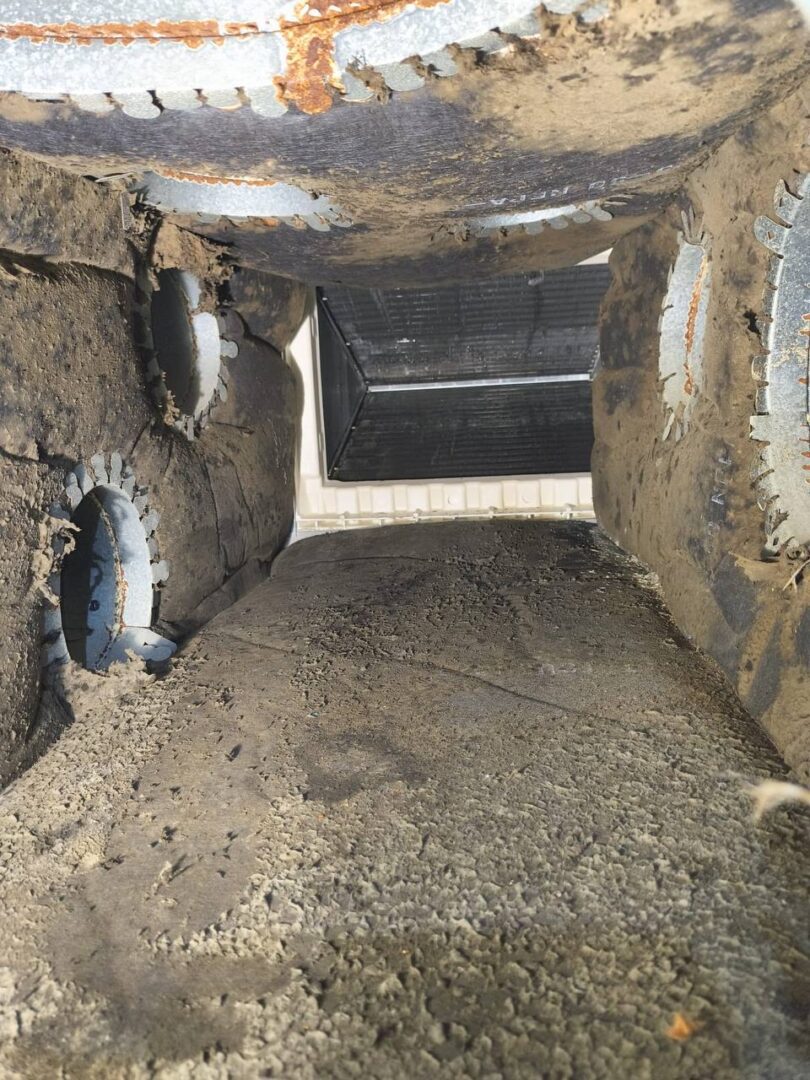
Mold growth inside the ductwork near the opening: The vent staining you can see is often a surface indication of a colony that has developed on the duct interior. Airflow carries spores out through the opening, and they deposit on the vent cover and the surrounding ceiling or wall surface.
HVAC soot (not mold): Sometimes what looks like mold is actually a dark residue from combustion byproducts or air quality particles. This also warrants investigation, but the response is different. A professional inspection distinguishes between the two.
The key point: any dark growth around your air vents warrants professional evaluation. Whether the mold is on the cover, just inside the opening, or deep in the duct system, you cannot assess the full extent without equipment and expertise.
The “Black Mold” Question
When Houston homeowners see dark growth, many immediately wonder if it’s Stachybotrys chartarum — the species commonly called “black mold” and associated with severe health effects.
Here’s the honest answer: color alone doesn’t identify mold species. Stachybotrys is dark green-black, but so are several other common mold species. Species identification requires laboratory testing of samples collected by a professional.
More importantly, the species matters less than you might think for determining your response. Any mold growth inside ductwork that is circulating through your home is a health concern requiring professional remediation. Whether it’s Stachybotrys, Cladosporium, Penicillium, or another species, the correct action is the same: professional inspection, professional cleaning, professional treatment.
What species identification does matter for is understanding potential health risk levels — which is one reason to have any visible mold growth professionally evaluated rather than assumed harmless.
Why Mold Appears at Vents and Not Elsewhere
Homeowners are often puzzled when mold shows up specifically at air vents without visible growth elsewhere on walls or ceilings. The explanation involves the physics of how your HVAC system operates.
Temperature differential at supply vents: In Houston summers, the air leaving your supply vents can be 20–30°F cooler than the surrounding room air. That temperature difference creates a micro-zone of condensation at and around the vent opening — precisely where the cool duct air meets humid Houston room air. The vent cover and the surrounding ceiling surface are consistently damp, which encourages mold colonization even when the rest of the ceiling is dry.
Airflow concentrates spore deposits: Mold colonies anywhere in the duct system release spores into the airstream. As that air exits through supply vents, spores are deposited at the opening — making vent covers one of the first places visible mold symptoms appear, even when the primary colony is deeper in the system.
Return vents and dust accumulation: Return vents pull air from living spaces back toward the air handler. That suction collects dust and debris, which builds up around the return opening. Organic-rich dust plus moisture creates mold growth conditions directly at the vent.
What NOT to Do
This is critical. The wrong first response to dark mold at your vents can make the situation significantly worse.
Don’t wipe it down with bleach. Cleaning the vent cover removes surface growth from that one piece of metal, but does nothing about the mold inside the ductwork. Within days to weeks, the growth will return — because the source hasn’t been touched. Worse, vigorous scrubbing releases spores into your living space in concentrations higher than the passive baseline.
Don’t tape or block the vent. A blocked supply or return vent changes the pressure dynamics of your entire duct system. You’ll create new problems — reduced airflow, increased pressure on connections, potential for moisture to accumulate in different areas — without addressing the mold itself.
Don’t ignore it. Mold does not stop growing on its own in Houston’s climate. Every day your HVAC system runs, it distributes spores from that colony to every room in your home. The longer you wait, the more extensive the remediation required.
The Right First Steps
Step 1: Stop disturbing the area. Don’t clean, scrape, or touch the growth. You want to contain spore dispersal until professionals can assess.
Step 2: Schedule a professional inspection immediately. A qualified inspection — with camera equipment to see into the ductwork — tells you the actual extent of the problem. What’s visible from outside the vent may represent a small fraction of the total mold presence.
Step 3: Note what you’re experiencing. Before the inspection, document any symptoms household members have been experiencing — respiratory irritation, persistent congestion, headaches, allergy flare-ups. This information helps professionals understand the urgency and potential health impact.
Step 4: Let professionals take it from there. A proper [mold remediation](/mold-remediation) of the duct system uses containment — negative air pressure — before any physical cleaning begins. This is the non-negotiable step that prevents a cleaning from becoming a spore dispersal event.
What Professional Remediation Involves
[Professional duct cleaning](/residential-duct-cleaning) for a mold situation is a full-day undertaking for our NADCA-certified team — approximately 7 hours for a thorough residential job. This includes:
- Full system inspection and documentation
- Negative air pressure establishment before cleaning
- Mechanical agitation and HEPA vacuum extraction of all accessible duct surfaces
- Antimicrobial treatment of treated areas
- Post-cleaning verification
If surface mold exists on the ceiling around the vent, that may require additional surface remediation beyond the duct system itself. Our team assesses the full scope during the inspection so there are no surprises.
After Remediation: Preventing Recurrence
In Houston’s climate, mold prevention is an ongoing effort. After remediation, the key measures that keep it from coming back include:
- Maintaining indoor relative humidity below 60% consistently
- Ensuring your HVAC system is properly sized and not short-cycling
- Annual duct inspections to catch early moisture issues
- Checking that duct insulation, particularly in attic spaces, is adequate
Our team walks through all of these factors with every client after a remediation job. The goal isn’t just to clean — it’s to fix the conditions that created the problem.
Don’t Guess. Get a Professional Look.
If you’re seeing dark staining or mold growth around your air vents, the worst thing you can do is assume it’s minor and wait. In Houston’s climate, mold problems don’t plateau on their own — they grow.
[Book your free inspection at crm.ahchooindoorair.com/book](https://crm.ahchooindoorair.com/book)
Our NADCA-certified technicians will assess the full extent of the problem, explain what they find in plain terms, and outline exactly what your situation requires. 38 years of Houston inspections means we’ve seen this before — and we know what it takes to resolve it properly.
Frequently Asked Questions
Is black mold around air vents dangerous?
Dark mold around air vents is a serious concern. While not all dark-colored mold is Stachybotrys (true “black mold”), any mold growth around vents indicates mold inside the duct system that is being circulated through your home. This requires professional evaluation — not DIY cleaning.
Why is there mold around my air vent but not elsewhere?
Mold at vent covers is often more visible than wall or ceiling mold because airflow concentrates spore deposits at the vent opening. The real mold colony is usually deeper in the ductwork. The vent staining is a surface symptom of an internal problem.
Should I cover or tape off a moldy air vent?
No. Blocking a supply or return vent doesn’t stop the mold — it just redirects airflow in ways that can create new pressure and moisture issues in your system. The only correct action is professional inspection and remediation of the duct system.
Can I wipe the mold off my vent cover and call it done?
Cleaning the vent cover removes surface growth from that piece of metal or plastic, but does nothing about the mold colony inside the ductwork behind it. Within weeks, the vent cover will show growth again — because the source hasn’t been addressed.
How do professionals test for black mold in ducts?
Professional assessment typically includes visual inspection with camera equipment, surface sampling if specific mold species identification is needed, and evaluation of humidity and moisture conditions throughout the duct system. The type of mold matters less than the extent of contamination and the conditions that allowed it to grow.
Related AH-CHOO resources: Houston air duct cleaning; schedule a free inspection.